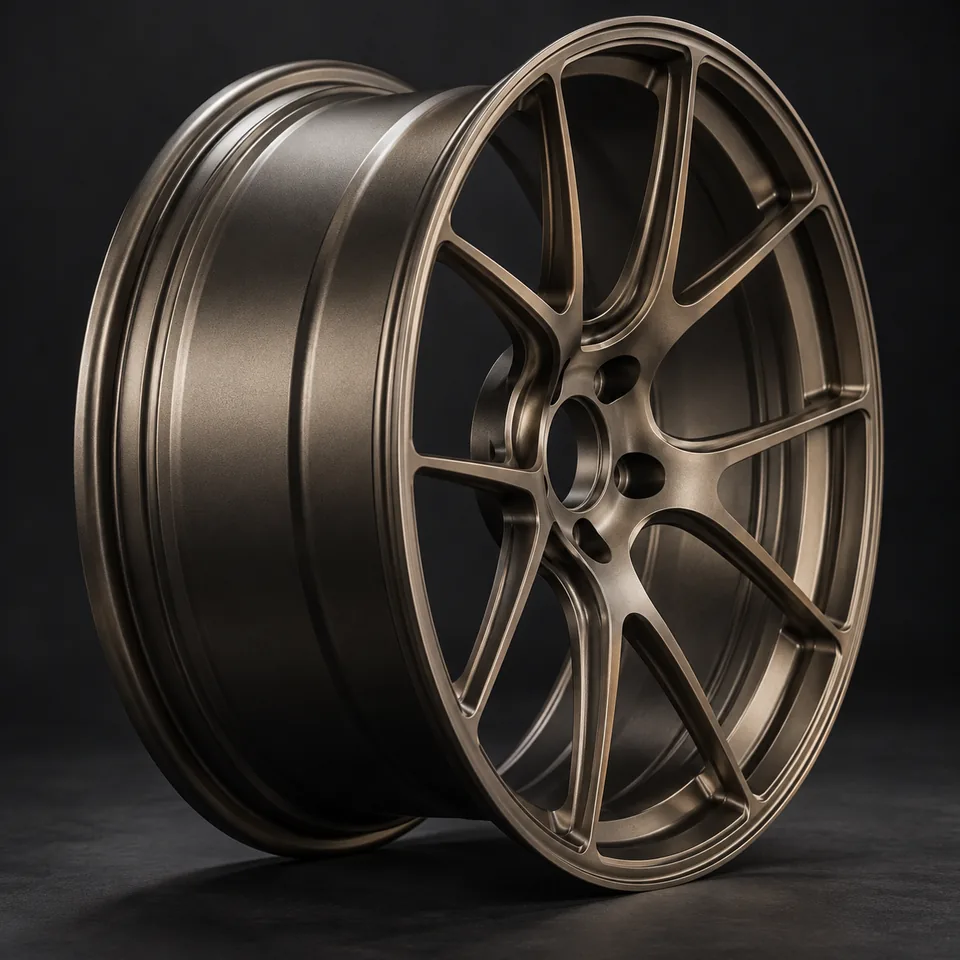
Spoke geometry
Choose the visual language: open, sculpted or layered. Feasibility and approved geometry are resolved separately from the inspiration image.
Material / Forged magnesium
For projects where wheel mass is a specific priority. Consider the proposed alloy, geometry, load capacity and protection system together before choosing magnesium.
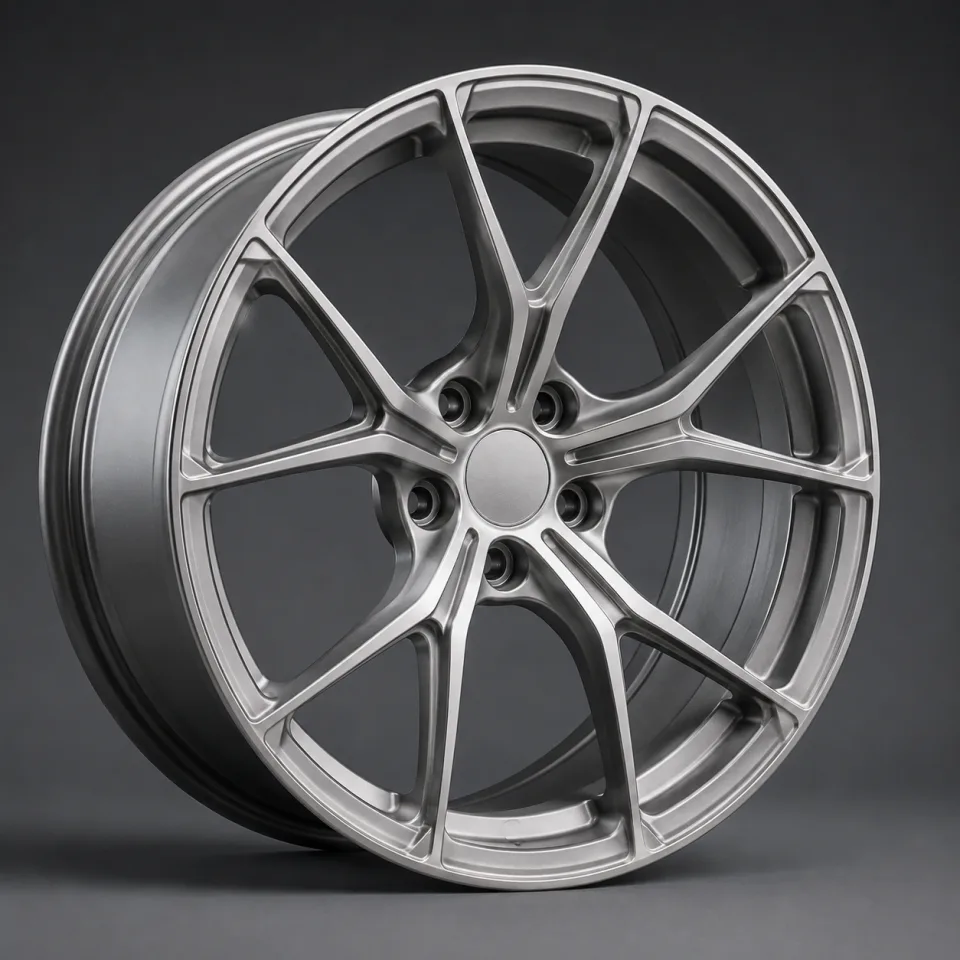
The project specification
A magnesium alloy can offer lower density than an aluminum alloy. Finished wheel mass still depends on geometry, size, the specified alloy, processing and load requirements. A fixed percentage saving cannot be inferred from the material.
For a meaningful comparison, request weights for equivalent dimensions, use and load requirements. Include coating, compatible hardware and care requirements in the comparison, rather than treating them as later accessories.
| Area | Define before the final quotation |
|---|---|
| Construction & alloy | Requested monoblock or multi-piece route, the exact alloy and what is actually available for the proposed design. |
| Front & rear dimensions | Diameter, width, offset, bolt pattern, center bore and any front/rear differences. |
| Load & intended use | Vehicle/application requirements, road or track use and applicable destination-market rules. |
| Fitment & installation | Brake envelope, hardware and seat type, tire compatibility, suspension and body clearance. |
| Finish & protection | Alloy-compatible surface preparation and protective coating, contact interfaces and written care guidance. |
| Evidence & order scope | Specification-specific documents, price basis, quantity, shipping scope, timing and warranty terms. |
Appearance / choose your direction
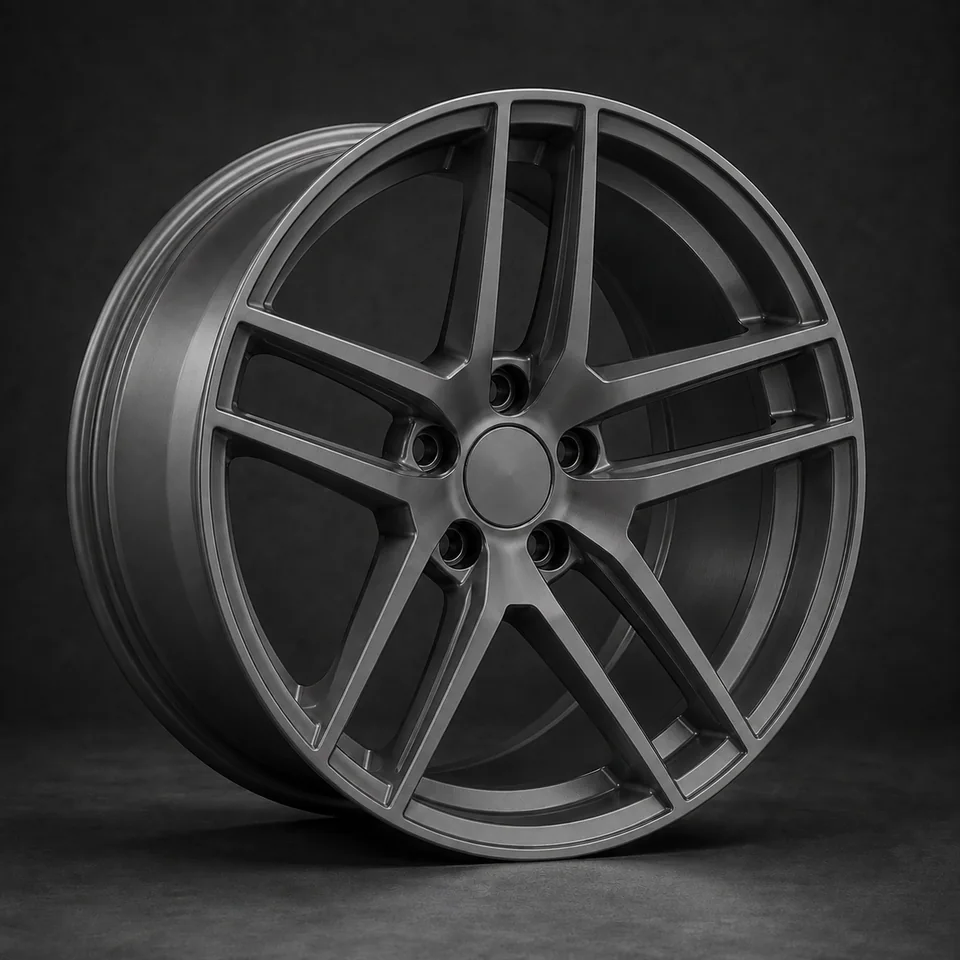
Choose the visual language: open, sculpted or layered. Feasibility and approved geometry are resolved separately from the inspiration image.
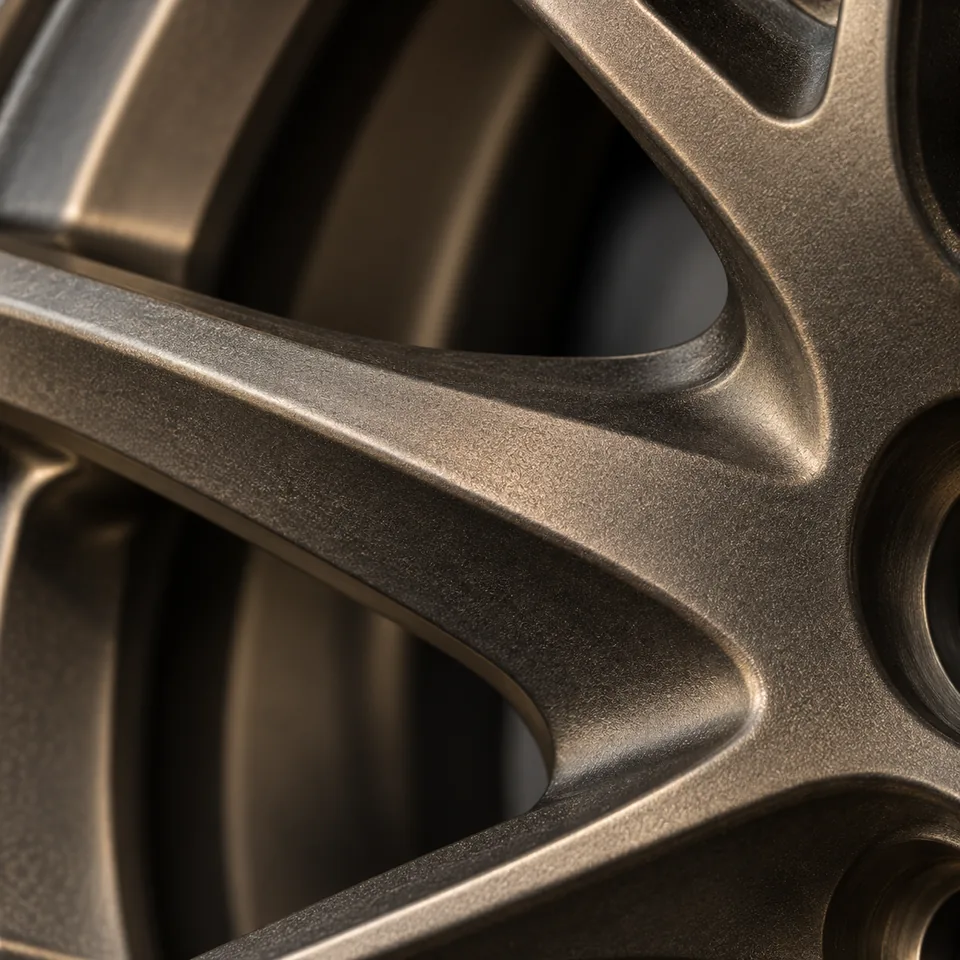
Define grain, gloss and coverage. The same screen color does not guarantee the same treatment or protection on different alloys.
Faces, pockets, lip and barrel can have different requirements. Approve the final reference and written finish description together.
Two ways to begin
Share your exact vehicle, changes to brakes or suspension, design direction and delivery country. Unknown measurements can stay open for review.
Prepare a personal briefInclude business type, target application, current quantity and any technical documents your project requires. MOQ, sample terms and timing are confirmed per quotation.
Prepare a trade inquiryBefore the next step
Use measured weights for the actual proposed specifications, compared at equivalent size, load requirements and intended use. Material density alone does not establish the mass of a complete wheel.
No such assumption should be made. Confirm a compatible pretreatment and coating system for the specified alloy, including hardware contact areas and the treatment of coating damage.
No. Check the intended application, relevant validation and destination-market or event requirements for the actual specification. Material, appearance and a generic report do not establish approval.
Include written care and inspection instructions in the agreed scope. Do not select chemicals, stripping, heat treatment or refinishing processes solely from a visual finish name. Seek appropriate inspection after impact or coating damage.
Your next step
A clear project brief comes before a final specification or order.