Brushed and polished
Brushing creates visible grain; polishing smooths the surface for stronger reflections. Define the grain direction and areas to be treated.
Compare texture, color and gloss on one wheel design. Find a direction for your custom set.
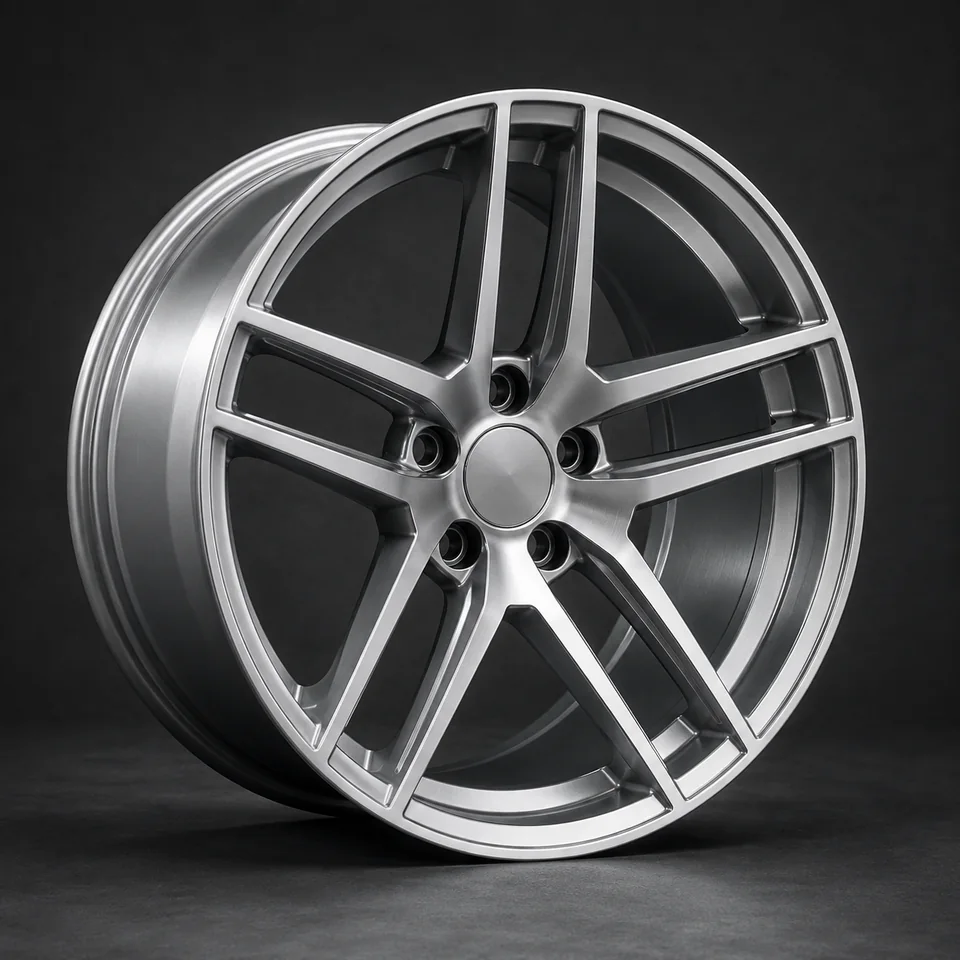
Fine directional grain and soft silver highlights keep the underlying metal texture visible.
Confirm brushing direction, coverage and the protective clear-coat system.
Request a quoteAsk about this finishFinish visualization. Confirm the process, alloy compatibility and approved sample before ordering.
Surface preparation, decorative treatment and protective coating work together. A picture shows appearance, not the complete process.
Brushing creates visible grain; polishing smooths the surface for stronger reflections. Define the grain direction and areas to be treated.
Both can create solid-color looks in different gloss levels. Confirm the actual coating system, preparation and cure requirements for the wheel.
Translucent color can reveal the metallic base beneath it. Brushed champagne and candy red illustrate appearance directions, not a specific coating formula.
Contrasting faces and pockets combine finishes on one wheel. Confirm the approved machining design, boundary lines and protection of exposed surfaces.
These are different treatment routes, not interchangeable names for a metallic color. Feasibility depends on the alloy, wheel construction and approved protection system. Request confirmation for the exact wheel before selecting one.
Texture in the light
Grain, gloss and curved surfaces change the way a finish reads. Confirm a physical sample and the coating system, not just a screen image.
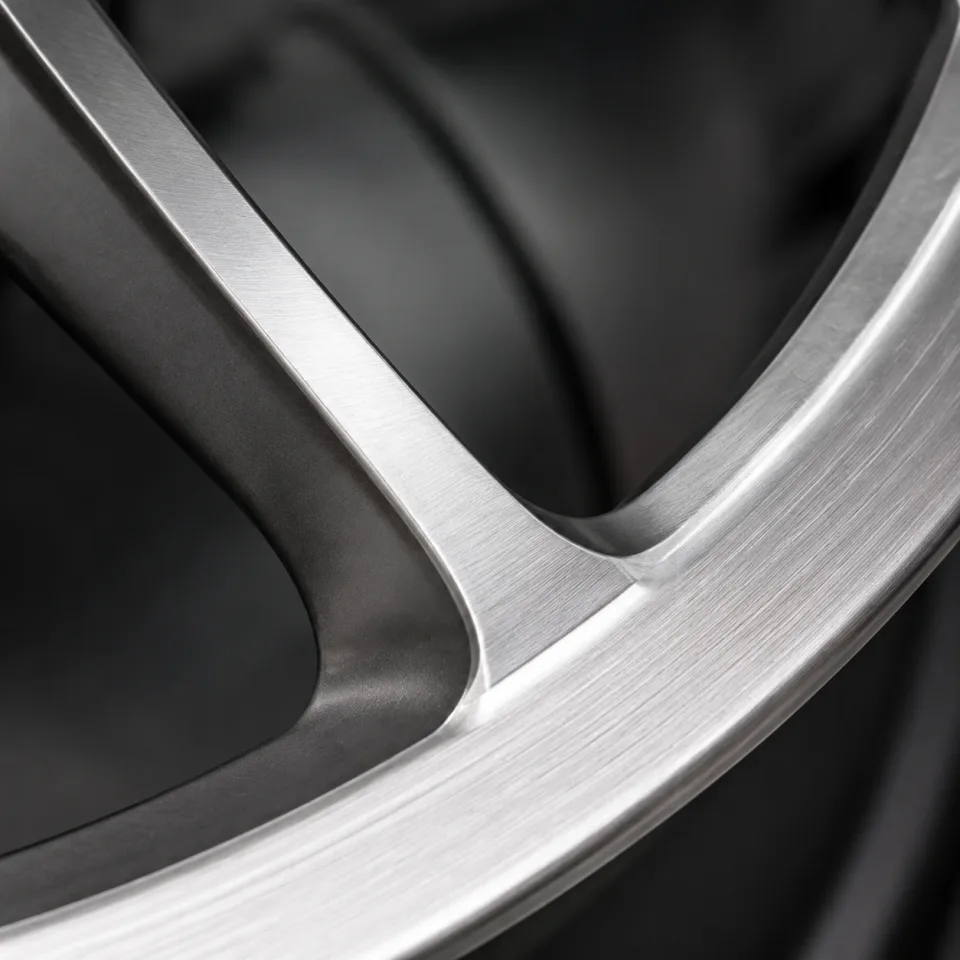
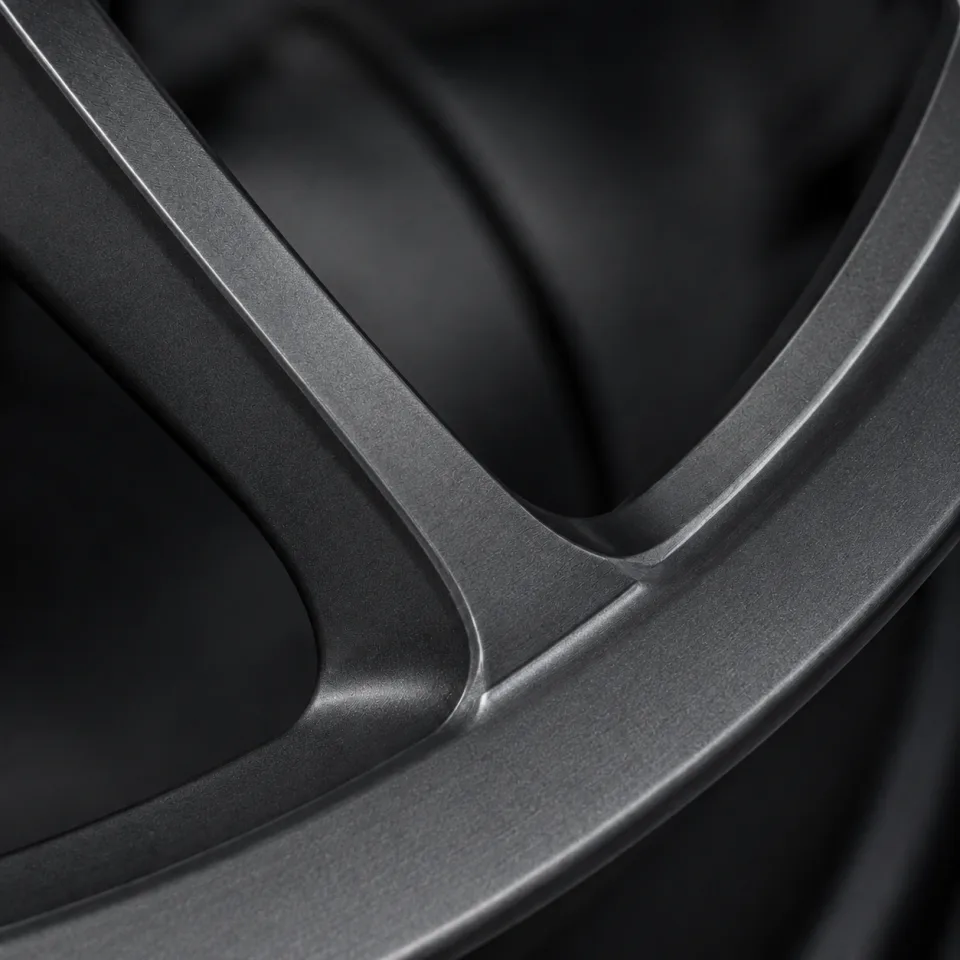
A finish suitable for an aluminum wheel is not automatically suitable for magnesium. Magnesium needs a compatible corrosion-protection system, including treatment of damaged coatings and contact areas.
Share the visual reference, color direction and desired gloss.
Define spoke faces, pockets, lip, barrel and center cap separately.
Approve the physical finish reference and written care instructions before production.
These images illustrate eight design directions, not eight confirmed inventory options. Screen settings and lighting affect perceived color.
For client projects & private sets
Keep the approved appearance reference with the project specification. Screen color and lighting are not a substitute for agreeing the physical finish reference.
State the finish consistency requirements, current quantity and the sample approval process you need. Confirm availability and acceptance criteria in the quotation.
Specify the areas to finish: faces, pockets, rim, barrel and center cap. Include the desired gloss and any contrast, not just a color name.
Your next step
A clear project brief comes before a final specification or order.
Finishing process
Machined wheels are degreased and cleaned so no cutting fluid or residue remains. Any surface to be brushed or polished is prepared first, because those textures sit beneath the protective coat.
A chemical conversion or similar pretreatment improves coating adhesion and corrosion resistance. On magnesium this step is especially important and is selected for the alloy.
Powder coat is electrostatically applied and oven-cured; liquid paint is sprayed in base and color layers. Coverage of spoke sides, windows and barrel is defined in the specification.
Brushed finishes are created by directional abrasion that leaves a visible grain; polished finishes are worked to high reflectivity. Both need protection afterwards.
Two-tone finishes are produced by masking zones between coats, or by re-machining (diamond cutting) the coated face to expose bright metal against the color.
A clear protective coat in matte, satin or gloss seals the finish, including brushed, polished and machined areas. Tinted clears add color over bright metal.
Coats are cured, then checked for appearance against the approved reference, coverage and defects.
Finish systems explained
| Finish | What it is | Notes |
|---|---|---|
| Powder coat | Electrostatically applied powder, oven-cured. | Durable, wide color range; satin, gloss or matte. |
| Liquid paint + clear | Wet-sprayed base color and clear coat. | Fine control of color and effects such as candy or pearl. |
| Brushed | Machined surface brushed to a directional grain, then clear coated or tinted. | Grain direction and coverage are approved per design. |
| Polished | Surface polished to a high reflectivity, then protected. | More care required; often used on lips of multi-piece wheels. |
| Diamond cut / machined face | Face re-machined after coating for bright contrast. | Exposed edges need a sound clear coat. |
| Two-tone / multi-zone | Different finishes on face, windows, lip or barrel. | Boundaries specified in the drawing. |
| Anodized-type / tinted clear | Translucent tint over bright metal. | Appearance varies by alloy and process; agree a sample reference. |
Magnesium
On forged magnesium wheels, the finish is also the corrosion protection: pretreatment, primer, color and clear coat work together. Some aluminum effects (for example bare polished metal) are not appropriate for magnesium. The finishing system is stated in your quotation.
Finish is approved together with the drawing as part of a fully custom order. Every VEXORA set is made to order, and custom orders start from a single pair. MOQ: 1 pair (2 wheels). Read the full specification guide.
Finish choices amplify dish and lip contrast on forged concave wheels. Material class notes: 6061-T6 forged wheels.