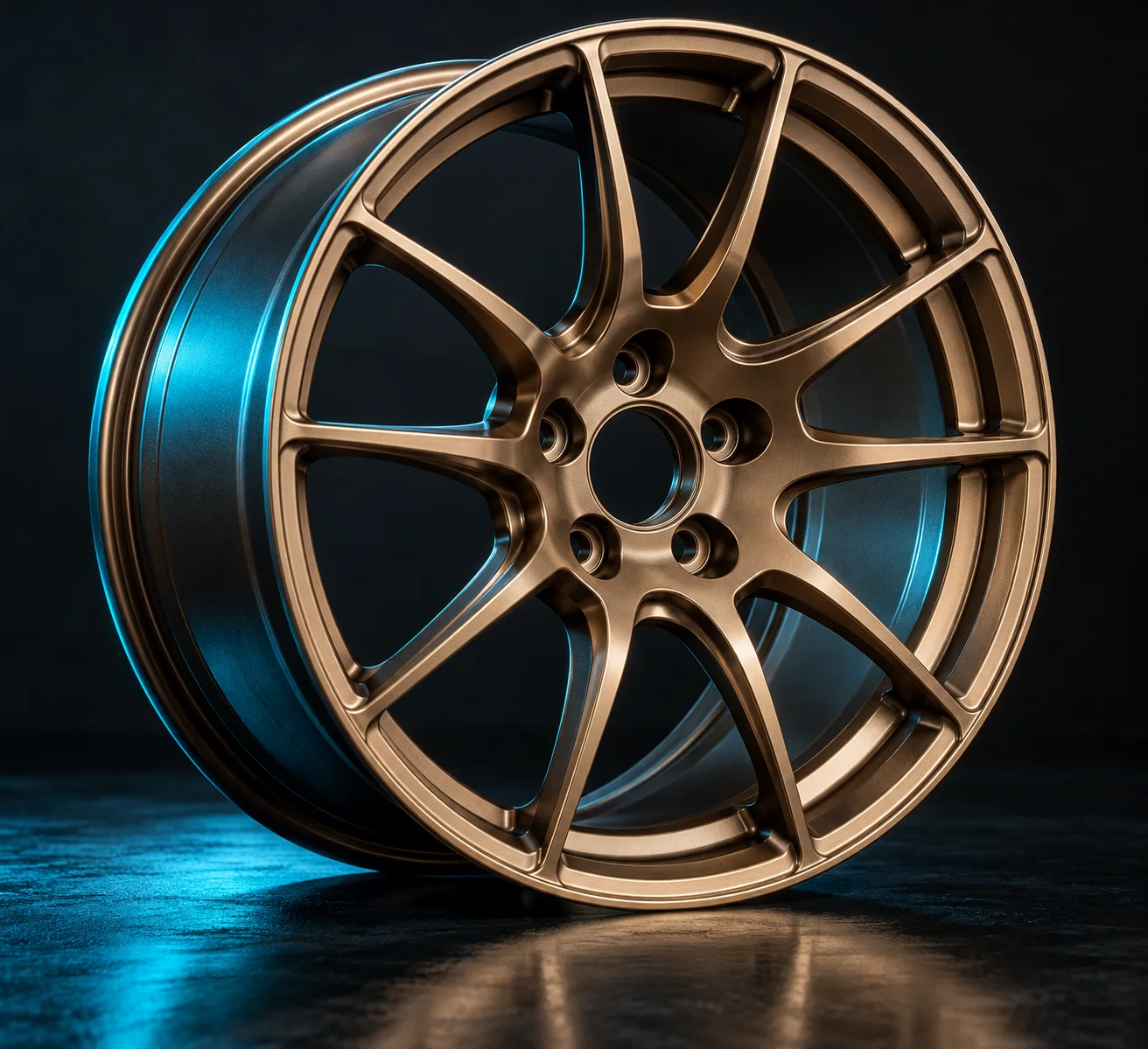
Start with the intended use
For a custom wheel, appearance is only one requirement. Vehicle loads, road conditions, track use, maintenance expectations and budget all affect the choice. Both aluminum and magnesium wheels need a suitable design, protective finish and validation for their application.
What changes with the material?
| Consideration | Aluminum alloy | Magnesium alloy |
|---|---|---|
| Density and wheel mass | Higher material density than typical magnesium alloys. Finished mass depends on the design. | Lower material density can support weight reduction, subject to design and load requirements. |
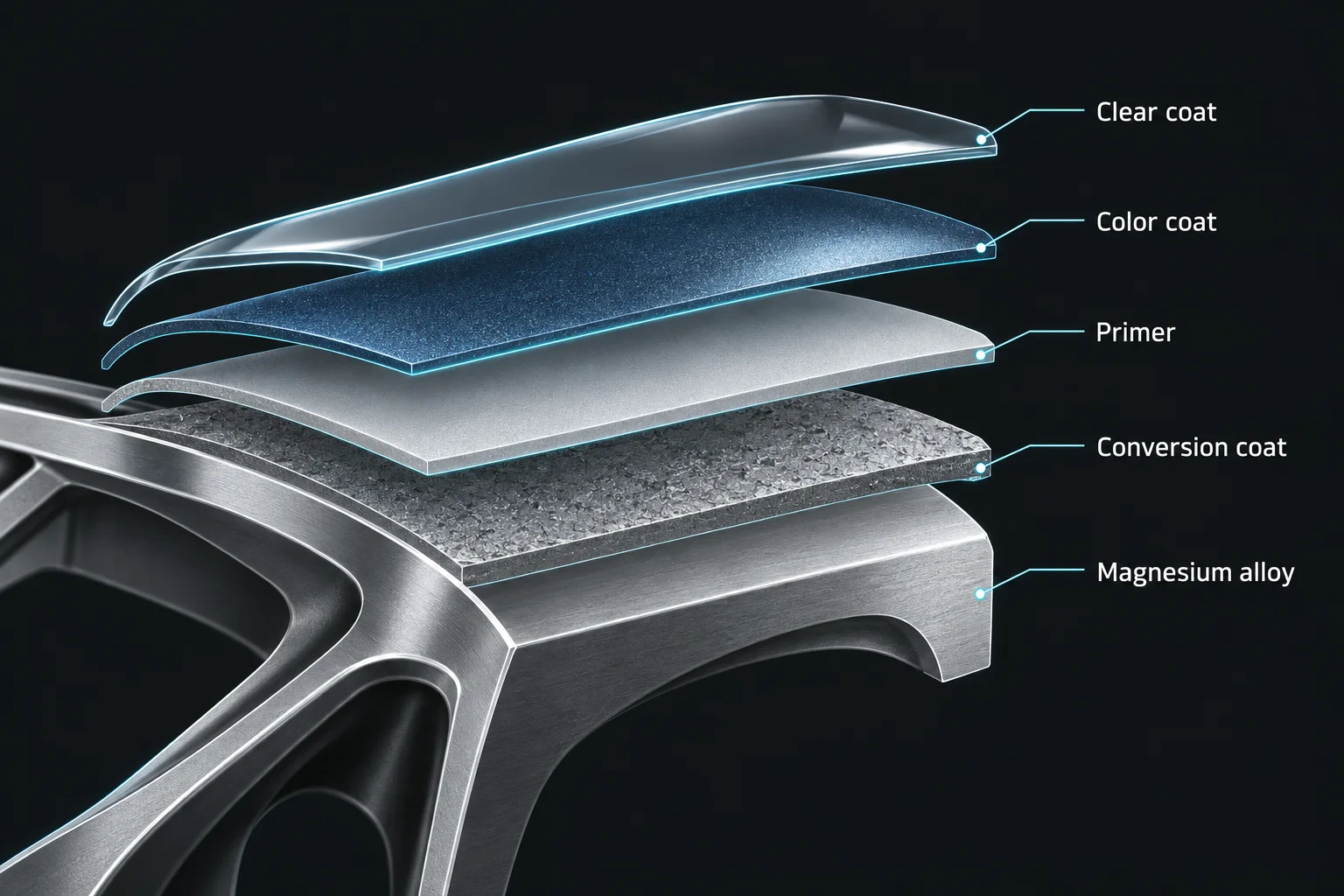
| Surface protection | Confirm the finish, its durability and care requirements. | Corrosion protection, coating condition and compatible hardware require particular attention. |
| Cost and availability | Typically a wider choice of suppliers and configurations. | Often a more specialized supply route. Compare actual quotes and lead times. |
| Suitability | Needs vehicle-specific fitment, load capacity and applicable approvals. | Needs the same checks, plus clear material-specific care guidance. |
Weight claims need context
Lower-density material does not translate directly into an identical percentage reduction in wheel weight. Spoke geometry, barrel thickness, size and safety margins affect the final result. Request measured weights for comparable wheel sizes and load capacities. Do not compare a small road wheel with a larger heavy-load wheel.
Ask about corrosion protection and care
Ask which coating system is specified for the alloy and how chips or scratches should be handled. Avoid choosing cleaning chemicals or a refinishing method based only on the visual finish. Follow the supplier’s written guidance and seek inspection after impact damage.
Neither material is automatically road-approved
A material description does not establish road legality or motorsport eligibility. Ask which regulations, test reports and approvals apply to the exact wheel specification and your destination market.
Which is the better starting point?
If you want a broad range of design and finish options, begin with custom forged aluminum wheels. If reducing mass is a particular project priority, discuss forged magnesium wheels alongside cost, protection and ongoing care. The best choice is the one supported by a complete specification for your vehicle.
The numbers behind the materials
| Forged aluminum | Forged magnesium | |
|---|---|---|
| Typical alloys | 6061-T6 | AZ80- / ZK60-type |
| Density | ~2.7 g/cm³ | ~1.8 g/cm³ |
| Finishing | Wide range, simple care | Protective multi-layer system essential |
| Cost | Lower | Higher |
| Best for | Most road builds, all-weather use | Weight-critical performance and track builds |
How much lighter is a magnesium wheel?
Magnesium is about a third less dense, but a wheel weight saving depends on design and load requirement. Compare documented weights for the same diameter, width and load rating.
Is magnesium a fire risk?
Solid forged wheels do not ignite in normal use; magnesium burns as fine chips or powder, or at very high temperatures. The practical concerns are corrosion protection and care, covered in are forged magnesium wheels safe?
Material FAQ
Can I order either material in any design?
Each VEXORA set is fully custom; feasibility of a design in each material is confirmed per project. Every VEXORA set is made to order, and custom orders start from a single pair. MOQ: 1 pair (2 wheels).
Lead time difference?
Production typically takes approximately 20 days once the specification, drawings and finish are approved, confirmed per project. Shipping time varies by destination country. Where DDP (Delivered Duty Paid) is available for your country, orders ship DDP: import duties and taxes are handled and the wheels are delivered to your door.
Explore custom forged aluminum wheels or custom forged magnesium wheels.
Where carbon fiber fits against both metals: carbon fiber vs forged wheels.