Why forged magnesium corrosion protection matters
Forged magnesium corrosion protection is the single most important topic for anyone considering magnesium wheels. Magnesium is the lightest structural metal used for wheels, which is why it is valued for performance builds, but it is also chemically reactive. Bare magnesium exposed to water, road salt and contact with other metals corrodes far more readily than aluminum.
Modern forged magnesium wheels deal with that by never leaving the metal bare. They rely on a protective multi-layer finish system plus correct hardware and sensible care. This guide explains how such a system works as general industry practice, where corrosion usually starts, and how to inspect and look after custom forged magnesium wheels.
VEXORA forged magnesium wheels are made to order, typically in AZ80- or ZK60-type alloys, which are common in the industry and confirmed per project. The finish system for each set is specified in writing before production.
How magnesium corrodes
Magnesium sits low on the galvanic series, meaning it gives up electrons easily. Two mechanisms matter most for wheels:
General corrosion happens when moisture, especially salty or acidic moisture, reaches bare metal. It shows up as white or grey powdery deposits and pitting under damaged paint.
Galvanic corrosion happens when magnesium is in electrical contact with a more noble metal, such as steel, in the presence of an electrolyte like salt water. The magnesium corrodes preferentially around the contact point. Wheel bolts, hub faces, balance weights and valve hardware are the usual places to watch.
The multi-layer finish system
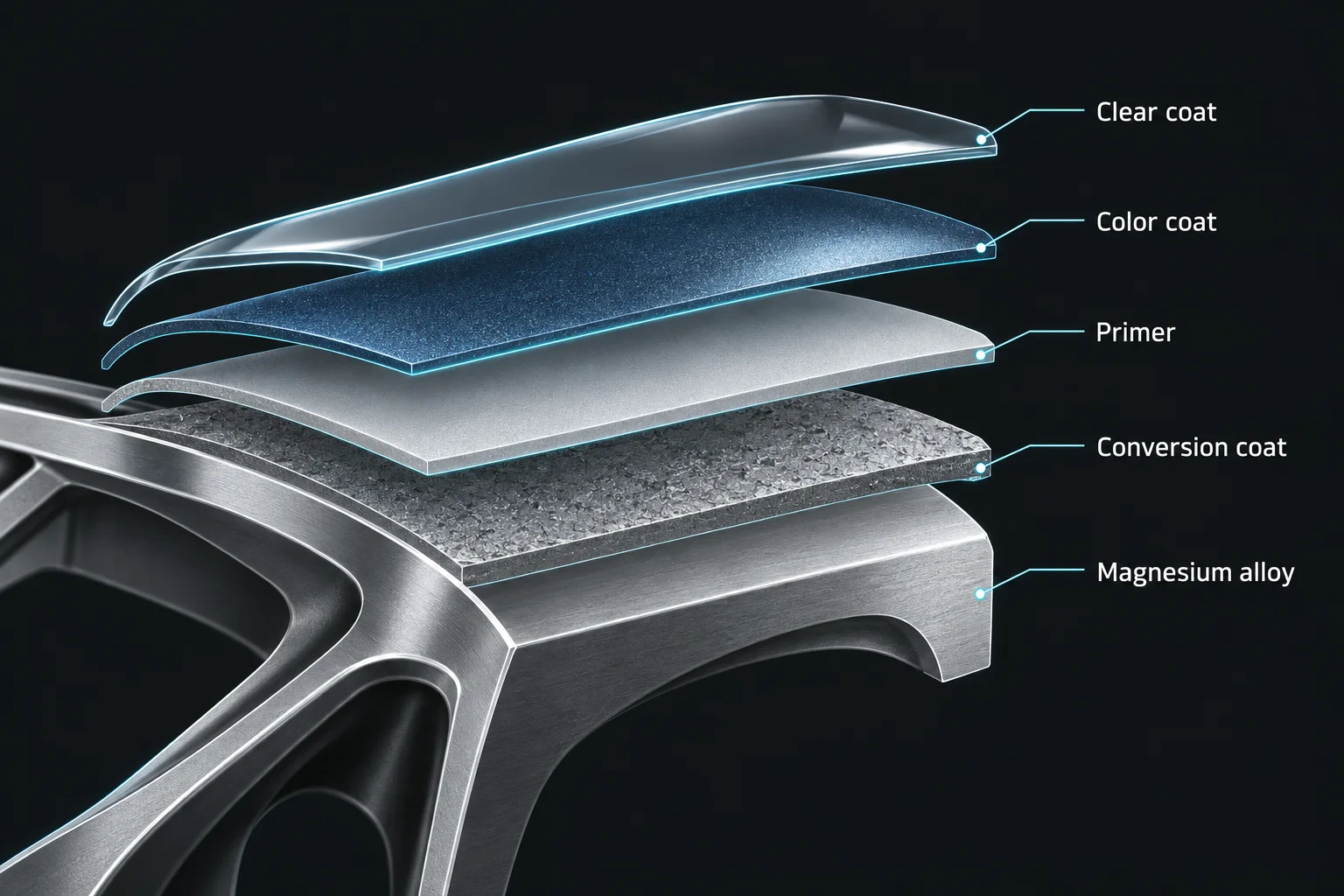
Protection on forged magnesium wheels is built up in layers, each with a different job. Exact chemistry and layer build vary between manufacturers and projects, so treat the table below as a description of the typical structure, not as a specification.
| Layer | Purpose | Notes |
|---|---|---|
| Surface preparation | Clean, degreased surface after machining | Contamination under coatings is a common cause of later failure |
| Pretreatment (conversion or anodic-type) | Converts the surface into a more stable layer and improves adhesion | The foundation of the system; coatings over untreated magnesium perform poorly |
| Primer | Seals the pretreated surface and adds a barrier | Coverage of edges, spoke windows and lug seats matters |
| Color coat | Appearance: color, metallic or texture | Specified per set: type, color, gloss and zones |
| Clear coat | Top barrier against moisture, chemicals and UV | Protects the color and makes cleaning easier |
The weakest point of any coating system is where it is thinnest or damaged: sharp edges, machined lug seats, the hub-mounting face and areas hit by stones or curbs. Ask how these zones are treated when you specify your set, and see custom wheel finishes for finish types.
Galvanic contact with steel hardware
Because galvanic corrosion needs metal-to-metal contact plus an electrolyte, prevention focuses on breaking that path. Good practice in the industry includes:
- Using wheel bolts or nuts with a suitable protective coating, and replacing corroded hardware
- Keeping the coating intact on lug seats and the hub-mounting face rather than leaving bare magnesium against steel
- Avoiding uncoated steel spacers, adapters or balance weights directly against bare magnesium
- Using the correct seat type and tightening torque so hardware does not move and wear through the finish
- Re-checking hardware contact areas whenever wheels are removed
Hardware and torque values are confirmed for your vehicle as part of fitment. See the wheel fitment guide for seat types and load considerations.
Salt, winter and cleaning
Road salt is the harshest everyday environment for any wheel and especially for magnesium. Many owners fit a separate set of wheels for winter. If forged magnesium wheels are driven in salty conditions, rinse them with clean water frequently, including the inner barrel and spoke backs where salt collects.
- Use pH-neutral wheel cleaners; avoid acidic or strongly alkaline products
- Use soft brushes and microfiber; avoid abrasive pads that wear through clear coat
- Rinse brake dust off regularly, since it can hold moisture against the finish
- Dry the wheels before long storage and store them clean, in a dry place
- Consider a wheel sealant or coating maintenance product compatible with clear coat
Inspection and repair
Corrosion on a well-finished magnesium wheel almost always starts at damage. A regular visual check catches it early, while repair is still cosmetic.
| Area | What to look for | Action |
|---|---|---|
| Spoke faces and lip | Stone chips, curb rash | Touch up chips promptly; refinish curb damage |
| Lug seats and hub face | Bubbling, white deposits, worn coating | Clean, assess and restore protection; check hardware |
| Inner barrel | Salt build-up, chipped paint behind weights | Rinse; repair damage; check weight type |
| Valve area | Corrosion around the valve hole | Inspect valve hardware and seal |
| Any area | Cracks, bends or impact damage | Stop using the wheel and have it professionally inspected |
Small chips can be sealed with a touch-up product to keep moisture out until proper repair. Larger damage or any corrosion that has lifted the finish should be handled by a refinisher experienced with magnesium, because the surface must be correctly prepared and pretreated again before recoating. Structural damage is a safety question, not a cosmetic one. For the wider safety picture, read are forged magnesium wheels safe?
Magnesium vs aluminum corrosion
Forged aluminum, typically 6061-T6, forms a protective oxide and is more forgiving if the finish is chipped. Forged magnesium saves more weight but needs the finish system and care routine above. If your car sees daily winter use with heavy salt, forged aluminum may be the more practical choice; for a performance or show build with attentive care, forged magnesium is a realistic option. Compare both in magnesium vs aluminum wheels.
Questions about forged magnesium corrosion protection
Do forged magnesium wheels corrode easily?
Bare magnesium does. Forged magnesium wheels are protected by a multi-layer finish system, so corrosion usually begins only where that finish is damaged or where steel hardware contacts bare metal.
What coating do magnesium wheels use?
Typically a layered system: surface preparation, a conversion or anodic-type pretreatment, primer, color coat and clear coat. The specific system for your set is confirmed per project.
Can I drive magnesium wheels in winter?
It is possible with frequent rinsing and prompt repair of chips, but road salt is very aggressive. Many owners use a separate winter set.
How do I prevent galvanic corrosion?
Keep the coating intact on lug seats and the hub face, use suitable coated hardware, avoid bare steel against bare magnesium, and use correct torque.
Can corroded magnesium wheels be repaired?
Cosmetic corrosion can usually be repaired by a refinisher experienced with magnesium, who prepares, pretreats and recoats the area. Cracks or impact damage need professional inspection.
Are your magnesium wheels custom?
Yes. VEXORA does not keep a stock catalog or ready-to-ship inventory. Every wheel is engineered and forged to your vehicle, dimensions and finish. Every VEXORA set is made to order, and custom orders start from a single pair. MOQ: 1 pair (2 wheels).
Specify your forged magnesium set
Tell us how the car will be used, road, track or show, and in which climate, so the finish specification and care advice match your conditions. Production typically takes approximately 20 days once the specification, drawings and finish are approved, confirmed per project. Shipping time varies by destination country. Where DDP (Delivered Duty Paid) is available for your country, orders ship DDP: import duties and taxes are handled and the wheels are delivered to your door. Request a quote for custom forged magnesium wheels. Email sales@vexoraforged.com or message WhatsApp +86 159 2056 8771.