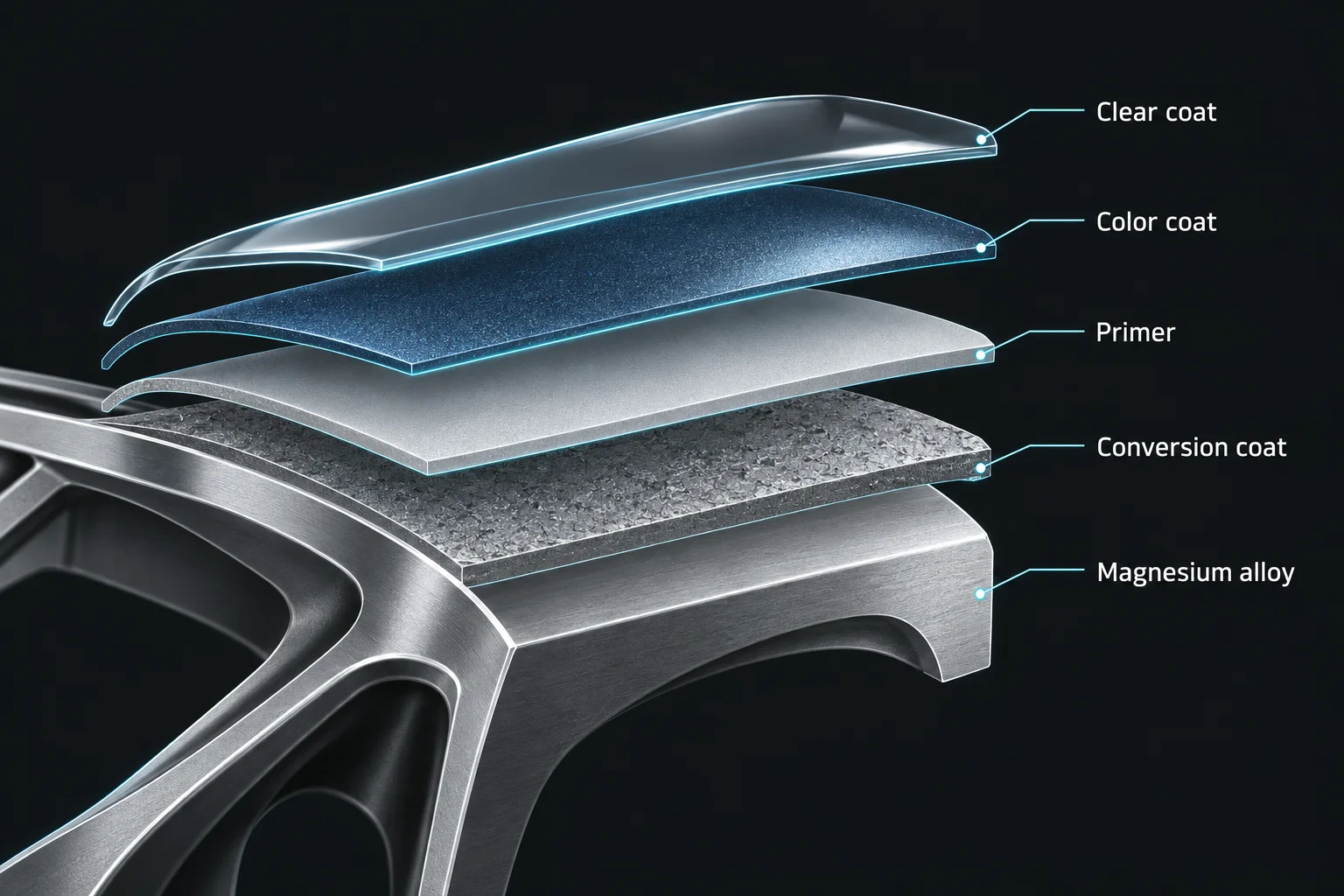
Why magnesium wheels have a reputation
Early magnesium racing wheels were often cast, and protective coatings were limited. Corrosion and cracking stories from that era still shape opinions. Modern forged magnesium wheels use forging-grade wrought alloys such as AZ80- and ZK60-type magnesium and multi-layer protective finishes.
Will magnesium wheels catch fire?
A solid wheel does not ignite in normal driving. Magnesium burns as fine chips, powder or at very high temperatures, conditions far beyond normal braking. In a severe vehicle fire many materials burn; the wheel material is not the usual concern.
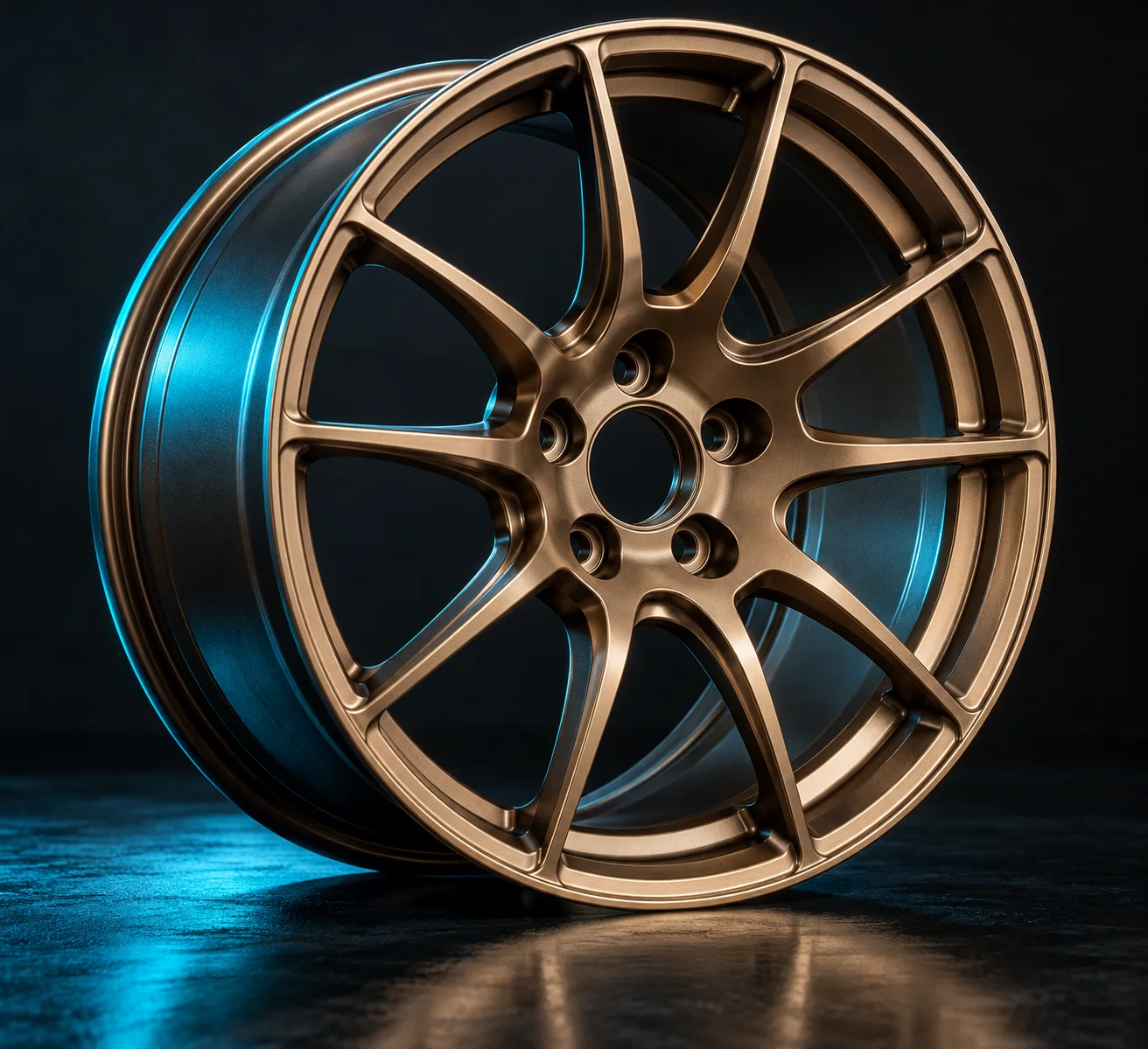
Strength: forged vs cast magnesium
Forging compacts the metal and aligns grain flow with the shape, reducing porosity that can affect cast parts. A forged magnesium wheel is designed to a load requirement just like aluminum; specify it for your vehicle.
Corrosion: the real issue
Magnesium is reactive. Safety and longevity depend on the protective system (pretreatment, primer, color, clear coat) and on avoiding galvanic contact with steel. Chips should be repaired promptly.
Care checklist
- Use pH-neutral wheel cleaners; avoid acidic or strongly alkaline products
- Rinse road salt off in winter
- Touch up chips and curb damage quickly
- Use correct hardware and torque
- Have impact damage inspected
Are magnesium wheels legal for the road?
Road-legal status depends on the wheel meeting applicable rules in your market, not on the material. Required documents are confirmed per project.
How forged magnesium wheels are made
A magnesium billet is heated within a controlled temperature window and pressed in closed dies. The forging is heat treated where the alloy calls for it, then CNC machined to the approved drawing and finished. Process control matters more than with aluminum because magnesium forges in a narrower window. Every VEXORA magnesium set is made to order; see custom forged magnesium wheels.
Magnesium alloys used in forged wheels
AZ80-type alloys (magnesium with about 8% aluminum and a little zinc) balance strength, forgeability and cost. ZK60-type alloys (magnesium with zinc and zirconium) offer high strength and fine grain. The alloy for a given wheel is confirmed per project.
Weight and performance benefits
Magnesium is about a third less dense than aluminum. Used well, that reduces unsprung and rotating mass, improving steering response, braking feel and ride over rough surfaces. The actual saving depends on design and load requirement, so compare documented weights at the same size.
The protective finish system
Industry practice builds protection in layers: a chemical conversion or anodic-type pretreatment, primer, color coat and clear coat, with particular attention to edges, lug seats and the hub face. Steel hardware should not sit directly on bare magnesium. A damaged coating is the main path to corrosion, which is why prompt repair matters.
Winter and climate
Road salt accelerates corrosion on any wheel. Many owners use magnesium wheels for spring to autumn and a separate winter set. If you plan year-round use in a salted climate, say so in your brief so the finish can be specified with that in mind.
Inspection and repair
After a hard impact, have the wheel inspected for cracks and runout. Cosmetic coating damage can usually be repaired by a refinisher experienced with magnesium; structural damage means replacement. Do not straighten or weld magnesium wheels.
Magnesium vs aluminum: when each makes sense
Choose forged magnesium when minimum weight is the priority and you accept a higher price and more careful ownership. Choose forged aluminum for a simpler, more forgiving all-round wheel. Full comparison: magnesium vs aluminum wheels.
Are magnesium wheels allowed on the road?
Rules depend on the market, not on the material. In some countries wheels must meet a national standard or carry specific markings; in others the vehicle owner is responsible for fitting suitable parts. If your market or insurer requires particular tests or documents, include that requirement in your brief so it can be addressed in the specification and confirmed per project. Do not rely on a generic certificate that does not name the design and size you are buying.
Hardware and installation
Use the correct seat type and thread, clean hub faces, and torque to the vehicle manufacturer's value in a star pattern with a calibrated wrench. Re-check torque after the first short drive. Avoid impact guns on magnesium wheels, and do not use anti-seize on lug threads unless the vehicle manufacturer specifies it. Where steel hardware meets the wheel, the coating and any isolating washers protect against galvanic corrosion.
Cleaning and long-term care
Wash with a pH-neutral wheel cleaner and soft brushes, rinse thoroughly and dry. Avoid acidic wheel cleaners and abrasive pads, which can damage the clear coat. Brake dust is corrosive if left for long periods, so clean regularly. A ceramic or wax coating over the clear coat makes cleaning easier. Store wheels clean and dry if you swap to a winter set. Inspect the coating around the lug seats and inner barrel when tires are changed.
Who should choose magnesium?
Forged magnesium makes most sense for owners and builders who value every gram of unsprung mass: track-day cars, high-performance road cars and builds where the wheel is a centerpiece. For these customers, the lighter material is worth the higher price and the more careful ownership. If you want a lower-maintenance wheel for year-round use, forged aluminum is usually the more practical choice. Either way, every VEXORA set is fully custom, made to order from one pair.
Safety starts in production
Much of a magnesium wheel's long-term behaviour is decided in the factory: controlled forging temperature, appropriate heat treatment, careful machining with proper handling of chips, deburred edges so coatings cover properly, and a protective system applied promptly to the clean surface. Ask your supplier how each of these steps is handled for your wheels. More in how forged wheels are made and CNC machining of forged wheels.
Choosing a finish for a magnesium wheel
Opaque coatings such as satin or gloss paint and powder coat give the most robust protection on magnesium, because the whole surface is sealed by primer, color and clear coat. Bare polished or brushed metal effects that are common on aluminum are generally less suitable for magnesium; tinted or metallic paints can achieve a similar look while keeping the protective layers intact. Agree the finish in writing, see finishes.
Magnesium wheels and insurance or inspections
Some owners are asked about aftermarket wheels by insurers or at periodic vehicle inspections. Keep the specification, the approved drawing and any project documents with the car's paperwork. A clear record of alloy, size, load rating and offset makes those conversations straightforward, whatever material the wheel is made from.
FAQ
Can magnesium wheels be daily driven?
Yes, with proper finish and care.
Are your magnesium wheels custom?
Yes. Every set is made to order. Every VEXORA set is made to order, and custom orders start from a single pair. MOQ: 1 pair (2 wheels).
Lead time?
Production typically takes approximately 20 days once the specification, drawings and finish are approved, confirmed per project. Shipping time varies by destination country. Where DDP (Delivered Duty Paid) is available for your country, orders ship DDP: import duties and taxes are handled and the wheels are delivered to your door.
Explore custom forged magnesium wheels or compare magnesium vs aluminum.