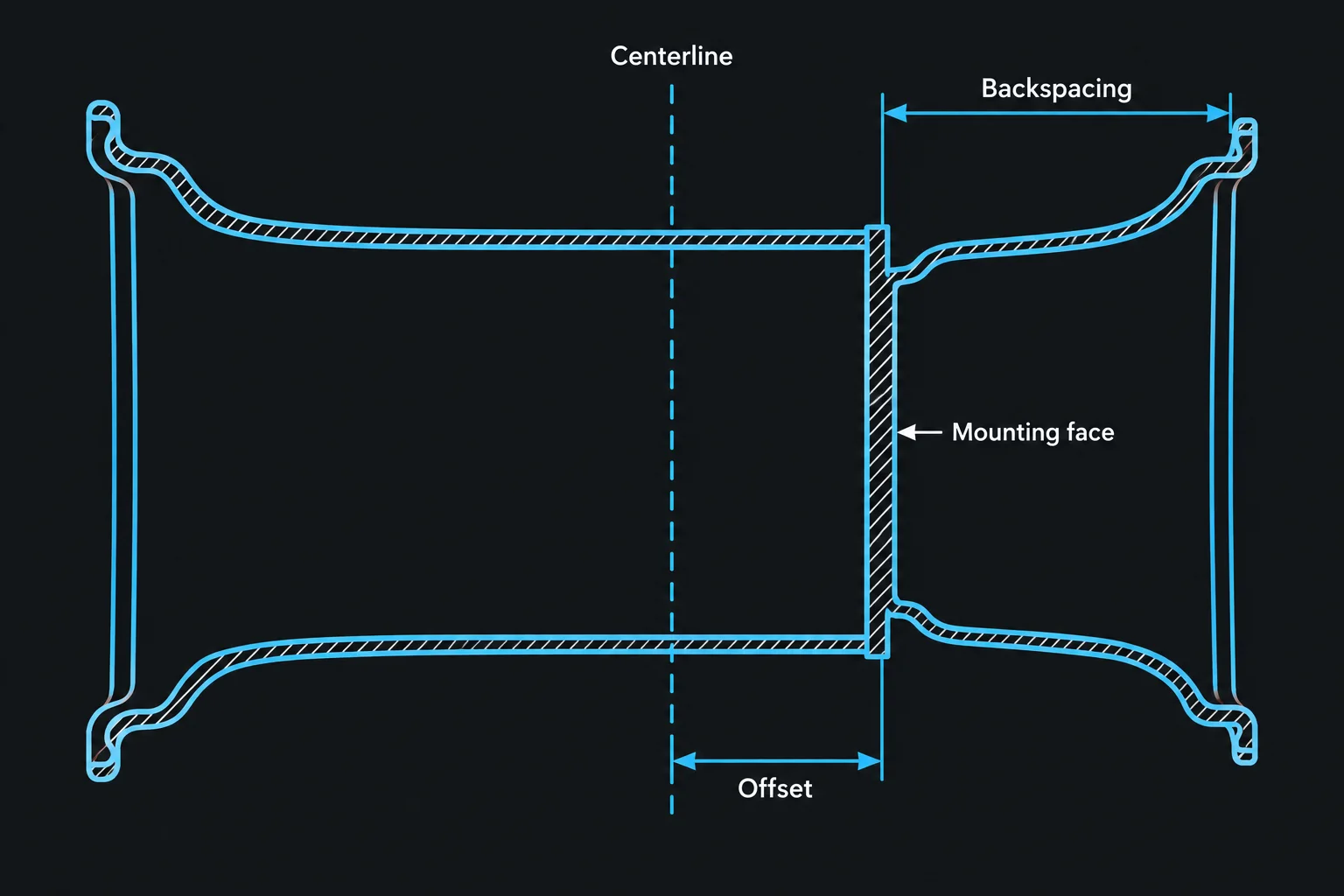
Step 1: Vehicle and use
Year, make, model, trim and market; brake system and any big-brake kit; suspension changes; road, track or show use. Use defines load requirement and material choice.
Step 2: Material
Forged aluminum (6061-T6) suits most builds. Forged magnesium (AZ80/ZK60-type) is for when minimum weight matters most. See magnesium vs aluminum.
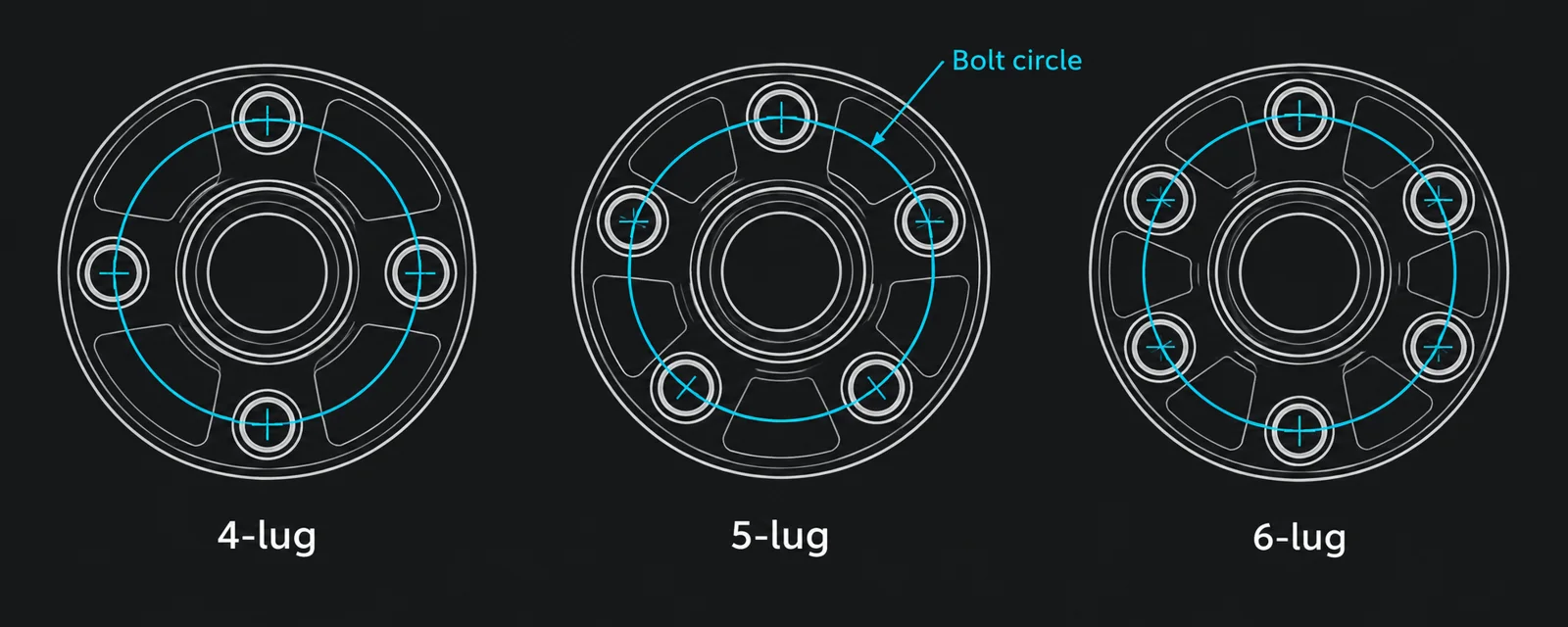
Step 3: Construction
Monoblock for weight and stiffness; 2-piece or 3-piece for lip depth and modular widths.
Step 4: Dimensions and fitment
| Item | Example |
|---|---|
| Diameter x width (front/rear) | 20x9.5 / 20x11 |
| Offset (front/rear) | ET30 / ET40 |
| PCD | 5x112 |
| Center bore | 66.5 mm |
| Seat / thread | Conical, M14x1.5 |
| Tire sizes | 255/35R20, 295/30R20 |
| Brake | Caliper model or template |
Examples only; your values are confirmed against the vehicle. See the fitment guide.
Step 5: Design direction
Spoke count and style (split, mesh, multi-spoke, directional), face profile (flat, concave, deep concave), and reference images. Profile depth depends on width and offset.
Step 6: Finish
Type, color, gloss and zones (face, windows, lip, barrel). See finishes.
Step 7: Quantity, delivery, timing
Every VEXORA set is made to order, and custom orders start from a single pair. MOQ: 1 pair (2 wheels). Production typically takes approximately 20 days once the specification, drawings and finish are approved, confirmed per project. Shipping time varies by destination country. Where DDP (Delivered Duty Paid) is available for your country, orders ship DDP: import duties and taxes are handled and the wheels are delivered to your door.
Why the specification matters more than the label
"Forged" describes how a wheel is made, not whether it suits your car. Two forged wheels of the same size can differ in alloy, load capacity, weight and fitment. A complete specification removes that ambiguity: it is the document the drawing, the forging, the machining and the finish are all checked against. Because every VEXORA set is fully custom and made to order, the specification is the product.
Choosing a face profile
Profile describes how far the spoke face sits behind the outer lip. Flat faces suit narrower wheels and higher offsets; concave and deep-concave faces become possible as width increases and offset decreases, because there is more depth between the mounting pad and the lip. Ask to see the profile on the drawing at your actual width and offset rather than relying on a photo of a different size.
Spoke design and brake clearance
Big brake kits push calipers toward the spoke back. Concave designs can curve away from the caliper, but the clearance must be measured. Provide the caliper model or a manufacturer template. Spoke count also influences cleaning, brake visibility and weight.
Load rating and vehicle weight
The rated load per wheel should exceed half the heaviest axle load with a sensible margin. Electric vehicles and large SUVs are heavy, and lightweight designs need care here. State the vehicle, any modifications and the intended use (road, track, towing) so the load requirement can be set.
Staggered vs square setups
Staggered sets use wider rear wheels, often with different offsets, for appearance and rear traction. Square setups allow tire rotation and are common for track use. Both are specified independently front and rear on a custom order.
Hardware and accessories
Confirm the lug bolt or nut thread, seat type and length; whether hub-centric machining removes the need for centering rings; valve stems and TPMS compatibility; and center caps. Multi-piece wheels add assembly hardware and sealing.
Common mistakes
- Choosing offset from a forum post rather than measuring
- Forgetting the brake upgrade planned for next year
- Approving a render without approving the drawing
- Describing finish only as a color name
- Ignoring tire availability for the chosen size
A sample brief
"2022 BMW M3 (G80), carbon-ceramic brakes, road and occasional track. Forged aluminum monoblock, 20x9.5 front / 20x10.5 rear, offsets to be confirmed for flush fitment on Michelin PS4S 275/35 and 285/30. 5x112, 66.6 mm bore, conical seat. Deep concave split-spoke, satin bronze. One set, delivery to Germany." This is an illustrative example; your values are verified against your vehicle.
Monoblock, 2-piece or 3-piece: deciding in practice
Start from the priority. If weight and stiffness come first, monoblock is usually the most efficient choice, because the center and barrel are one forging with no joints or assembly hardware. If the look depends on a deep stepped lip, or you want the flexibility to change widths, a multi-piece construction may suit better: a 2-piece joins a forged center to a barrel; a 3-piece uses a center with separate inner and outer barrels. Multi-piece wheels involve more parts to seal and maintain, and the construction available for a given design and size is confirmed per project.
Measuring your current setup
Your existing wheels are a useful reference. Note the size and offset stamped on the back of the spokes, the tire sizes on the sidewall, and how far the tire sits from the fender and the strut. Measure the gap from the inside of the tire to the suspension at full lock, and from the outer tire to the fender lip. If you have changed ride height, measure at your actual height. These numbers let the new offset and width be set precisely instead of guessed. The wheel fitment guide explains each value.
Writing a finish specification
A finish specification is more than a color name. State the finish type (powder coat, liquid paint, brushed, polished, machined face), the color reference, the gloss level (matte, satin, gloss), and which zones receive which treatment: face, spoke sides, windows, lip, barrel and hardware. For forged magnesium wheels, the protective system is part of the finish. Approve a reference image together with the written description. More in custom forged wheel finishes.
From brief to drawing approval
Once the brief is in, fitment is reviewed, open values are proposed, and a technical drawing is issued showing the profile, spoke geometry, offset, center bore and lug seats. Review it carefully: this is the point where changes are simple. After approval and order confirmation, production typically takes approximately 20 days once the specification, drawings and finish are approved, confirmed per project. Shipping time varies by destination country. Where DDP (Delivered Duty Paid) is available for your country, orders ship DDP: import duties and taxes are handled and the wheels are delivered to your door. Every VEXORA set is made to order, and custom orders start from a single pair. MOQ: 1 pair (2 wheels).
How your specification flows into production
Each part of the brief drives a production step. Material and construction decide the billet and forging route. Diameter, width and profile decide the blank and the barrel operations. Spoke design drives the 3D milling program. PCD, center bore and seat type are drilled and machined at the end of machining. Finish choices decide pretreatment, coating, brushing or polishing and clear coat. A complete brief therefore shortens the time to an accurate drawing. See how forged wheels are made and the custom process.
Checklist before you send the brief
- Vehicle year, make, model and trim
- Brake system and planned upgrades
- Ride height and suspension changes
- Material and construction preference
- Known sizes, offsets and tire sizes
- Design references and finish direction
- Quantity and delivery country
Include capacity early in the brief: forged wheel load rating explains what to ask for without relying on invented catalog numbers.
FAQ
What if I do not know my offset?
Leave it open; fitment is reviewed before the drawing is approved.
Can front and rear differ?
Yes, staggered sets are specified independently.
Send your brief. Email sales@vexoraforged.com or message WhatsApp +86 159 2056 8771.
Model-specific example: Mercedes monoblock wheels.