The short answer to carbon fiber vs forged wheels: carbon fiber typically offers the lowest mass at a given size, very high stiffness, and a distinctive woven appearance. Forged aluminum usually makes the stronger all-around case for customization, cost, inspection, and everyday ownership. Forged magnesium is the lightweight metal middle ground. Choose around your driving conditions, brake package, damage risk, and replacement budget—not material alone.
Key takeaways
- Carbon fiber excels at low mass: its stiffness and distinctive appearance appeal to performance-focused and show builds.
- Forged aluminum balances priorities: broad customization, accessible refinishing, and generally lower costs suit street and track use.
- Forged magnesium bridges the gap: it reduces mass relative to comparable aluminum designs while retaining a metal construction.
- Impact history matters: any wheel needs inspection after a significant strike; carbon damage can be harder to see.
- Compare complete ownership: include fitment, finish care, inspection, replacement, and delivery—not just the initial purchase.
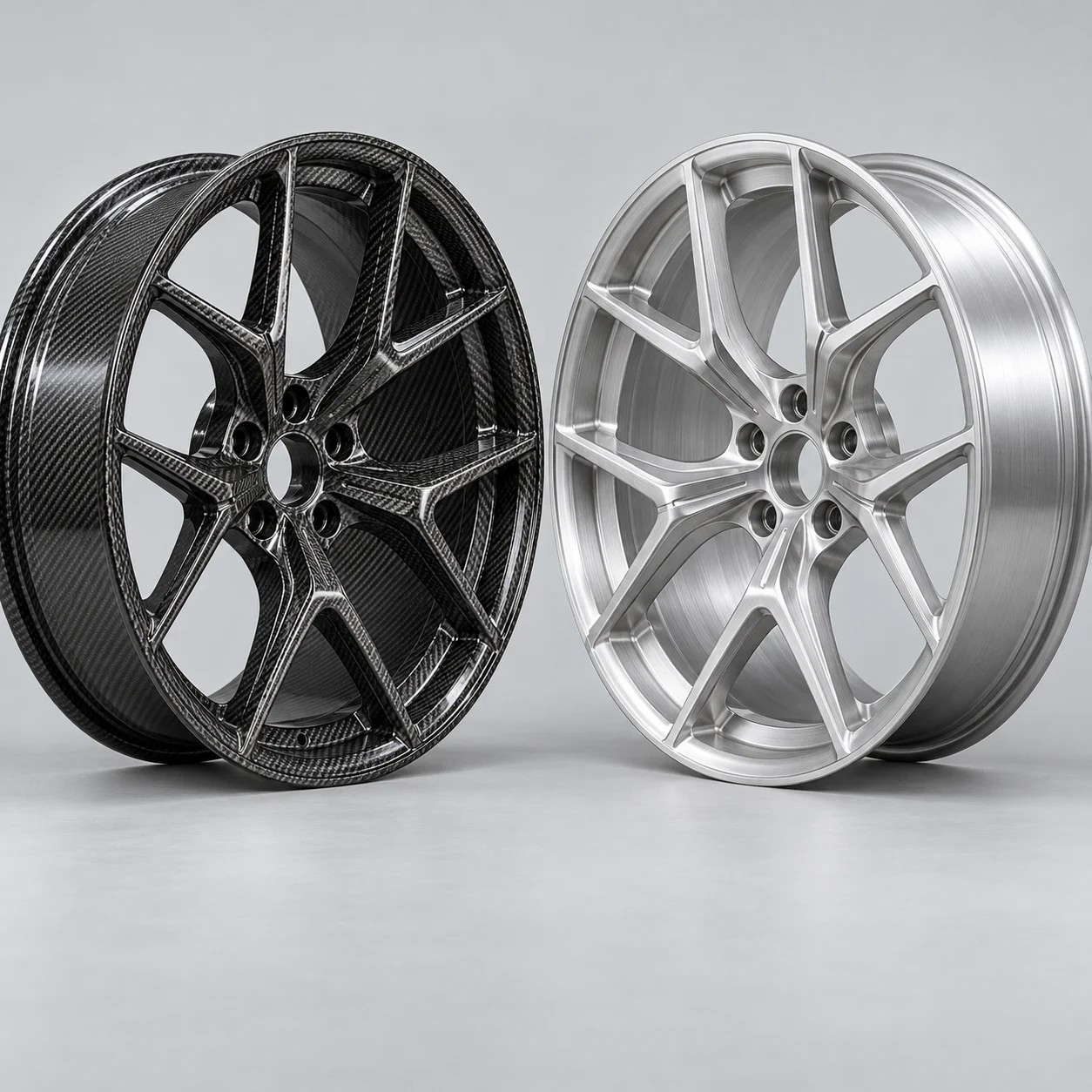
What is the difference between carbon fiber and forged wheels?
Carbon fiber wheels use fiber layers arranged in specific directions and bonded with resin. The layup is molded and cured into a structural component. Fiber orientation, resin selection, and manufacturing quality determine how that structure handles loads and heat.
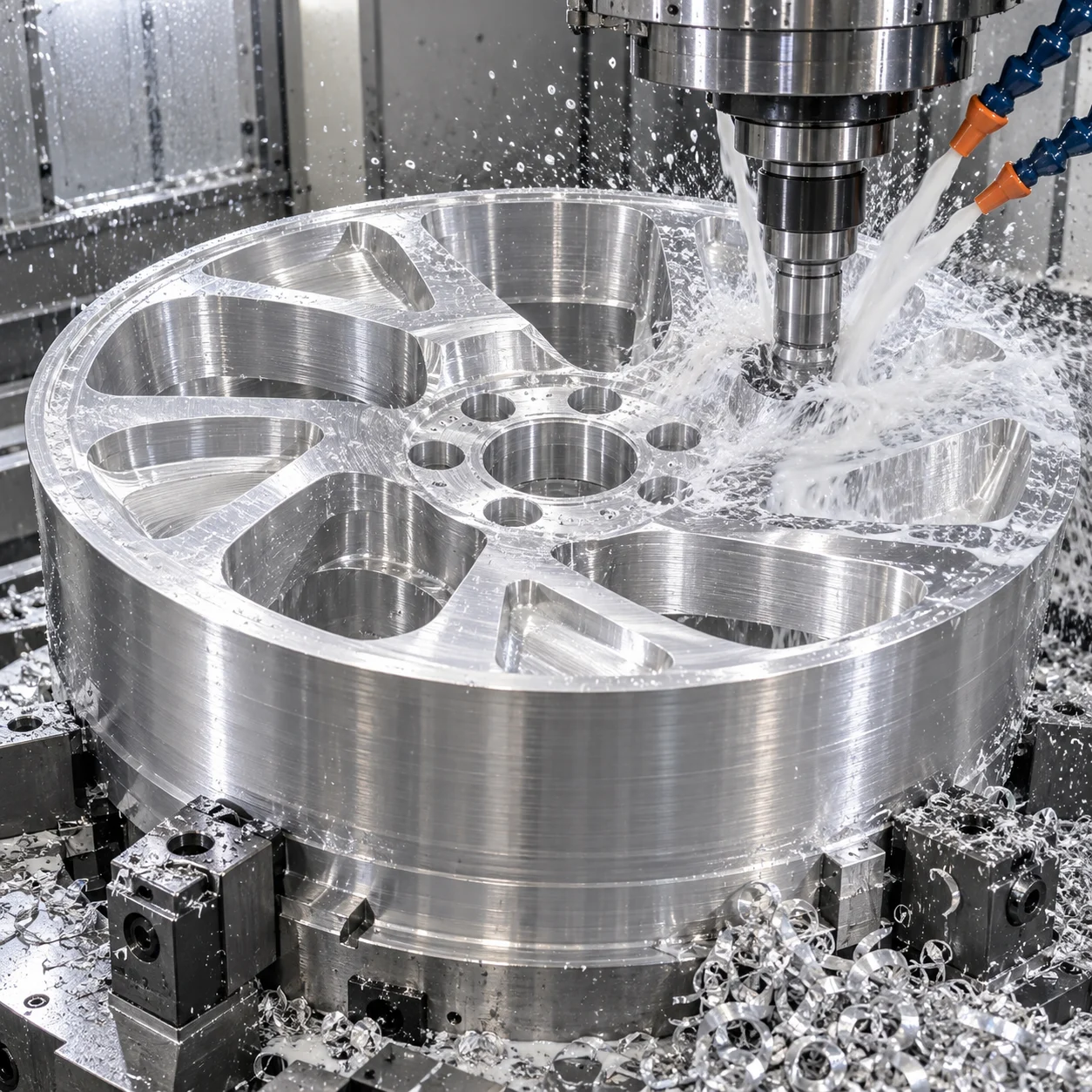
Forged metal wheels start with a solid billet pressed under high pressure, then CNC machined into the finished design. Aluminum and magnesium provide different balances of mass, cost, and care requirements. Read how forged wheels are made for the process behind the finished wheel.
Material is only part of the decision. Geometry, construction, intended vehicle, and manufacturing quality all matter. A lighter wheel is not automatically better suited to your car or driving conditions.
How should you compare carbon fiber vs forged wheels?
| Consideration | Carbon fiber | Forged aluminum | Forged magnesium |
|---|---|---|---|
| Typical mass | Typically lowest at a comparable size | Usually heavier than the alternatives | Lightweight metal middle ground |
| Stiffness | Very high; layup-dependent | High with appropriate design | Design-dependent; geometry matters |
| Impact/damage behavior | Can crack or develop internal damage | May bend or crack under impact | May deform or crack under impact |
| Inspection after a hit | Manufacturer-directed assessment recommended | Visible damage and runout checks help | Visible checks plus specialist assessment |
| Repair/refinish | Specialized and manufacturer-dependent | Generally broader options; damage-dependent | Specialist processes and coating care |
| Custom sizes & finishes | Often limited by available molds | Broad custom possibilities | Custom possibilities with material-specific finishes |
| Cost level | Usually highest | Usually most accessible here | Usually above forged aluminum |
| Best fit use | Maximum mass reduction and distinctive builds | Versatile street, track, and custom builds | Weight-conscious builds favoring metal |
Are carbon fiber wheels lighter than forged wheels?
Typically, yes, when comparing similar sizes and intended loads. Carbon fiber's low mass and very high stiffness are genuine advantages. Reducing unsprung and rotating mass can help suspension response and vehicle responsiveness, although tires and the complete setup influence the result.
Forged magnesium deserves consideration when mass is a priority but you prefer metal. Compare finished wheel designs for your actual application rather than assuming a material guarantees the lightest result. Width, brake clearance, spoke geometry, and required load capacity all affect mass.
Which is safer after a pothole or curb strike?
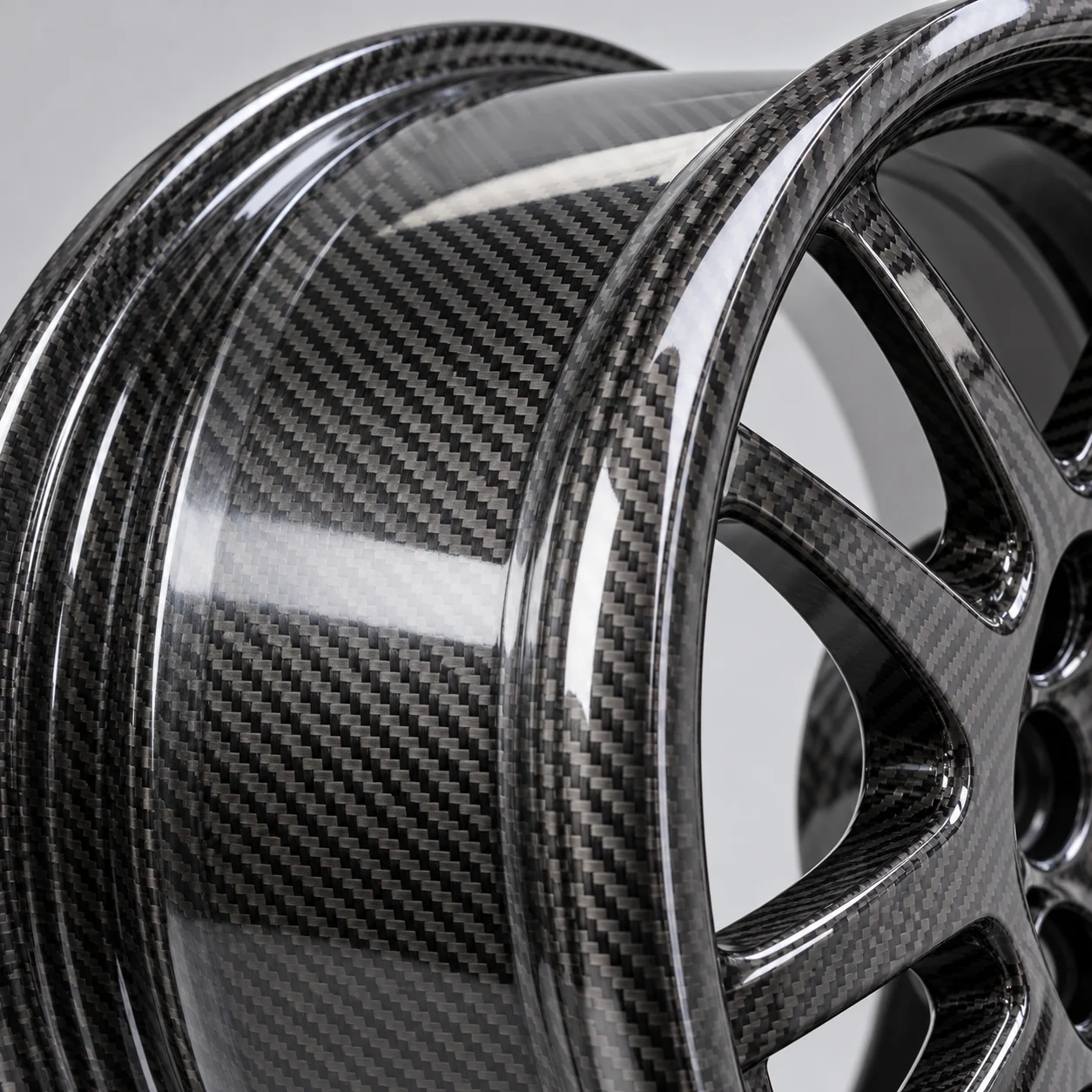
No material earns an automatic pass after a hard hit. Forged metal generally offers more familiar inspection routes and damage behavior, but a wheel that looks straight may still be unsafe. With carbon fiber, damage can be harder to see, including damage beneath the surface.
- Start with a visual check: look for cracks, deformation, coating disruption, tire damage, and air loss. Stop driving if damage is suspected.
- Check runout: have a qualified shop measure wheel runout and assess the tire and bead seating.
- Get professional inspection: follow the wheel manufacturer's criteria. For carbon fiber, request manufacturer inspection or an authorized assessment.
Do not treat balancing or cosmetic refinishing as proof of structural safety. Repair suitability depends on damage location, severity, material, and manufacturer guidance.
Which costs more to buy and to own?
Carbon fiber wheels usually cost more initially and can involve specialized inspection or replacement after damage. Forged aluminum is generally the most cost-accessible choice here, while forged magnesium typically commands a premium over aluminum.
Forged metal also offers broader refinishing options. Magnesium needs material-appropriate surface preparation and protective coatings. With suitable multi-piece designs, a damaged barrel or lip may be replaceable rather than requiring an entire wheel replacement. Confirm component availability and approved procedures; not every damaged assembly is repairable.
One-off sizing and finish choices are usually more accessible with forged metal than mold-dependent carbon designs. Include downtime and replacement logistics in the budget, especially for a daily driver.
Which suits street, track and show builds?
Street: prioritize damage tolerance and serviceability
Potholes, rough pavement, and curb exposure make forged aluminum a practical default. Its balance of cost, inspection access, and finish options supports regular use. Forged magnesium suits buyers who value lower mass and accept more careful coating maintenance.
Track: evaluate the complete operating environment
Carbon fiber can excel when reducing mass is the priority. Forged aluminum remains compelling for repeated use where inspection, replacement cost, and durability matter. Forged magnesium offers another weight-conscious route, provided the specific wheel is appropriate for the application.
Brake heat deserves attention with every material. Carbon composites depend on their resin system and thermal protection; metals also have temperature limits and conduct heat differently. Confirm intended track suitability, brake clearance, and any required heat shielding with the wheel manufacturer.
Show: choose the visual language
Carbon weave has a distinctive look that paint cannot replicate. Forged metal offers broad freedom in spoke design, surface treatment, and finish. Decide whether exposed composite texture or a fully personalized metal design better fits the build.

How do you decide? A 5-step checklist
Make the carbon fiber vs forged wheels decision against your actual build requirements:
1. Define use. Identify daily driving, rough-road exposure, track sessions, or show priorities.
2. List your weight goal. Decide how much purchase cost and maintenance you will accept to pursue lower mass.
3. Check brake clearance. Document calipers and brake modifications, then review brake clearance requirements.
4. Check fitment. Confirm vehicle specifications from documentation or measurement. Include suspension changes and tire plans using the wheel fitment guide.
5. Set budget and lead time. Allow for tires, delivery, inspection, and potential replacement—not just the wheel purchase.
Getting a custom forged set from VEXORA
Every VEXORA set is 100% custom and made to order in forged aluminum or forged magnesium. There is no stock catalog or ready-to-ship inventory. The minimum order is one pair, or two wheels.
Customers approve drawings before forging. Production typically takes about 20 days after specifications, drawings, and finish are approved. Shipping time varies by country; DDP delivery, with duties and taxes handled and delivery to your door, is available where supported for your country.
Explore custom forged wheels, forged magnesium wheels, and magnesium versus aluminum. Compare monoblock construction with three-piece construction before specifying your build.
Request a forged wheel quote · WhatsApp · sales@vexoraforged.com
Carbon fiber vs forged wheels — FAQ
Are carbon fiber wheels always the best performance choice?
No. They typically excel at low mass and stiffness, but suitability also depends on loads, brake heat, road conditions, and inspection requirements.
Can a damaged carbon fiber wheel be repaired?
Ask the manufacturer. Cosmetic damage and structural damage require different assessments; do not authorize a generic composite repair without wheel-specific approval.
Is forged magnesium practical for street use?
It can be, when designed for the application. Follow coating-care and inspection instructions, and address coating damage promptly.
What matters most in carbon fiber vs forged wheels for a daily driver?
Prioritize correct fitment, road conditions, inspectability, and replacement cost. Forged aluminum usually provides the most balanced ownership proposition.
How do other metal wheel constructions compare?
Read forged versus cast wheels and forged versus flow-formed wheels to separate manufacturing differences from material choices.