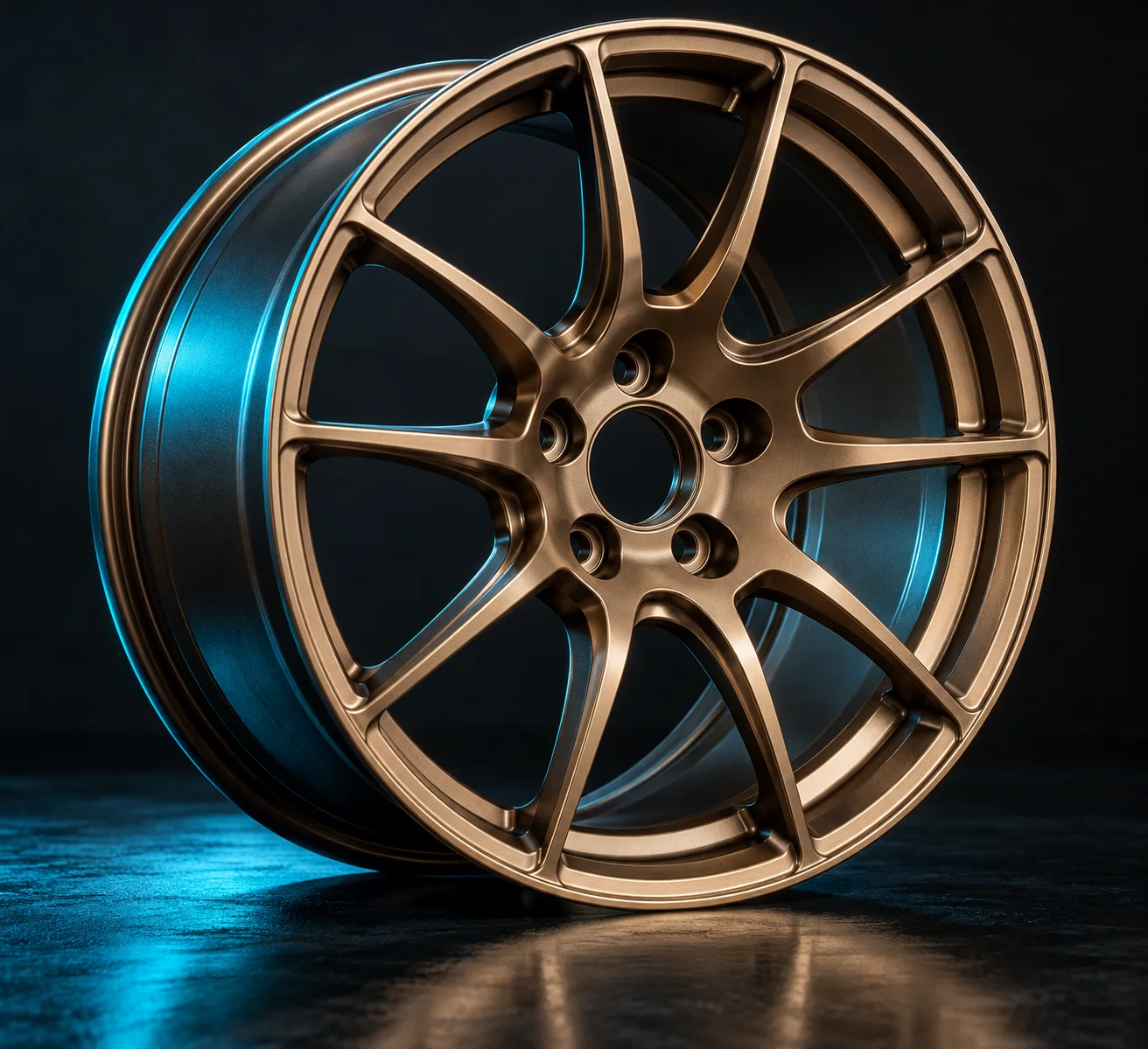
Where the saving comes from
Magnesium alloys have a density of roughly 1.8 g/cm³ against roughly 2.7 g/cm³ for aluminum, about a third less. If a magnesium wheel used exactly the same volume of metal as an aluminum one, it would be about a third lighter. In practice designers adjust wall thicknesses and spoke sections to meet the load requirement in each material, so the real saving is smaller than the pure density ratio and depends on the design. Compare documented weights for the same size and load rating.
Why load rating limits the saving
Heavier vehicles need wheels with higher load ratings, which means more material regardless of alloy. A lightweight sports car allows slim spokes in either material; a heavy EV or SUV needs more substantial sections. The heavier the car, the more the design is governed by strength rather than by minimum mass, and the saving in kilograms can still be meaningful even if the percentage is lower.
Car class guide
| Car class | Typical sizes | What magnesium offers | Notes |
|---|---|---|---|
| Lightweight sports cars and track cars | 18-20 in | Largest relative benefit in handling and response | Load ratings modest; slim designs possible |
| Performance coupes and sedans | 19-21 in, staggered | Clear gains in steering feel and ride | Wide rears add mass in either material |
| Supercars | 20-21 in, often staggered | Premium weight reduction where every kilogram counts | Brake clearance and load closely reviewed |
| Electric sedans | 19-21 in | Helps offset vehicle mass; ride and efficiency benefits | High load ratings required |
| Large SUVs and luxury cars | 21-23 in | Meaningful kilograms saved on very large wheels | Load rating dominates design |
These are qualitative directions, not test results. The weight target for your wheel is documented on its specification.
Unsprung mass and rotating inertia
Wheel weight is unsprung: it sits below the springs, so less of it lets the suspension keep the tire in contact with the road more easily. It is also rotating: mass toward the rim must be accelerated and braked with every speed change. Removing mass from the barrel and rim area has the largest effect on rotational inertia.
What drivers notice
- Sharper turn-in and steering response
- Better ride over sharp bumps
- Crisper throttle and braking response
- Less effort for the suspension on rough roads
Comparing a magnesium quote
Ask for the documented weight of the proposed magnesium wheel and the equivalent aluminum design at the same size and load rating. That is the only fair comparison. Also compare finish system, care requirements and price. See magnesium vs aluminum wheels.
Design choices that add or remove weight
- Spoke count and section: fewer, thinner spokes are lighter
- Back-side pocketing: removes mass where loads are low
- Concave depth: very deep faces can add material
- Construction: monoblock is usually lightest
- Width: wider barrels weigh more
Is magnesium worth it for your car?
For track-focused cars and high-performance road cars, magnesium is the most direct way to reduce unsprung mass with a wheel. For heavy daily-driven cars in harsh climates, forged aluminum may offer better value and simpler ownership. Read are forged magnesium wheels safe? for care considerations.
Illustrative calculation
Imagine an aluminum wheel design that uses a given volume of metal. The same volume in magnesium would weigh about two thirds as much because of the density difference. If the magnesium design then needs some extra section in highly loaded areas to meet the same load rating, part of that saving is used up. The net result depends on how much of the wheel is governed by strength and how much by minimum practical wall thickness. This is why a documented weight for the specific design is the only reliable figure.
Sports and track cars in detail
On a lightweight sports car, the wheels are a significant share of unsprung mass, so the relative effect of magnesium is large. Drivers typically notice steering response and the way the car settles over bumps. Track sets also benefit from reduced rotating inertia during repeated braking and acceleration.
EVs and SUVs in detail
Electric vehicles and large SUVs are heavy, use large diameters and need high load ratings. Magnesium can still remove meaningful kilograms from big wheels, which helps ride quality, but the design is governed by strength. Discuss your vehicle's axle loads and use so the load requirement is set correctly.
Balancing weight against care and cost
Forged magnesium costs more and needs a protective finish system and sensible care. For many owners, a well-designed forged aluminum wheel delivers most of the benefit at lower cost; for others, the additional saving of magnesium is exactly the point. See cost factors and custom forged magnesium wheels.
Choosing the right finish for a light magnesium wheel
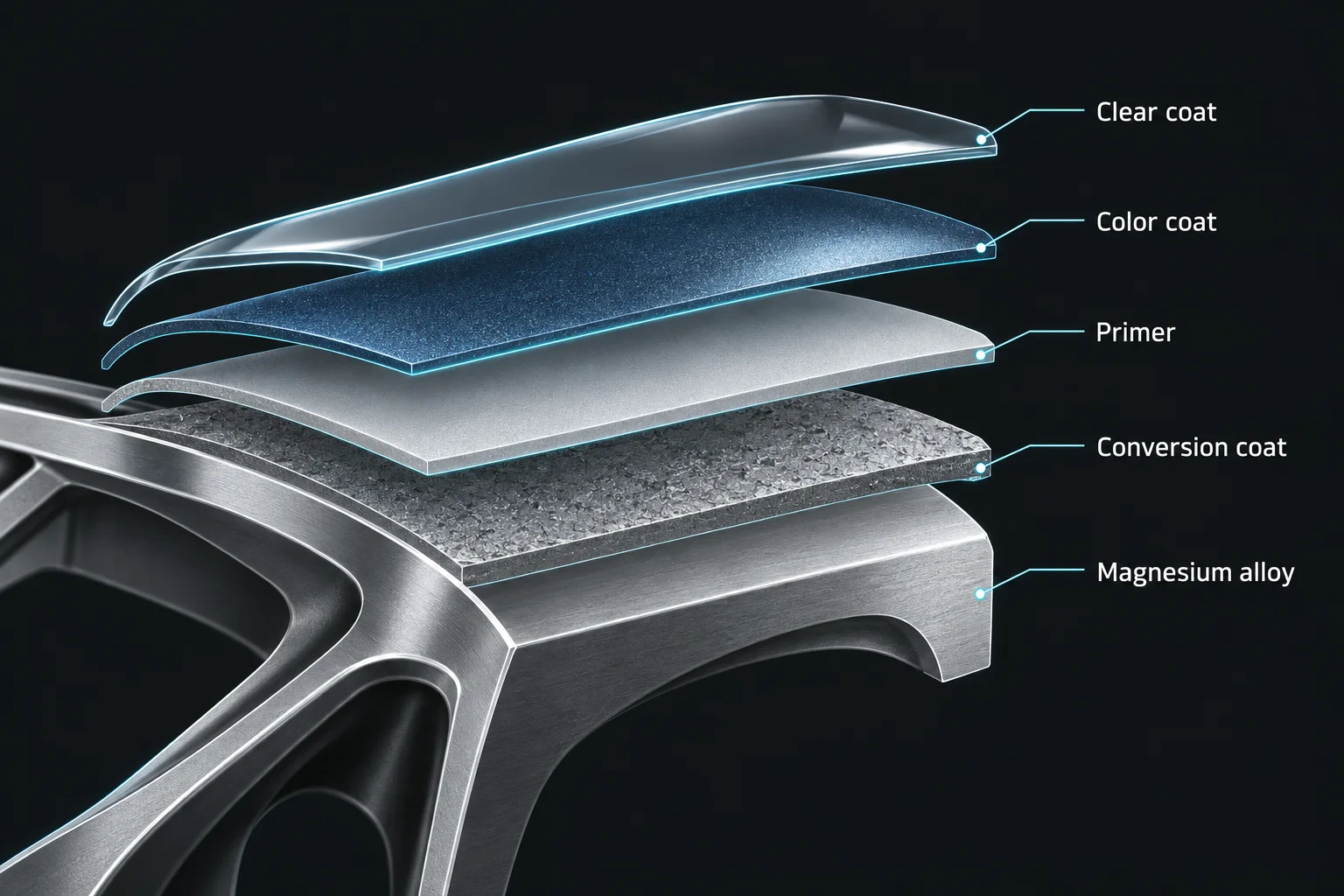
Opaque painted and powder-coated finishes give the most robust protection on magnesium. Metallic and tinted paints can reproduce bronze, gold or silver looks without exposing bare metal. See finishes.
Front vs rear and staggered setups
Rear wheels on staggered cars are wider and heavier, so they offer more kilograms to save; fronts influence steering feel most directly. Some owners prioritise magnesium for both axles; for others, the decision is all-or-nothing for visual consistency. Either way, specify the load requirement per axle.
Measuring the difference yourself
If you are replacing existing wheels, weigh one current wheel without the tire and compare it with the documented weight of the proposed design. Also compare the tire weights if you change tire size, since tires are a large part of rotating mass.
Summary
Forged magnesium offers the largest wheel-mass reduction available in a road wheel material. The size of the saving depends on car class, size, design and load rating. Ask for documented weights, choose a robust finish, and decide whether the benefit matches how you use your car.
Magnesium wheel weight savings: what to ask the supplier
To turn magnesium wheel weight savings from a claim into a number, ask for the documented mass of the proposed magnesium design and of an equivalent forged aluminum design at the same diameter, width and load rating. That pair of weights is the only fair way to estimate magnesium wheel weight savings for your car class.
- Confirm load rating meets or exceeds your axle requirement
- Ask whether the finish system is included in the quoted weight
- Compare tire sizes too—tires often outweigh the wheel
- State track vs daily use so the design is not under- or over-built
Magnesium vs aluminum: a worked comparison frame
Put three columns on one page: current wheel (or a known forged aluminum proposal), proposed magnesium wheel, and tires. Record diameter, width, load rating, documented wheel weight and tire weight. The difference in wheel weight is your magnesium wheel weight savings; the combined wheel-and-tire difference is what you feel as rotating mass. Use that frame with any supplier so claims stay comparable.
FAQ
How much lighter is a magnesium wheel than aluminum?
The material is about a third less dense; the wheel-level saving depends on design and load rating and is documented per specification.
Do EVs benefit from magnesium wheels?
Yes, reducing unsprung mass helps ride and handling, but high load ratings limit how slim the design can be.
Are your magnesium wheels custom?
Yes. Every set is made to order. Every VEXORA set is made to order, and custom orders start from a single pair. MOQ: 1 pair (2 wheels).
How long does production take?
Production typically takes approximately 20 days once the specification, drawings and finish are approved, confirmed per project. Shipping time varies by destination country. Where DDP (Delivered Duty Paid) is available for your country, orders ship DDP: import duties and taxes are handled and the wheels are delivered to your door.
Related guides
Want a magnesium vs aluminum weight comparison for your car? Request a custom forged wheel quote. Email sales@vexoraforged.com or message WhatsApp +86 159 2056 8771.
Considering carbon fiber for the lowest mass? Read carbon fiber vs forged wheels first.