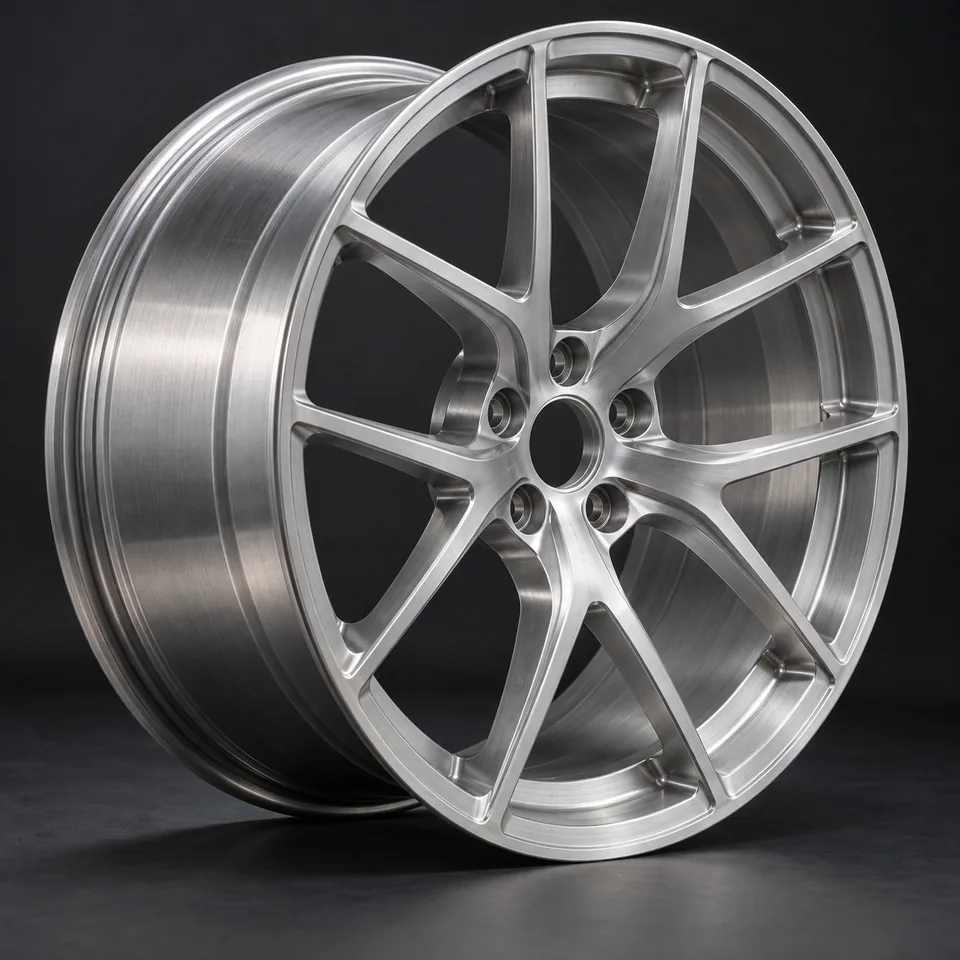
6061-T6 forged wheels: the short answer
6061-T6 describes an aluminum alloy family and a heat-treatment temper commonly used for forged aluminum wheel blanks that are later CNC machined into monoblock, 2-piece or 3-piece wheels. For a buyer, that label is useful material context — it does not by itself prove finished-wheel weight, load capacity or test results for a specific design.
Use this page to understand what the designation means, what to ask before you order, and when a fully custom forged specification is worth briefing. Next step: custom forged wheels or request a quote.
What does 6061-T6 tell you — and what does it not prove?
It tells you: the blank is described as a 6061-class aluminum that has been solution treated and artificially aged to a T6 temper — a familiar route for forged aluminum programs that machine cleanly after forging.
It does not prove: a specific finished weight, a load rating for your size and design, a regional certification mark, or that two wheels with the same alloy label perform the same. Those answers belong to the configuration, documentation and intended use you review with the maker.
| Topic | Buyer meaning |
|---|---|
| 6061 | A common wrought aluminum alloy family used for many forged aluminum wheel blanks |
| T6 | Temper: solution treated and artificially aged — stronger than soft tempers of the same alloy |
| Forged route | Billet pressed in a die, then CNC machined — different from cast or flow-formed |
| What to check next | Design, intended load, fitment (PCD/ET/CB), construction and available documentation for that set |
Alloy class vs finished wheel performance
Alloy and temper are inputs. Final behavior still depends on design, section thickness, machining, inspection and the load discussion for your vehicle — see forged wheel load rating.
T6 is not a style name
T6 does not describe concave depth, spoke count or finish. Those are design and coating choices specified after the blank route is chosen.
Naming variations you may see
Listings may say “forged 6061,” “6061-T6 billet,” or simply “forged aluminum.” Ask which alloy family and temper the blank uses for your size.
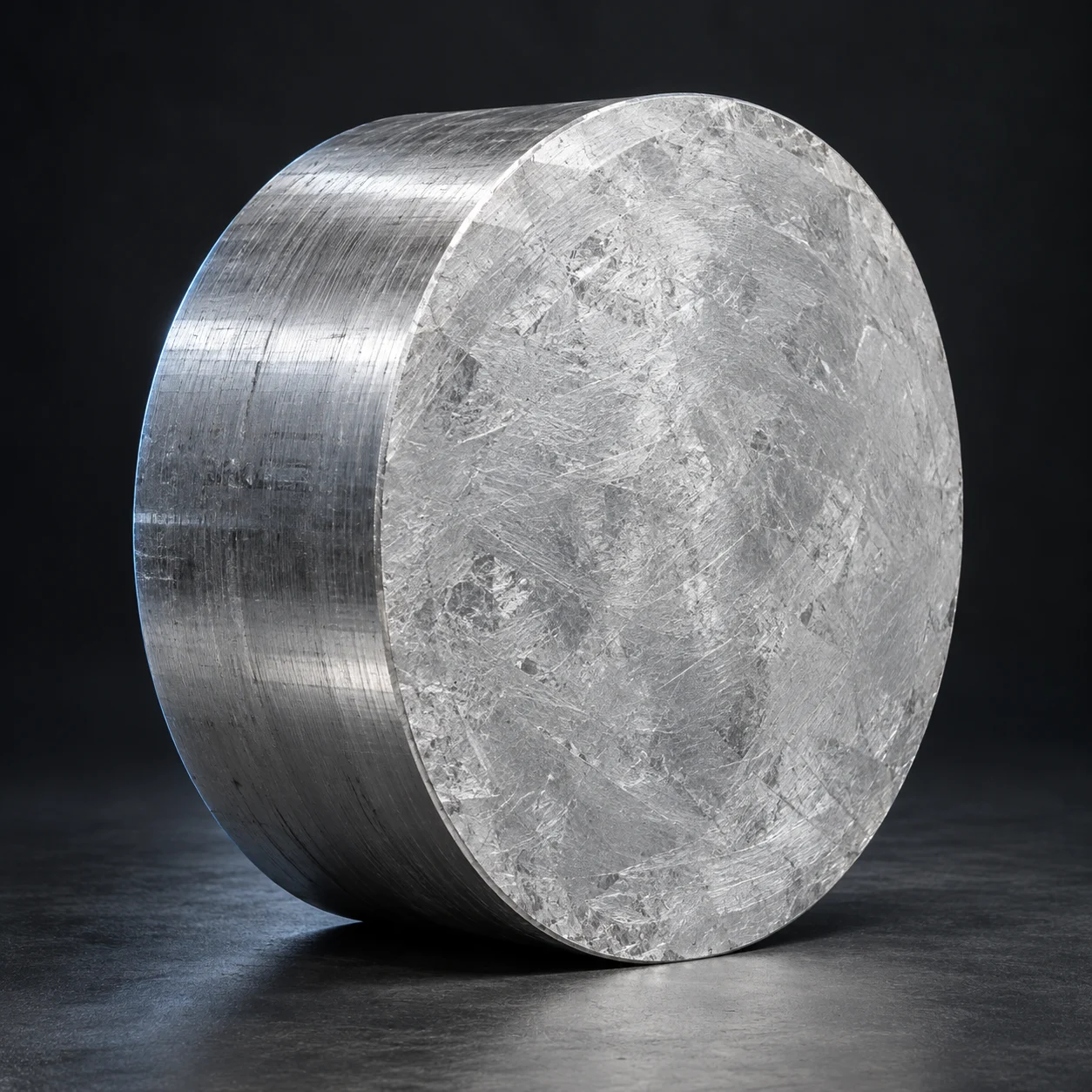
Cast, flow-formed and forged — a quick construction comparison
| Route | How it is typically made | Purchase consideration |
|---|---|---|
| Cast aluminum | Molten metal poured into a mold | Often the lower-cost catalog route; different grain/structure story than billet forging |
| Flow-formed / rotary forged (barrel) | Cast or hybrid center with a worked barrel | Not the same as a full billet forge — ask what “forged” means on that listing |
| Forged aluminum (e.g. 6061-T6 class) | Billet forged, then CNC machined | Strong path for custom size, face and hub machining |
| Forged magnesium | Mg alloy billet forged + protective finish system | Lighter density class; coating and care matter — see magnesium guides |
Process context: how forged wheels are made, forged vs cast, forged vs flow-formed, magnesium vs aluminum.
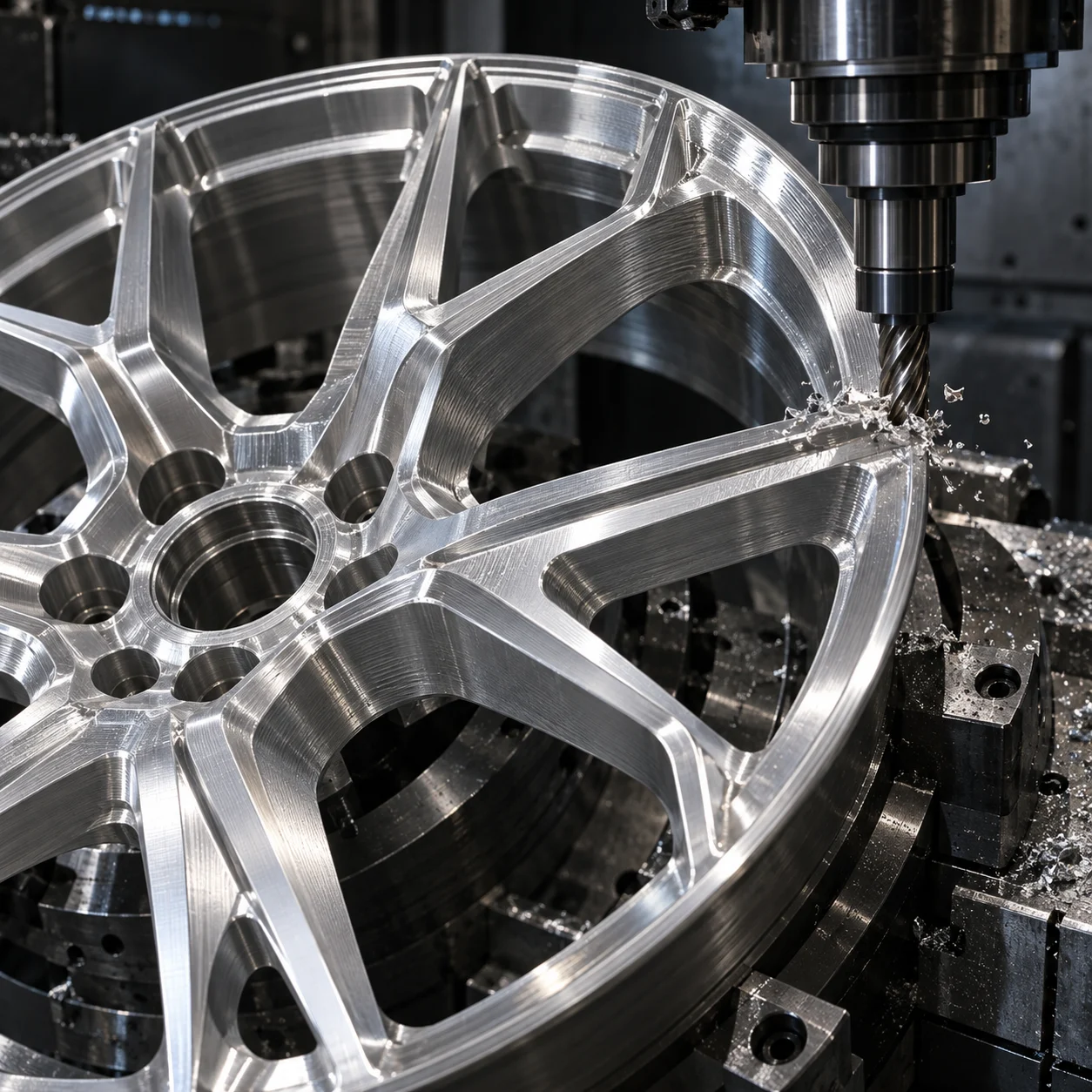
What information should you request before ordering?
- Alloy/temper description for the blank used on your size
- Construction: monoblock, 2-piece or 3-piece
- Exact PCD, center bore, seat type, diameter, width and offset for your vehicle
- Intended use so load requirements can be discussed for that configuration
- Finish system and care notes
- Drawing/approval steps, production timing after approval, and shipping terms for your destination
- Any supporting documentation the maker can provide for that design — treat marketing adjectives as secondary
Bring vehicle data with the material question. Fitment refresher: wheel fitment guide and how to measure bolt pattern.
When does a custom forged specification make sense?
A custom forged set makes sense when catalog grids cannot hit your combination of width, offset, center bore, brake packaging or face design — or when you want a one-off pair without stocking a warehouse full of sizes.
Every VEXORA set is made to order, and custom orders start from a single pair. MOQ: 1 pair (2 wheels). VEXORA does not keep a stock catalog or ready-to-ship inventory. Every wheel is engineered and forged to your vehicle, dimensions and finish. Face depth language: forged concave wheels. Vehicle starting points: Mustang · BMW.
Common myths
- “6061-T6” alone proves a specific load rating — ask for the rating discussion that applies to your size and design
- Any forged aluminum wheel is identical — design and thickness matter as much as alloy class
- T6 means the wheel never needs inspection after curb strikes — impact damage is still possible
- A stock catalog size labeled 6061 is the same as a custom machined set — custom PCD/offset/CB still have to be specified

Heat treatment, finish and delivery — keep them distinct
Heat treatment is part of the blank story
T6 describes a temper path. You do not need to run the furnace, but you should ask whether the blank for your size follows a controlled heat-treat route before CNC.
Finish sits on top of alloy
Powder coat, brushed, polished and two-tone choices are finish-system decisions. They change appearance and care, not the underlying alloy/temper label — see finishes.
Lead time and shipping belong in the quote panel
Alloy class does not set transit time. Production is typically about 20 days after drawing and finish approval; shipping and DDP availability depend on destination. Confirm both on the quote — overview: forged wheels lead time and importing forged wheels from China.
How to read marketing claims about forged aluminum
Marketing pages sometimes stack “aircraft-grade,” “race-proven” and alloy names without tying them to the wheel you are actually buying. Treat alloy language as one line on the datasheet. Ask how fitment is verified, what the approval steps look like, and what documentation applies to that design and size.
Also separate forged aluminum education from magnesium education. Density, coating and care differ. If weight is the primary goal, compare both materials rather than assuming one label wins every brief.
6061-T6 forged wheels FAQ
What does 6061-T6 mean for a wheel?
6061 identifies the aluminum alloy, while T6 describes a solution heat-treated and artificially aged condition. It does not by itself establish forging, finished weight, load capability, or vehicle compatibility.
Are 6061-T6 forged wheels always lighter than cast wheels?
No. Finished weight depends on dimensions, design, construction, and load requirements. Request a measured weight for the exact quoted configuration and compare wheels intended to meet the same application requirements.
Does flow-formed mean fully forged?
No. Flow-forming shapes the rim section of a cast preform using rollers; the center remains cast. Ask for the manufacturing description and evaluate the finished wheel's documentation rather than relying on the label alone.
What test evidence should I ask for?
Request reports identifying the tested wheel configuration, test method, conditions, and results. If the tested sample differs from your quote, ask for the documented basis explaining whether the report covers your proposed configuration.
How should I confirm fitment before approval?
Provide vehicle details, brake information, suspension changes, and intended tires. Review the proposed mounting dimensions and brake-clearance drawing or template, then check tire, suspension, and body clearances. Matching PCD alone is not a complete fitment check.
Can I order one pair of custom VEXORA forged wheels?
Yes. MOQ is 1 pair. Specify which axle the pair is intended for and confirm both wheels' dimensions, finish, and supporting documentation in the approval package.
Request a custom wheel quote
Send vehicle details, sizes, suspension/brake notes, target fitment and finish direction. Every VEXORA set is made to order, and custom orders start from a single pair. MOQ: 1 pair (2 wheels). Production typically takes approximately 20 days once the specification, drawings and finish are approved, confirmed per project. Shipping time varies by destination country. Where DDP (Delivered Duty Paid) is available for your country, orders ship DDP: import duties and taxes are handled and the wheels are delivered to your door. Request a quote. Email sales@vexoraforged.com or message WhatsApp +86 159 2056 8771.