Hub centric wheel spacers: the short answer
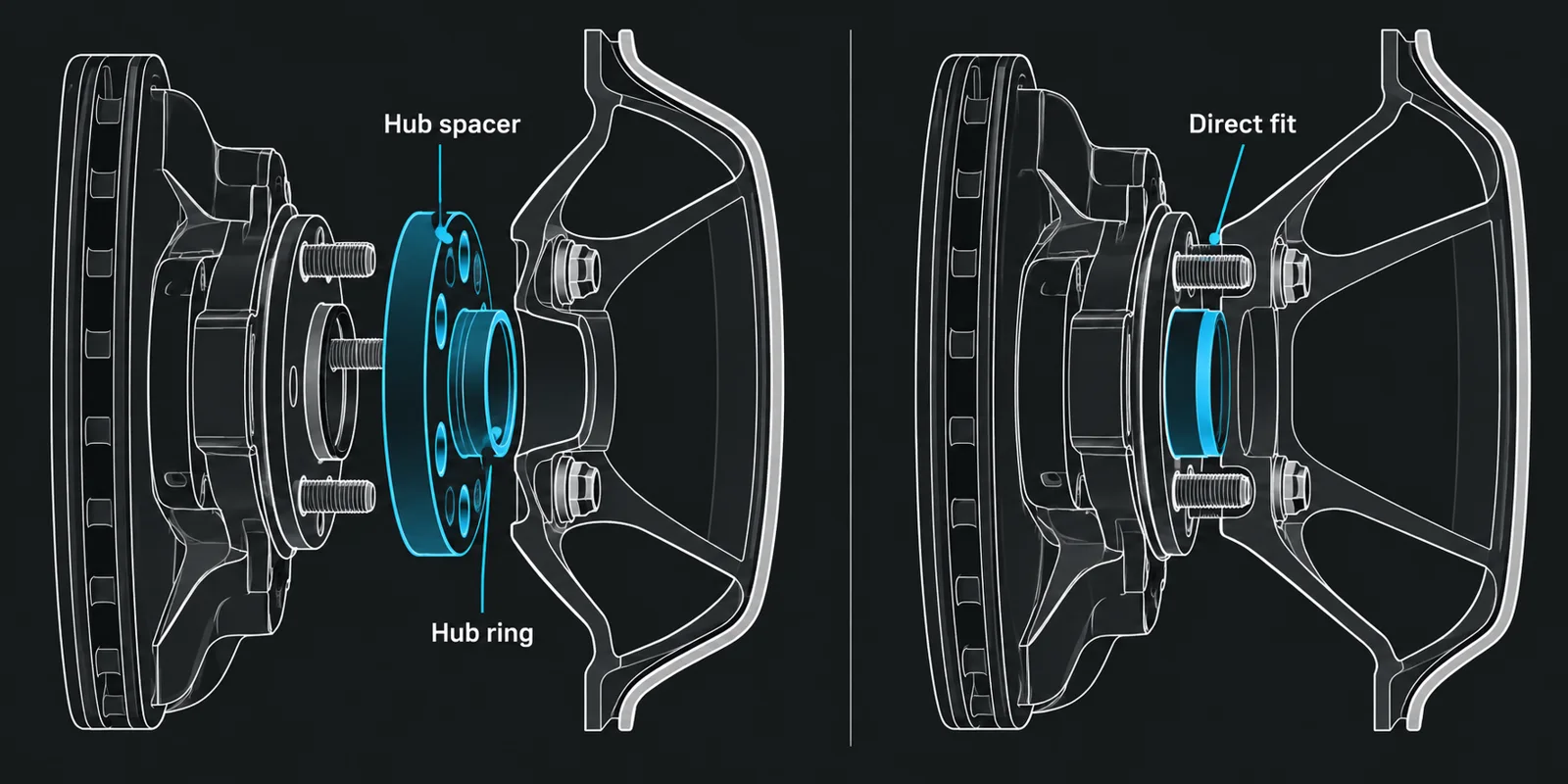
Hub centric wheel spacers are spacer plates that sit between the hub and the wheel and locate on the hub pilot (and usually provide a new outer pilot for the wheel bore). “Hub centric” means the spacer is centered on the hub flange pilot rather than relying only on lug seats to center the stack. People also search “hub centric spacers” and “hub centric spacer” for the same part.
This guide is educational. VEXORA does not sell wheel spacers. We machine custom forged wheels to the offset and center bore your vehicle needs so you often avoid spacers altogether. If you are comparing spacers to ordering the right offset, use this page with our hub centric rings and hub-centric vs lug-centric guides.
| Part | What it does | Typical role |
|---|---|---|
| Hub centric wheel spacer | Adds thickness between hub and wheel; shifts effective offset | Change poke / clearance when you keep the same wheels |
| Hub centric ring | Fills the gap between hub pilot and a larger wheel bore — no thickness added to offset | Center a wheel whose CB is larger than the hub |
| Custom offset + CB | Wheel machined so mounting face and bore match the car | Long-term fitment without an extra interface |
How hub centric spacers work
A hub-centric spacer has an inner diameter that fits the vehicle hub pilot and an outer diameter (or raised lip) that fits the wheel center bore. Lug holes pass through the spacer. Thickness is usually quoted in millimetres: that thickness reduces effective offset by the same amount (a 15 mm spacer on an ET35 wheel behaves like ET20 at the hub face).
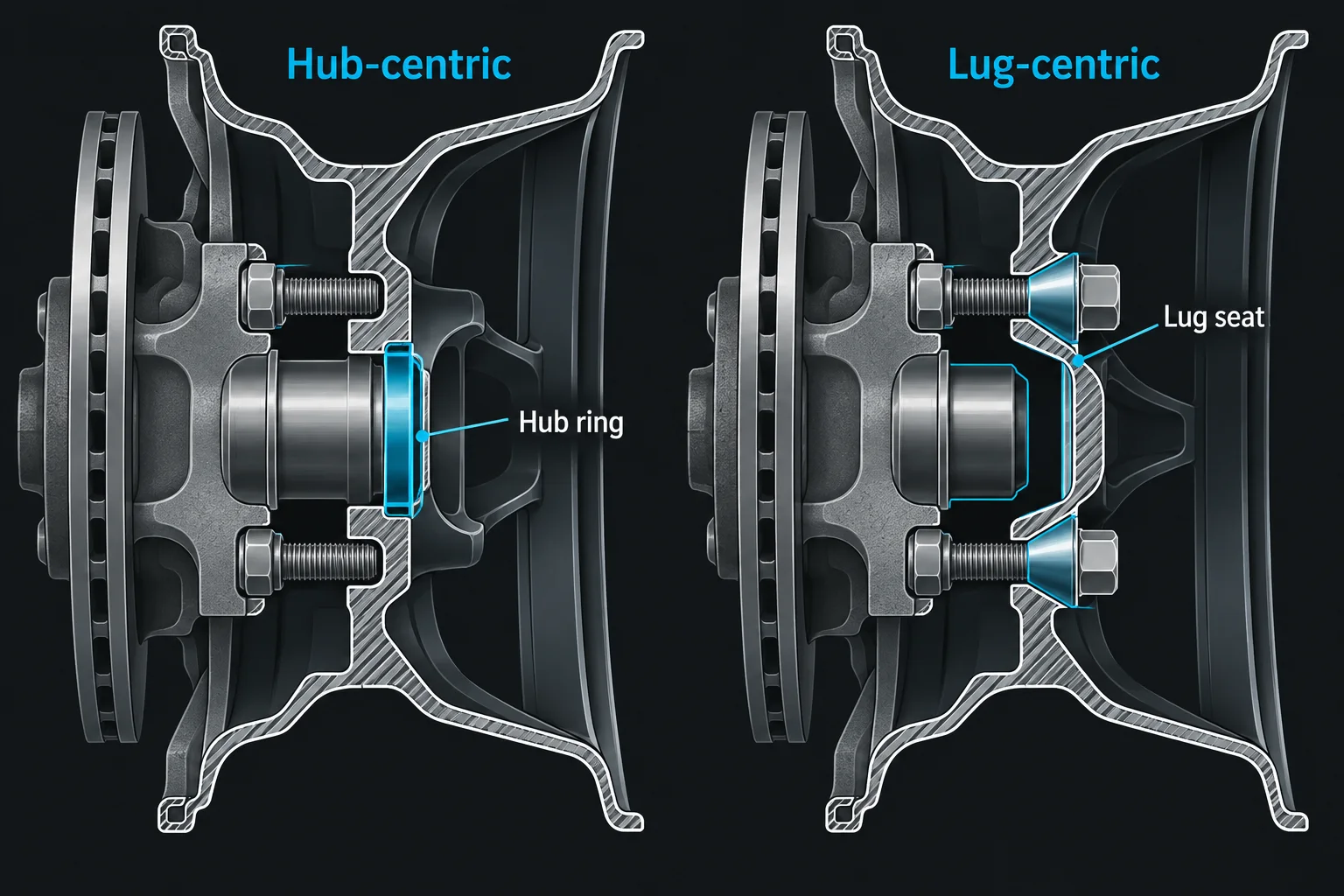
Lug-centric spacers without a proper hub pilot put more centering duty on the lug seats. That can work with carefully torqued conical or radius seats, but hub-centric designs are preferred when you want the stack located on the pilot the way OEM hubs and many aftermarket wheels expect.
Spacers vs ordering the correct offset
Spacers are a way to move existing wheels outward. Ordering a custom forged set with the target offset builds that position into the wheel so there is no extra plate, no longer stud requirement from a thick spacer, and one fewer torque interface. Rings only fix bore mismatch; they do not change offset. If your only issue is a large center bore, rings (or a custom CB) are the relevant tool — not spacers.
Thick spacers may need longer studs or bolts so thread engagement stays safe. Always follow the spacer maker’s hardware guidance and a qualified installer’s checks. VEXORA will not specify spacer brands or thicknesses as a product — we design the wheel instead.
When spacers are commonly considered
- You already own wheels and want more poke or fender fill without buying a new set
- You need a small clearance change for a brake or suspension package on existing wheels
- You are testing a poke target before committing to a custom offset
When you are commissioning new custom forged wheels, it is usually cleaner to lock width and offset on the drawing, confirm brake clearance, and machine the center bore to the hub. That is the approach described in our wheel fitment guide and wheel offset calculator.
Safety and fitment checklist (any spacer)
- Confirm hub-centric pilot fit on both the hub side and the wheel side
- Match bolt pattern, seat type (conical / radius / flat) and thread
- Verify stud or bolt length and thread engagement after the spacer thickness
- Torque in a star pattern to the vehicle or spacer maker’s specification
- Re-check torque after the first short drive when the maker recommends it
- Never use spacers to “fix” a wheel that does not clear the caliper — fix brake clearance properly
Hub centric wheel spacers FAQ
What are hub centric wheel spacers?
Spacer plates that locate on the hub pilot and add thickness between the hub and the wheel, changing effective offset.
Are hub centric spacers the same as hub centric rings?
No. Rings fill a bore gap without adding offset thickness. Spacers add thickness and shift the wheel outward.
Do I need spacers on custom forged wheels?
Usually no — specify the correct offset and center bore on the wheel so the set mounts directly.
Does VEXORA sell spacers?
No. VEXORA makes custom forged aluminum and magnesium wheels; we do not sell spacer products.
Can spacers replace a correct load rating?
No. Spacers do not change the wheel’s load rating. Match rating and hardware to the vehicle and use case.
Where should I start for a spacer-free fitment?
Measure PCD, hub pilot, desired poke and brake envelope, then request a quote for a custom offset. Email sales@vexoraforged.com or message WhatsApp +86 159 2056 8771.
Prefer a spacer-free custom set?
Send the fitment brief and we will machine offset and center bore to the car. Custom forged wheels · Request a quote. Email sales@vexoraforged.com or message WhatsApp +86 159 2056 8771. Every VEXORA set is made to order, and custom orders start from a single pair. MOQ: 1 pair (2 wheels). Production typically takes approximately 20 days once the specification, drawings and finish are approved, confirmed per project. Shipping time varies by destination country. Where DDP (Delivered Duty Paid) is available for your country, orders ship DDP: import duties and taxes are handled and the wheels are delivered to your door.