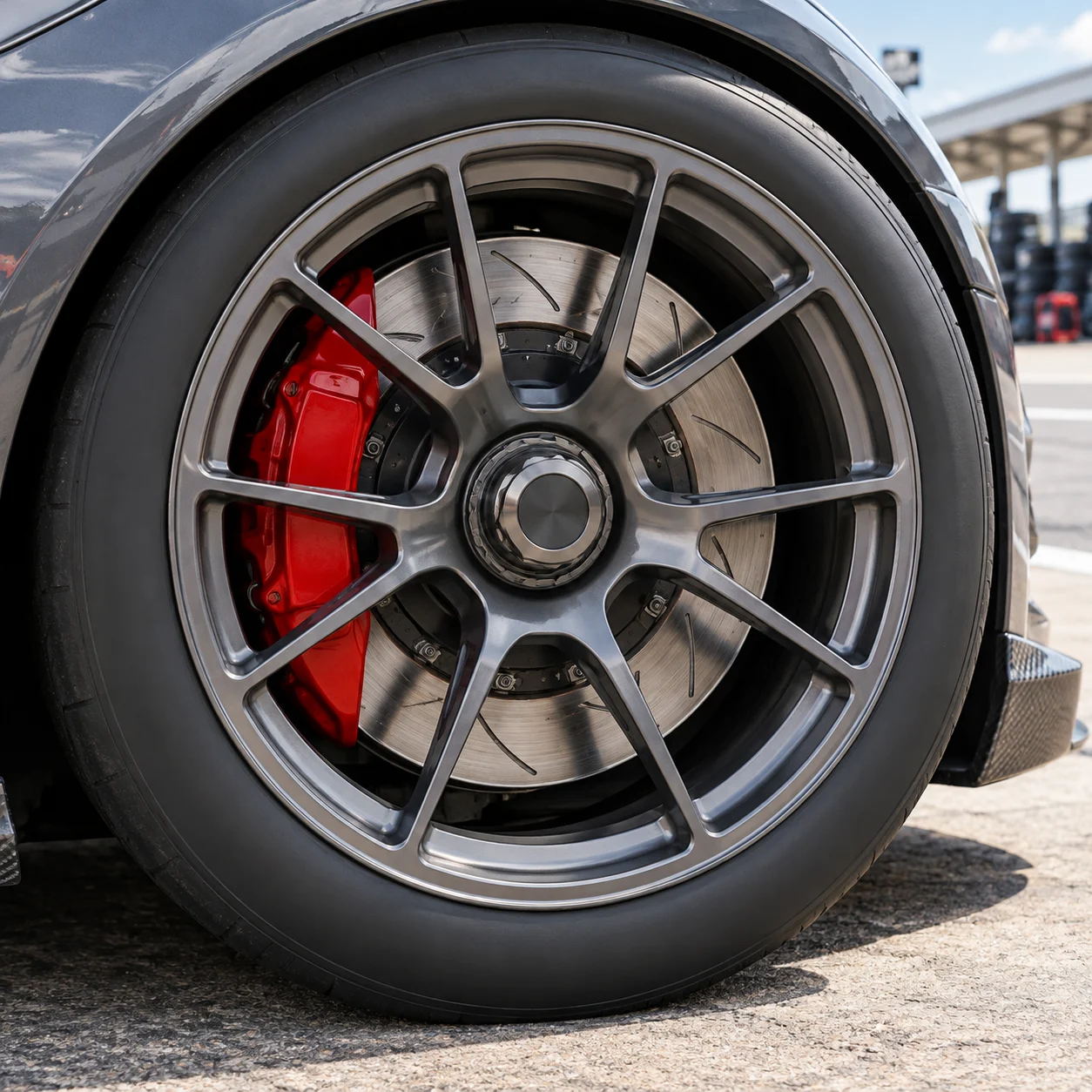
Center lock wheels: the short answer
Center lock wheels are held on by a single large nut in the middle of the wheel instead of four, five or more lug bolts or nuts. The hub has a matching interface, and drive is transferred through features such as pins or splines rather than through a ring of lug fasteners.
The system came from racing, where fast wheel changes matter, and it now appears on some high-performance road cars from the factory. For most buyers the real question is whether their car already has a center-lock hub, or whether they are looking at a conversion or a center-lock look on a normal bolt pattern.
Key takeaways
- A center lock wheel must match the hub interface it mounts to; it is not interchangeable with a five-lug wheel.
- Tightening procedure, tools and torque come from the vehicle maker or hub system supplier — follow their documentation, never a forum number.
- Converting a five-lug car means changing or adapting the hub, which is an engineering job with legal and inspection questions in some countries.
- If you only want the look, a center-lock-style cap on a five-lug wheel is a cosmetic option, not a mechanical one.
- Custom forged center lock wheels start from accurate hub data, not from a photo.
| Topic | Center lock | Five-lug (bolt pattern) |
|---|---|---|
| Fastener | One central nut | Several lug bolts or nuts on a PCD |
| Drive transfer | Pins, splines or similar features at the hub | Clamping force of the lug fasteners |
| Wheel change | Fast with the correct tool and procedure | Slower; common tools |
| Tools | System-specific socket and high-torque wrench | Standard wrench and socket |
| Where seen | Motorsport and some factory performance models | Most road cars |
How does a center lock wheel work?
A center-lock hub carries a threaded spigot and a drive interface. The wheel has a matching center that locates on the hub; the central nut clamps the wheel against the hub face; and the drive features stop the wheel from rotating relative to the hub under braking and acceleration. Safety retainers or clips are used on many systems so the nut cannot back off unnoticed.
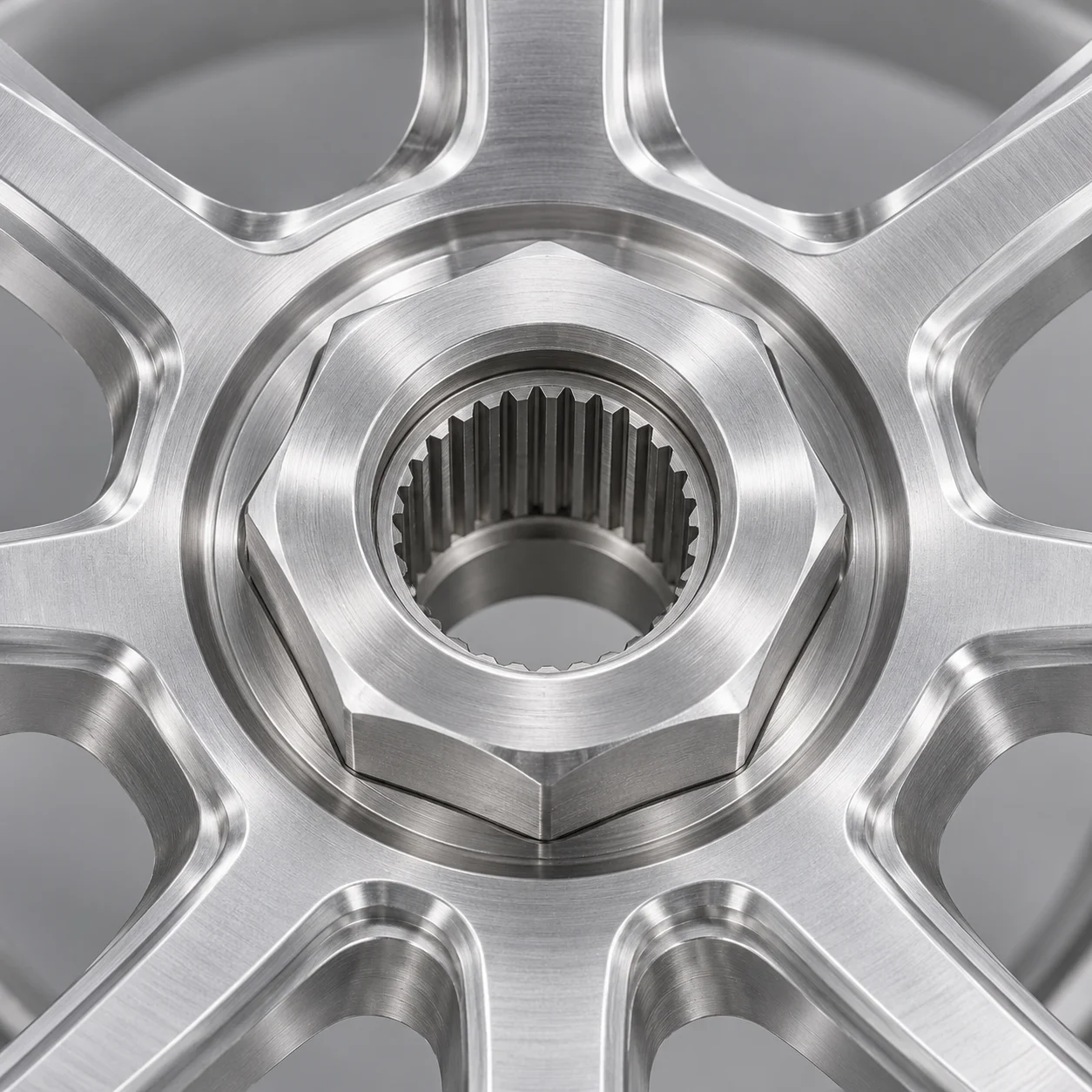
Why the procedure matters so much
With one fastener doing the job of five, the clamping and inspection procedure is critical. Vehicle makers publish their own steps, tool requirements and checks for factory center-lock cars. Use those, and make sure whoever fits the wheels knows the system.
Thread direction and side-specific parts
Some center-lock systems use different thread directions on each side of the car. Nuts and sometimes wheels are side-specific. Mark them and follow the maker’s documentation.
Not the same as a hubcap
A large decorative cap on a five-lug wheel can look like a center lock but does not retain the wheel. Don’t confuse the two when buying or inspecting a car.
Why do people ask for center lock wheels?
- Their car has it from the factory. Some Porsche models and other performance cars can be ordered with center-lock hubs. Owners want a lighter or different design that still fits that hub.
- Track and racing use. Faster wheel changes and a motorsport look.
- The look. A clean center with no visible lug ring is a strong design cue, especially on mesh and multi-spoke faces.
Each motive leads to a different brief. A factory center-lock owner needs a wheel engineered to the existing interface. A five-lug owner who wants the look has two very different options: a conversion or a cosmetic cap.
Center lock conversion: what to think through first
Converting a five-lug car to center lock usually means replacing hubs or fitting adapters, plus matching nuts and tools. Before going down that path:
- Engineering. Conversion parts carry all braking and cornering loads. They need to come from a supplier who documents the design for your vehicle.
- Fitment changes. An adapter can move the wheel mounting face and change effective offset and track width. Recheck fender and suspension clearance with the offset calculator.
- Registration and inspection. Rules differ by country. Check local requirements before buying parts.
- Daily use. Every wheel change needs the right tool and procedure, including at tire shops.
For many road cars, a well-specified five-lug wheel with correct hub-centric fit is the simpler path. If the center-lock look matters, ask about a design with a center-lock-style cap on a standard bolt pattern.
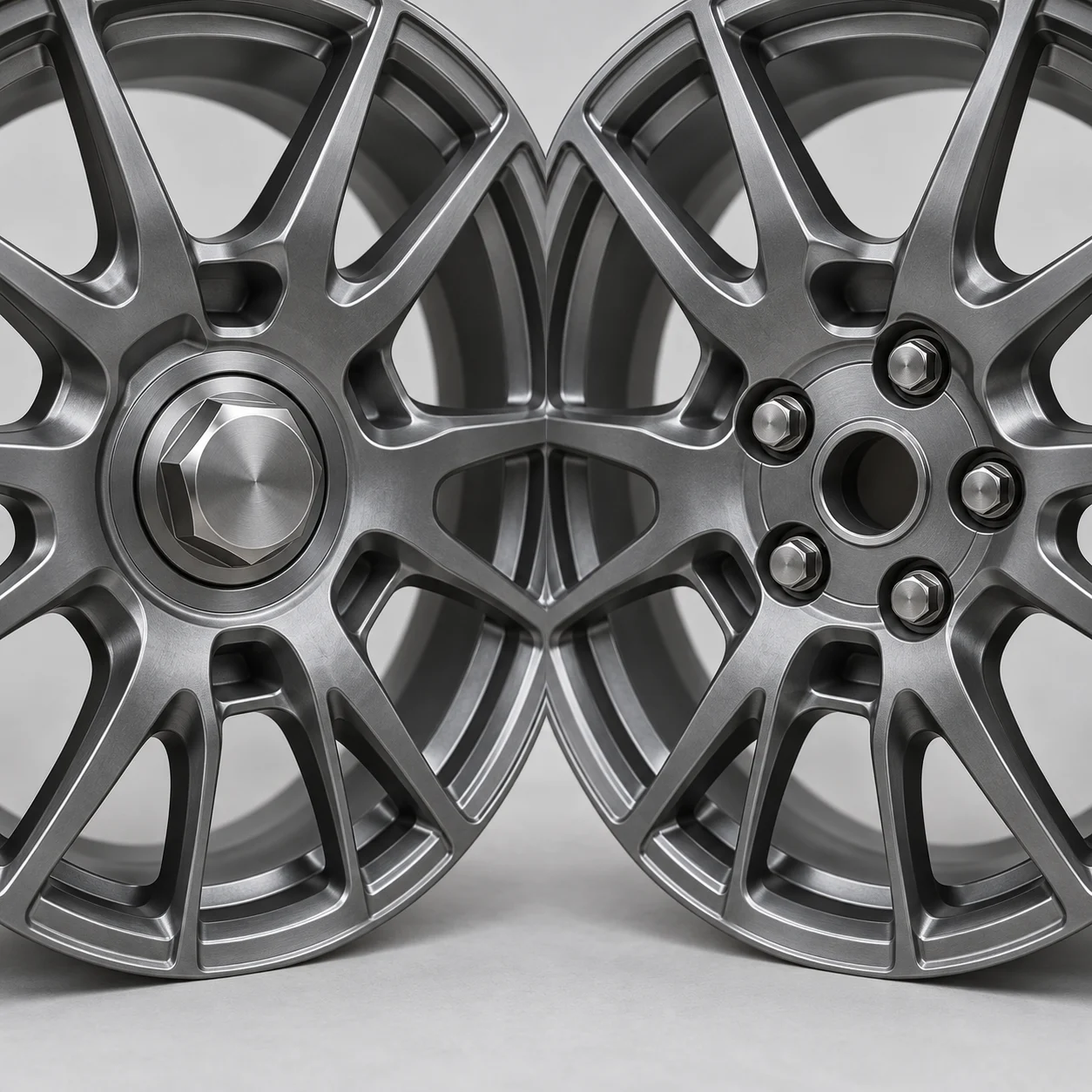
Which option fits your car?
| Your situation | Typical path | What to send |
|---|---|---|
| Factory center-lock hub | Wheel engineered to the existing interface | Vehicle, model year, hub system details, OEM wheel sizes, brakes |
| Five-lug car, track focus | Conversion via a documented supplier, then wheels to match | Conversion supplier documentation, resulting mounting face position |
| Five-lug car, look only | Five-lug wheel with center-lock-style cap | Standard fitment data and a reference image |
| Not sure | Start with fitment data and the goal | Vehicle, current wheels, how the car is used |
Center lock wheels on Porsche and other factory systems
Porsche center lock wheels are among the most searched variants because several Porsche models are offered with a center-lock option. Even within one brand, the interface can differ between models and generations, so the brief should identify the exact car rather than “Porsche center lock.” We do not publish interface charts; the exact interface is confirmed for your car during engineering review.
For 911 design direction, see custom forged wheels for Porsche 911. Brake packages on these cars are often large, so include the brake specification too — see brake clearance for BBK.

Monoblock or multi-piece for center lock?
A center-lock wheel has to locate and clamp precisely at the center, so many are one-piece forged designs. A monoblock keeps the load path simple from the center to the barrel. Multi-piece designs are possible in principle but add joints that need their own engineering. Construction is decided together with the interface, not before it.
Common mistakes
- Ordering wheels from a photo without confirming the hub interface.
- Using torque values or tools from another system.
- Forgetting that some nuts and wheels are side-specific.
- Treating a conversion as a bolt-on cosmetic change.
- Not telling the tire shop the car has center-lock wheels.
Ordering custom center lock or center-lock-look wheels
VEXORA builds every set to the vehicle through the custom process. Every VEXORA set is made to order, and custom orders start from a single pair. MOQ: 1 pair (2 wheels). Production typically takes approximately 20 days once the specification, drawings and finish are approved, confirmed per project. Shipping time varies by destination country. Where DDP (Delivered Duty Paid) is available for your country, orders ship DDP: import duties and taxes are handled and the wheels are delivered to your door. VEXORA does not keep a stock catalog or ready-to-ship inventory. Every wheel is engineered and forged to your vehicle, dimensions and finish. Center-lock requests go through engineering review against your hub data before any drawing is approved.
- Vehicle make, model, year and whether the hub is factory center lock
- OEM or current wheel diameter, width and offset per axle; tire sizes
- Brake package details
- Use: road, track days, or racing
- Reference image and finish — see finishes
Center lock wheels FAQ
What is a center lock wheel?
A wheel retained by a single central nut on a matching hub interface, with drive transferred through pins, splines or similar features instead of a ring of lug fasteners.
Can I put center lock wheels on a five-lug car?
Not directly. The hub has to be changed or adapted. That is an engineering decision with fitment and legal implications, so research documented conversion suppliers first.
Are center lock wheels lighter?
Not automatically. Weight depends on the whole wheel design, size and material. Any weight figure should come from the specific wheel drawing.
Where do I find the torque value for a center lock nut?
From the vehicle maker or the hub system supplier for your exact car. Do not use a figure from another model or system.
Is a center cap that looks like a center lock safe?
A cosmetic cap does not hold the wheel; the lug bolts do. It is a styling choice on a normal five-lug wheel.
What is the minimum order?
Every VEXORA set is made to order, and custom orders start from a single pair. MOQ: 1 pair (2 wheels). Production is approximately 20 days after approval; shipping time depends on destination.
Brief your center lock set
Tell us your car, whether it has a factory center-lock hub, and how you use it, then request a quote. Email sales@vexoraforged.com or message WhatsApp +86 159 2056 8771.