Forged vs cast vs flow-formed wheels.
Comparing forged vs cast vs flow formed wheels starts with how each wheel is made, but the right choice also depends on load capacity, weight, fitment, intended use and budget. This guide explains the practical differences without assuming that one manufacturing label guarantees a better wheel.
Short answer
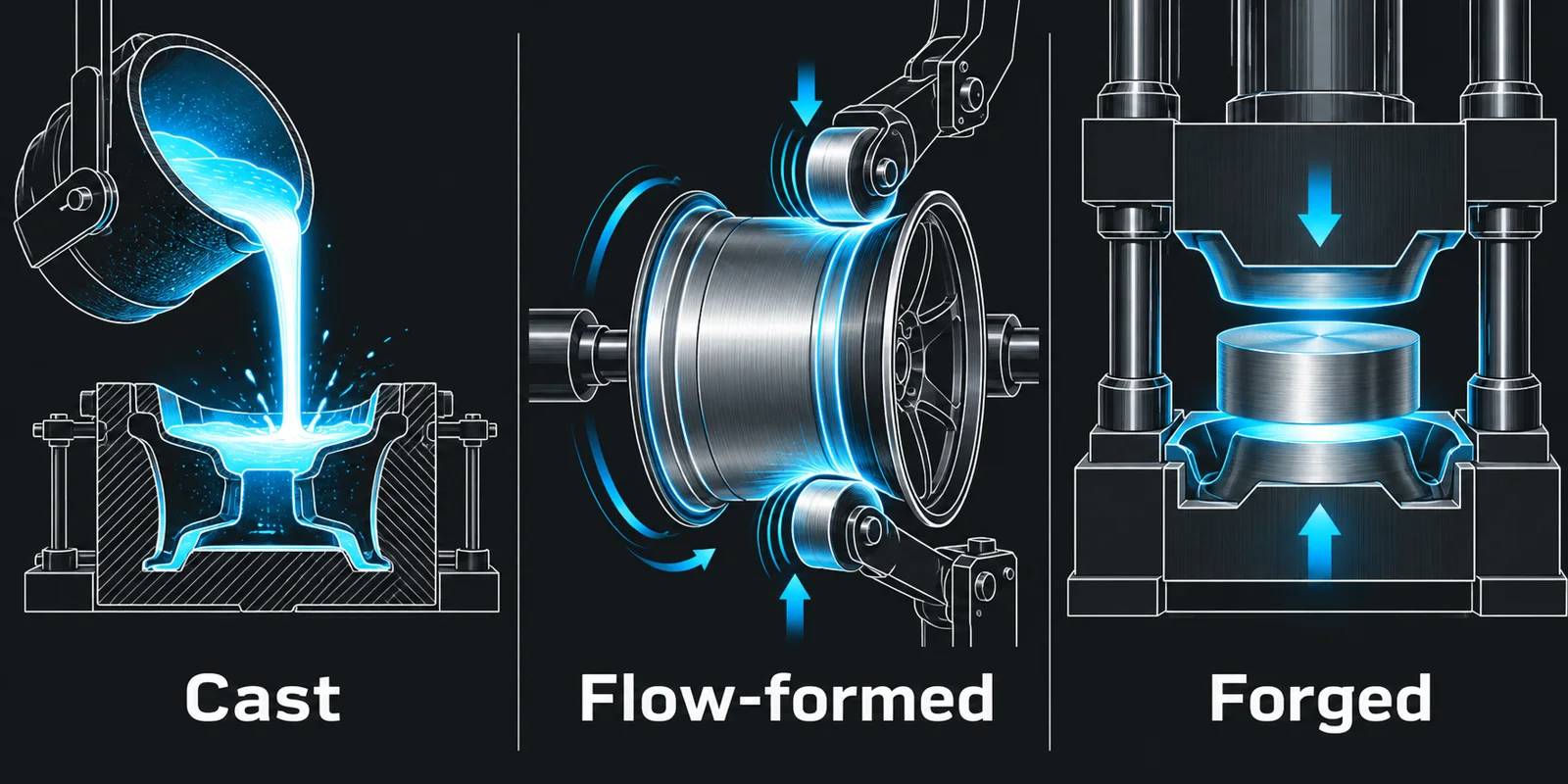
Cast wheels begin as molten metal poured or introduced into a mould. Flow-formed wheels typically start with a cast blank, then use rollers to shape the barrel. Forged wheels begin with solid metal shaped under pressure before further processing and machining.
- Cast: a practical option when purchase cost and an available off-the-shelf fitment are the priorities.
- Flow-formed: a middle ground that can reduce barrel weight compared with a comparable conventional cast design.
- Forged: worth considering when weight efficiency, demanding fitment or made-to-order specifications justify a higher budget.
These are tendencies, not guarantees. A lightweight design is not automatically suitable for a heavier vehicle, and a forged wheel is not immune to impact damage. Compare the finished wheel’s specifications, documented load suitability and manufacturer guidance—not the manufacturing name alone.
How each is made
| Wheel type | Basic manufacturing route | What the process changes | What to check |
|---|---|---|---|
| Cast | Molten alloy fills a mould, solidifies and is then finished and machined. | Casting forms the wheel geometry directly. Solidification conditions and process control influence the resulting structure and defects. | Vehicle compatibility, load capacity, finished weight and evidence supporting the intended use. |
| Flow-formed | A cast blank rotates while rollers stretch and shape the barrel, commonly with controlled heat. | Plastic deformation works the barrel material and allows a thinner barrel section in suitable designs. The centre remains cast. | The actual production method, barrel design, total wheel weight and available sizes and offsets. |
| Forged | A solid metal billet or preform is shaped under pressure, then processed and machined into the finished wheel. | Forging deforms the material and influences its grain structure. Final properties also depend on alloy, heat treatment and design. | Exact material, construction, load suitability, fitment drawings and finished weight for the requested specification. |
Terminology can be confusing. Labels such as “rotary forged” are sometimes used for flow-formed wheels, so ask how the centre and barrel are actually produced. A process-based explanation is more useful than a name that sounds similar to fully forged construction.
Grain, strength and weight
Why the material structure matters
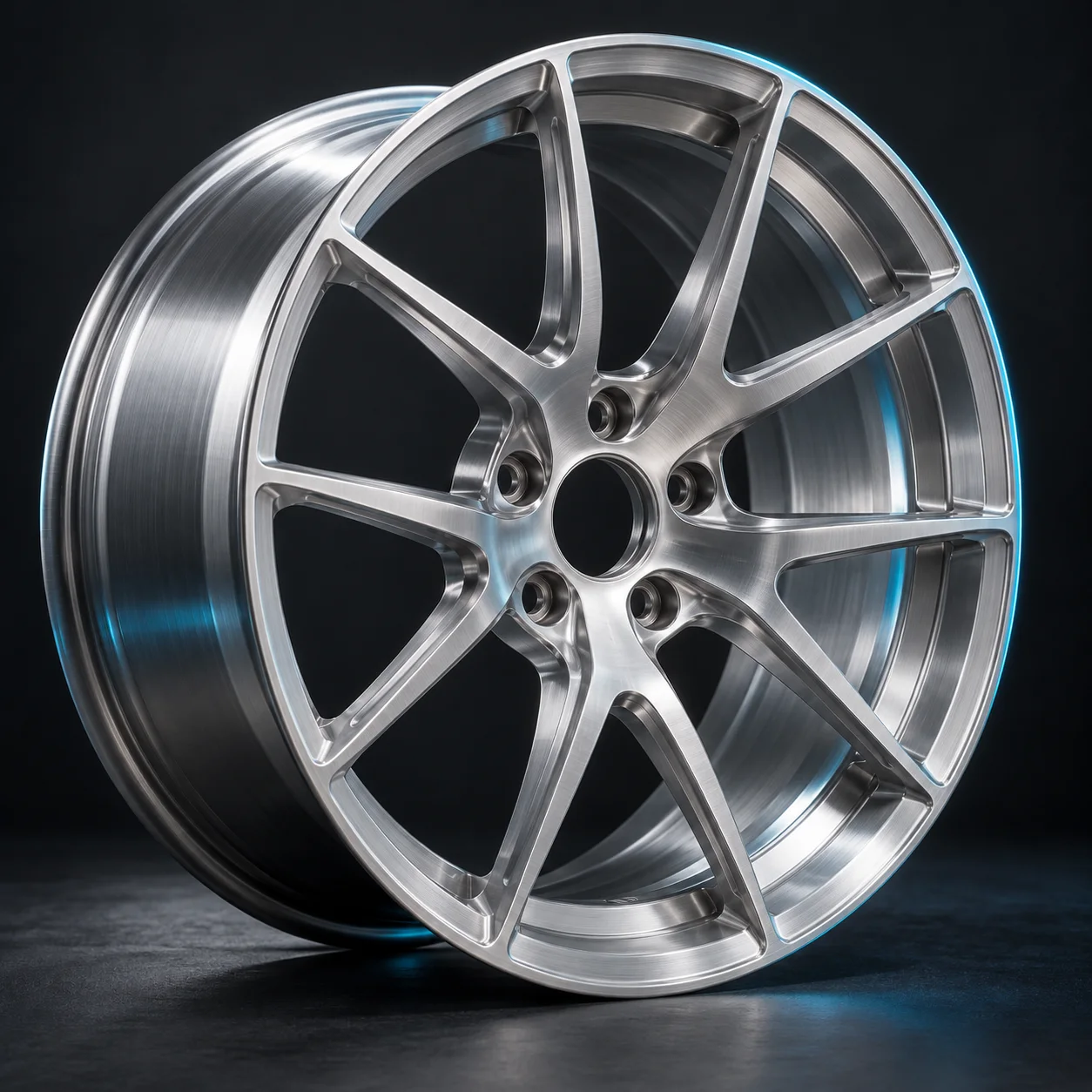
Cast metal develops its structure as it solidifies. Casting quality depends on factors including filling, cooling and control of porosity. Forging mechanically deforms solid metal, influencing grain structure and flow. Flow forming applies deformation mainly to the barrel rather than transforming the cast centre into a forged centre.
Those differences matter, but “grain” is not a complete performance specification. Alloy selection, heat treatment, spoke geometry, section thickness and manufacturing quality all affect the finished wheel. Aluminum and magnesium are also different material families; their properties should not be treated as interchangeable.
Strength is not one number
A wheel must handle repeated loading as well as occasional impacts. Fatigue resistance, stiffness and resistance to permanent deformation describe different behaviours. A claim that one wheel is simply “stronger” needs context: stronger under which loading condition, at what weight and for which application?
Do not assume any wheel type will always bend rather than crack. Impact severity, tyre protection, geometry and material condition influence damage. After a significant pothole strike or kerb impact, have the wheel and tyre inspected.
Compare weight fairly
Forging can enable a weight-efficient design, but a large forged wheel can still weigh more than a smaller cast wheel. Compare the same diameter, width, similar offset and load requirement. Ask for the weight of the exact specification, not the lightest size in a product range.
Reducing wheel mass can reduce unsprung mass and rotational inertia, potentially benefiting vehicle response. However, tyre weight, wheel diameter, mass distribution and suspension setup also matter. A manufacturing process alone cannot promise a particular improvement in acceleration, braking or comfort.
Fitment and customisation
A wheel is only useful if it fits the vehicle correctly. Diameter and bolt pattern are starting points, not a complete fitment check. Brake clearance depends on the inner barrel and spoke profile, while width and offset influence clearance on both sides of the wheel.
- Confirm the vehicle’s model, year, trim, axle loads and any modifications.
- Specify diameter, width, bolt pattern, offset and centre bore.
- Check brake clearance, especially with upgraded calipers or rotors.
- Verify clearance to suspension, bodywork and liners through steering and suspension travel.
- Match tyre sizes, wheel load suitability, fastener seats and TPMS compatibility.
Off-the-shelf cast and flow-formed wheels usually offer a defined menu of sizes and offsets. Made-to-order forged wheels can offer more scope to tailor dimensions and appearance, but custom does not mean unlimited. Brake clearance, structural requirements and tyre compatibility constrain safe designs.
For staggered setups, check the vehicle manufacturer’s tyre circumference requirements, particularly on all-wheel-drive vehicles. Approve a detailed specification before production rather than relying on photographs of another car.
Cost without fake prices
Cast wheels generally have a lower entry cost because mould-based production can spread tooling costs across larger quantities. Flow forming adds processing, while forged wheels require a different material and manufacturing route, often with substantial machining. These factors commonly produce a cast-to-flow-formed-to-forged price progression, but individual products overlap.
Compare complete quotes for the same dimensions and intended use. Material, design complexity, finish, order quantity and delivery destination can all affect the total. Forged magnesium should be quoted separately rather than assumed to cost the same as forged aluminum.
- Confirm whether the quote covers one wheel, a pair or a complete set.
- Check whether freight, duties, taxes and accessories are included.
- Ask about replacement-wheel availability and future reorder requirements.
- Separate production lead time from transit and customs time.
Shipping time varies by country. Where DDP is available, confirm the destination and charges covered in writing. A useful budget reflects the delivered specification, not just an advertised starting figure.
When to choose each
Choose cast for straightforward everyday requirements
A suitable cast wheel can make sense for a daily driver when an established size fits correctly and purchase cost matters most. Prioritise appropriate load capacity, tyre compatibility and reliable product information over aggressive styling or minimum advertised weight.
Choose flow-formed for a balanced upgrade
Flow-formed wheels are worth comparing when you want a potentially lighter barrel without moving to a fully forged option. They can suit road use and performance-oriented builds, provided the specific wheel meets the application’s requirements. Check total weight rather than assuming every flow-formed model is lighter.
Choose forged for specific weight or fitment goals
Forged wheels are worth considering when you need tailored dimensions, a particular design or weight efficiency for a defined load requirement. For track use, discuss the intended duty and inspection needs explicitly. For poor roads, consider tyre sidewall height and a sensible diameter alongside wheel construction.
FAQ
Are flow-formed wheels the same as forged wheels?
No. Flow-formed wheels typically have a cast centre and a mechanically worked barrel. Fully forged wheels follow a different manufacturing route based on a solid forged blank. Ask for a clear process description when marketing terminology is ambiguous.
Are forged wheels always lighter than cast wheels?
No. Forging can support lower-weight designs, but dimensions, load requirements and styling affect the result. Compare finished weights for equivalent specifications. A thicker-spoked forged design may weigh more than a smaller or differently rated cast wheel.
Are cast wheels suitable for everyday driving?
Yes, when the specific wheel is suitable for the vehicle and intended use. Correct fitment, adequate load capacity, appropriate tyres and proper installation matter more than dismissing an entire manufacturing category.
Should I choose forged aluminum or forged magnesium?
Compare the exact designs, load suitability, weights, costs and care requirements. Magnesium’s lower density creates lightweight-design opportunities, but finished wheel weight is not determined by density alone. Ask about coating care, inspection guidance and suitability for your operating conditions.
Next step
Explore the focused comparisons: forged vs cast wheels and forged vs flow-formed wheels.
For a made-to-order option, VEXORA FORGED offers fully custom forged wheels in 6061-T6 aluminum and forged magnesium, from one pair. Production takes approximately 20 days after approval; shipping time varies by country, with DDP available where offered. Explore custom forged wheels or forged magnesium wheels, then request a quote with your vehicle details, target sizes, intended use and delivery country.
When you move from construction choice to ordering, lock bolt pattern, center bore / hub-centric fitment and flush fitment before finish details.
One more comparison: carbon fiber vs forged wheels.
General planning information, not vehicle-specific engineering advice. Verify the final specification with the wheel supplier and a qualified installer.