How to measure wheel offset: the short answer
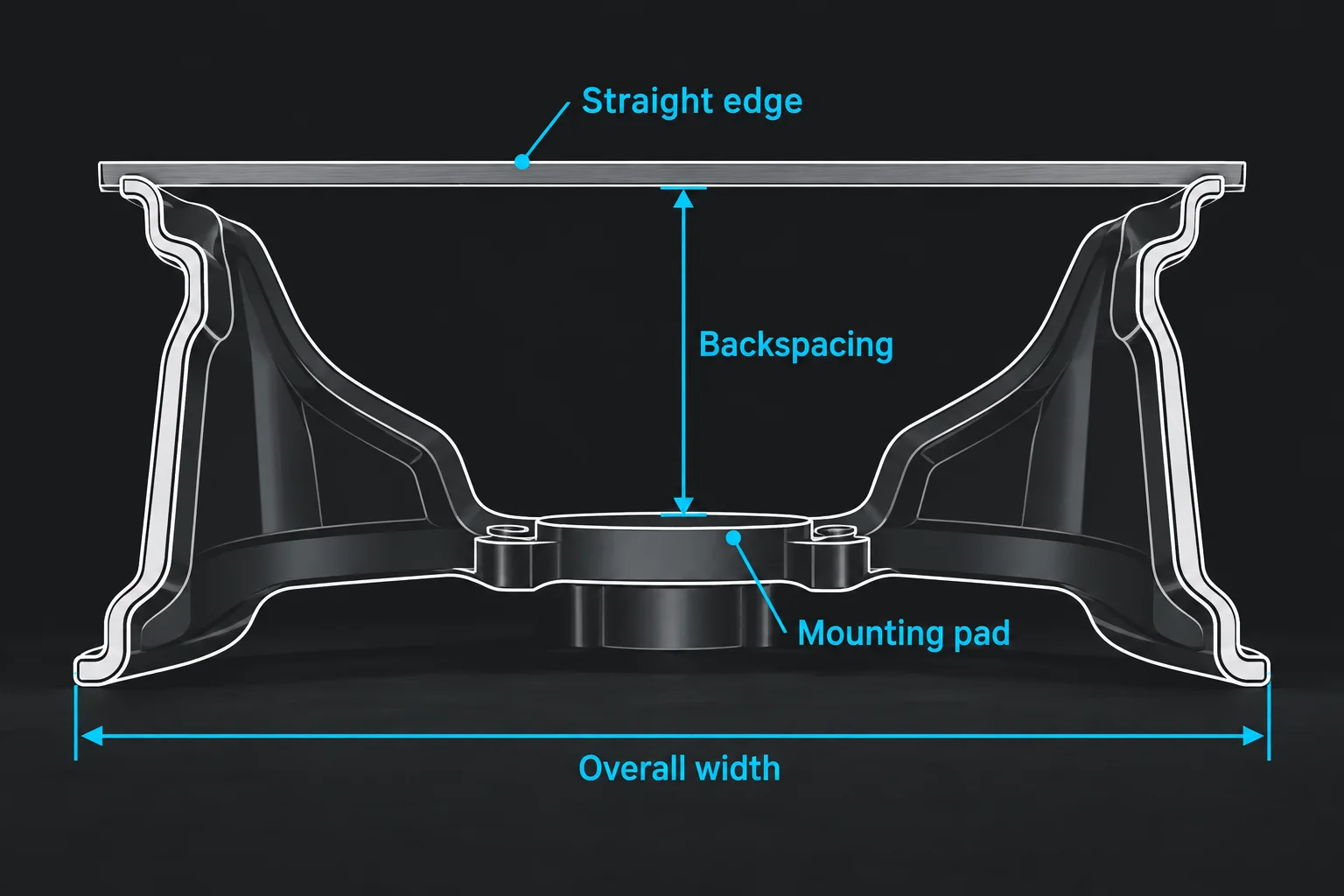
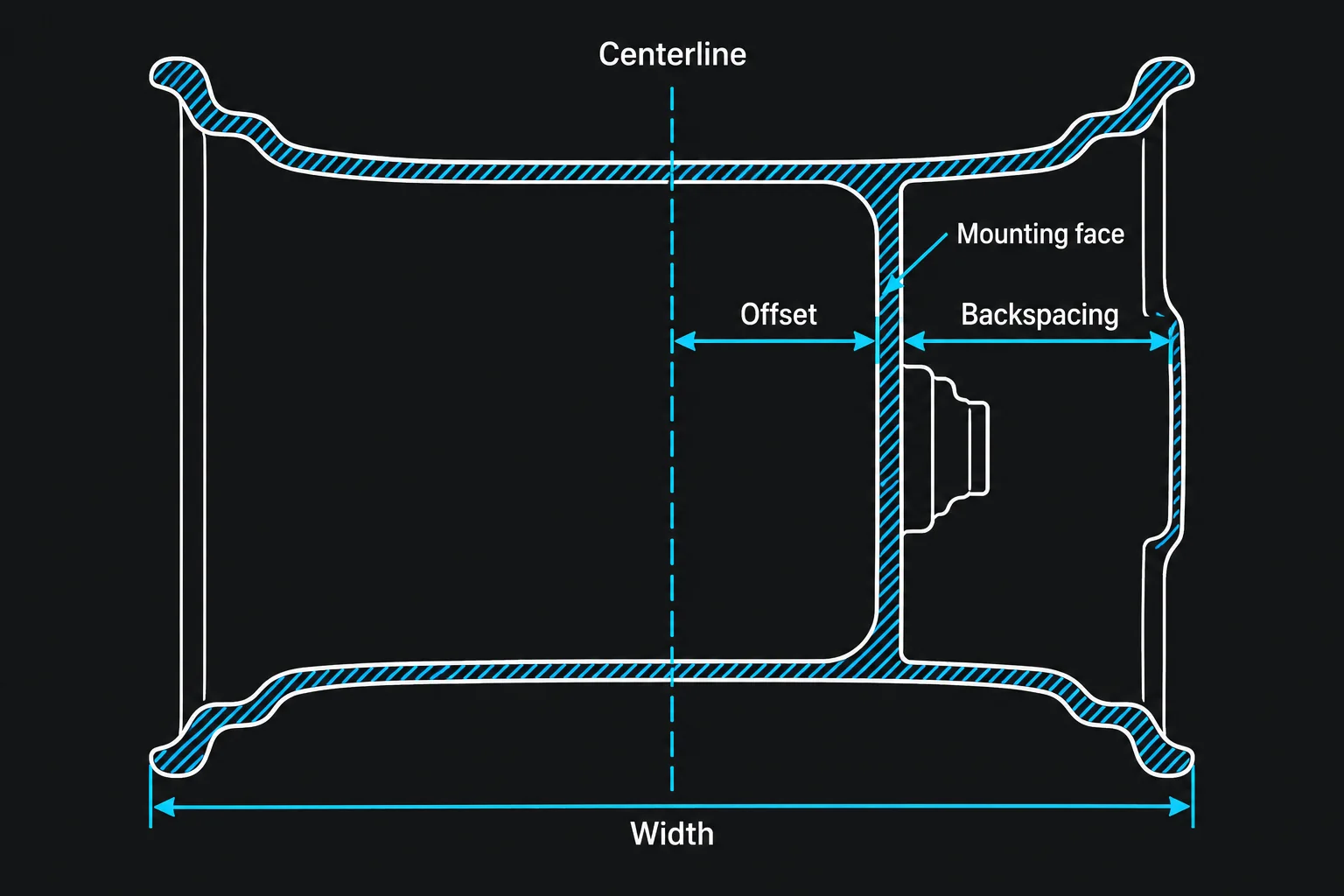
To measure wheel offset, measure the wheel’s backspacing and its overall width, then subtract half the width from the backspacing. The result, in millimetres, is the offset. Positive offset means the mounting face sits toward the outside of the wheel; negative means it sits toward the inside.
Before you measure, look for a stamp. Most wheels show the offset on the back of a spoke, inside the barrel or on the hub pad, usually as “ET” followed by a number (for example ET35 means +35 mm). If the stamp is legible and the wheel has not been modified, it is more accurate than a tape measure.
What you need
- A straight edge longer than the wheel diameter (a level or a metal rule)
- A tape measure or a ruler, ideally a depth gauge or digital caliper for the backspacing reading
- A clean, flat floor or bench
- The wheel off the car, with or without the tire (without is easier and more accurate)
Step-by-step: measure offset at home
1. Measure overall width
Lay the wheel on its face or stand it upright and measure across the outer edges of both rim flanges. Record it in millimetres. If you prefer inches, convert at the end: 1 in = 25.4 mm.
2. Measure backspacing
Lay the wheel face down so the back of the wheel points up. Lay the straight edge across the inner rim flange. Measure straight down from the underside of the straight edge to the hub mounting pad, the flat surface that touches the car’s hub. That distance is backspacing.
3. Find the centerline
Divide overall width by two. This is the distance from either flange to the rim centerline.
4. Calculate offset
Offset = backspacing − (overall width ÷ 2). Use the same width in both measurements. If you measured flange to flange for width, use that same width here.
| Overall width | Backspacing | Half width | Offset |
|---|---|---|---|
| 254 mm | 165 mm | 127 mm | +38 mm |
| 254 mm | 127 mm | 127 mm | 0 mm |
| 279 mm | 120 mm | 139.5 mm | −19.5 mm |
These rows show the math only, not recommended fitments.
Nominal width vs measured width
The width stamped on a wheel (for example 9J or 9.5J) is the nominal width, measured between the bead seats where the tire sits. A tape measure across the outer flanges reads more than that, roughly an inch on typical car wheels. Offset is defined from the true rim centerline, and because the flanges are at both edges, the centerline is the same whichever width you use, as long as backspacing is measured to the flange you used for width.
The mistake to avoid is mixing them: measuring backspacing from the outer flange edge and then subtracting half the nominal width. That inflates the result.
Common mistakes when measuring offset
- Measuring with the tire mounted and laying the straight edge on the sidewall instead of the rim flange
- Measuring to the center cap, hub ring or a raised logo instead of the flat mounting pad
- Using a tape measure that sags across the barrel; a rigid straight edge matters
- Mixing nominal and flange-to-flange width in the same calculation
- Forgetting the sign: mounting face inboard of the centerline is negative offset
- Ignoring spacers; a spacer reduces effective offset by its thickness
From measured offset to a new fitment
Once you know your current width and offset, you can compare a new wheel without guessing. Enter both into the wheel offset calculator to see how far the outer face moves and how much inner clearance changes. To understand how offset and backspacing describe the same mounting face in two ways, read wheel offset vs backspacing.
Offset is one line in a fitment brief. The others are bolt pattern, center bore, seat type, load rating and brake clearance. The wheel fitment guide covers them in order, and the PCD and offset guide has the formulas in one place.
Why offset matters more on custom wheels
With catalog wheels, offset is a filter: you pick from what exists. With a custom forged set the offset is machined to your brief, so accurate measurement turns directly into the result on the car. A careful reading of your current wheel, plus the clearance you have inside and outside, gives a target your wheel maker can design to. For the look side of that decision, see flush fitment.
Questions about measuring wheel offset
How do I measure wheel offset without a stamp?
Measure overall width and backspacing with a straight edge across the inner flange, then subtract half the width from the backspacing. The answer in millimetres is the offset.
Where is the offset stamped on a wheel?
Usually on the back of a spoke, inside the barrel or on the mounting pad, marked ET followed by a number, such as ET35.
Can I measure offset with the tire on?
You can, but lay the straight edge on the rim flange, not the tire. Readings are easier and more reliable with the tire removed.
What does a negative offset mean?
The mounting face sits toward the inside of the wheel from the centerline, so the wheel sits further out from the car.
How accurate does the measurement need to be?
Aim for the nearest millimetre. Small errors matter when clearance is tight, so measure twice and use a rigid straight edge.
Can you make wheels to an exact offset?
Yes. VEXORA custom forged wheels are machined to the width and offset in your brief. Every VEXORA set is made to order, and custom orders start from a single pair. MOQ: 1 pair (2 wheels). Production typically takes approximately 20 days once the specification, drawings and finish are approved, confirmed per project. Shipping time varies by destination country. Where DDP (Delivered Duty Paid) is available for your country, orders ship DDP: import duties and taxes are handled and the wheels are delivered to your door.
Send us your measurements
Share your current wheel size, measured offset and clearance photos, and we will work out a target for a custom set. Request a quote or browse custom forged wheels. Email sales@vexoraforged.com or message WhatsApp +86 159 2056 8771.
Once you have front and rear measurements, apply them in staggered forged wheels fitment so each axle gets the right width and ET.