Build the Supra around the stance you want, not the wheels available on a shelf. VEXORA custom forged wheels for Toyota Supra bring together a deliberate spoke design, axle-specific proportions, and a finish that works with your paint. From a clean street coupe to a track-focused build, start with your suspension, brakes, and tire plans, then request a quote for a made-to-order set.
Every set is 100% custom and made to order, with a minimum order of one pair (2 wheels). Production typically takes about 20 days after specifications, drawings, and finish are approved. Shipping time varies by country, with DDP delivery - duties and taxes handled, delivered to your door - where available. There is no stock catalog or ready-to-ship inventory.

Key takeaways
- Choose the face: GT concave, straight spokes, mesh, or an open Y-spoke layout.
- Plan each axle: width and concavity should support tire choice and clearance.
- Measure the actual car: coilovers and big brake upgrades change the fitment brief.
- Match the purpose: forged aluminum or forged magnesium, with construction selected for your build.
- Approve before forging: customer-approved drawings establish the design before production begins.
Why go custom forged on a Supra?
The Supra suits a wheel with presence: a defined spoke line, purposeful width, and a face that follows the body's muscular proportions. Custom sizing lets you plan front and rear independently instead of forcing one visual recipe onto both axles. Concavity still depends on brake clearance and mounting geometry; deeper is not automatically better.
Compared with casting, forging can provide a stronger material structure and support lower-mass designs. The finished result depends on material, geometry, and intended loading - not the label alone. Compare forged versus cast wheels, or read what forged wheels are.
Satin bronze adds warmth, gunmetal keeps the bodywork dominant, white delivers tuner character, and brushed finishes emphasize the metal. Choose the finish alongside the face, not afterward.
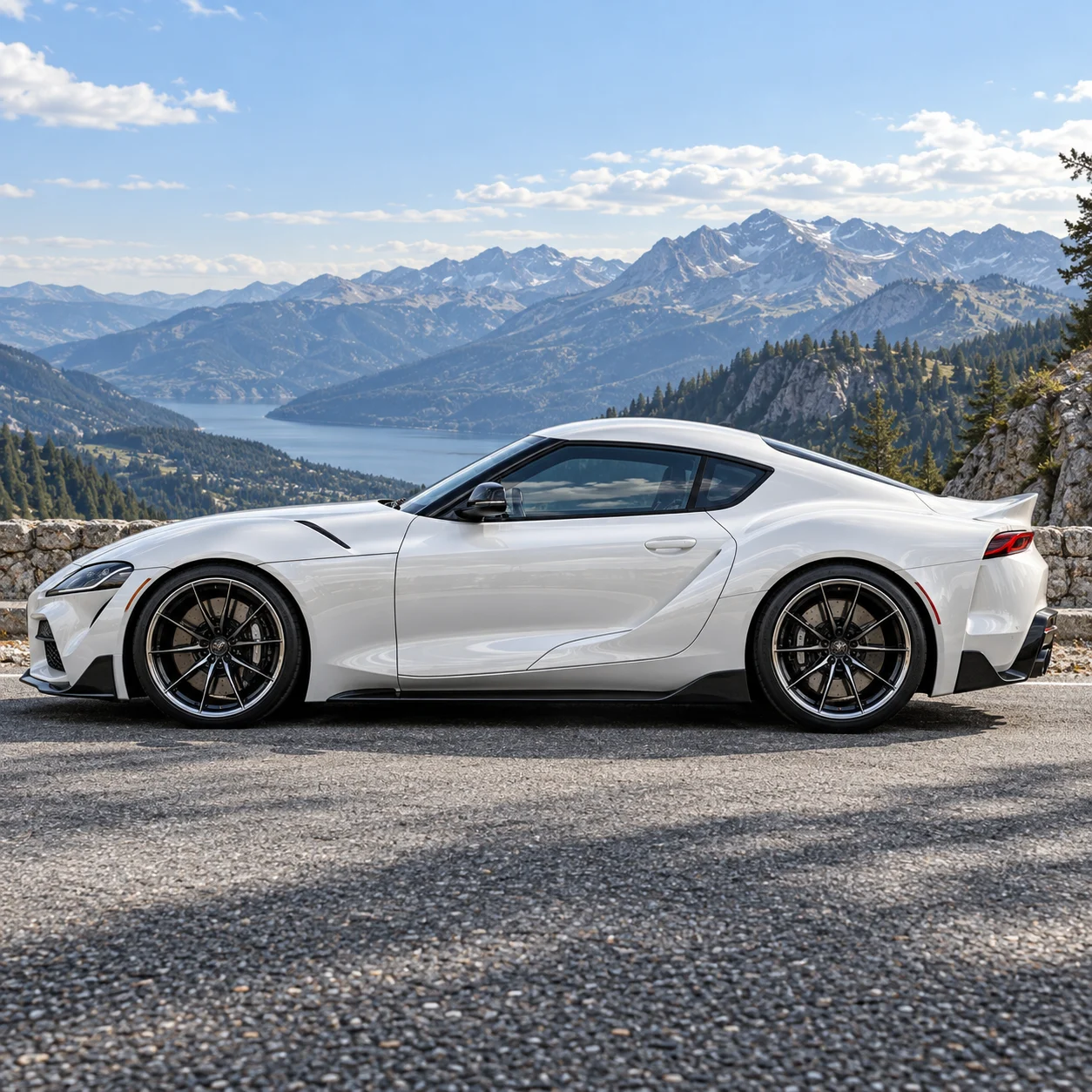
Which forged styles suit the Supra?
Supra forged wheels can lean toward modern GT or classic JDM without fighting the car's shape. Start with spoke density and brake visibility, then establish achievable concavity through fitment review.
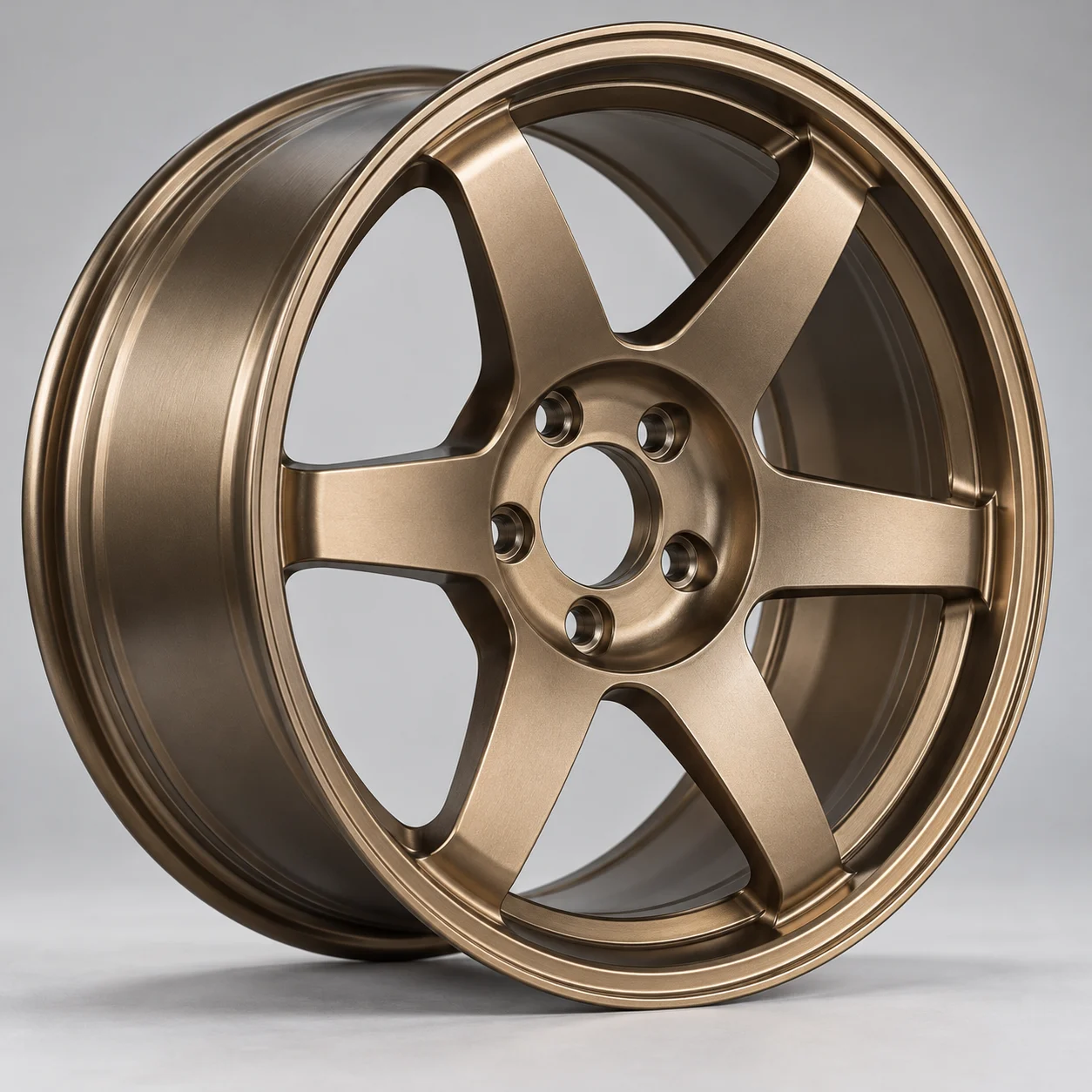
| Style | Look & concave | Brake visibility | Best for |
|---|---|---|---|
| GT concave 10-spoke | Broad, sculpted sweep | Balanced exposure | Modern GT street builds |
| Straight 6-spoke concave | Direct, bold recess | Open view | JDM-inspired track styling |
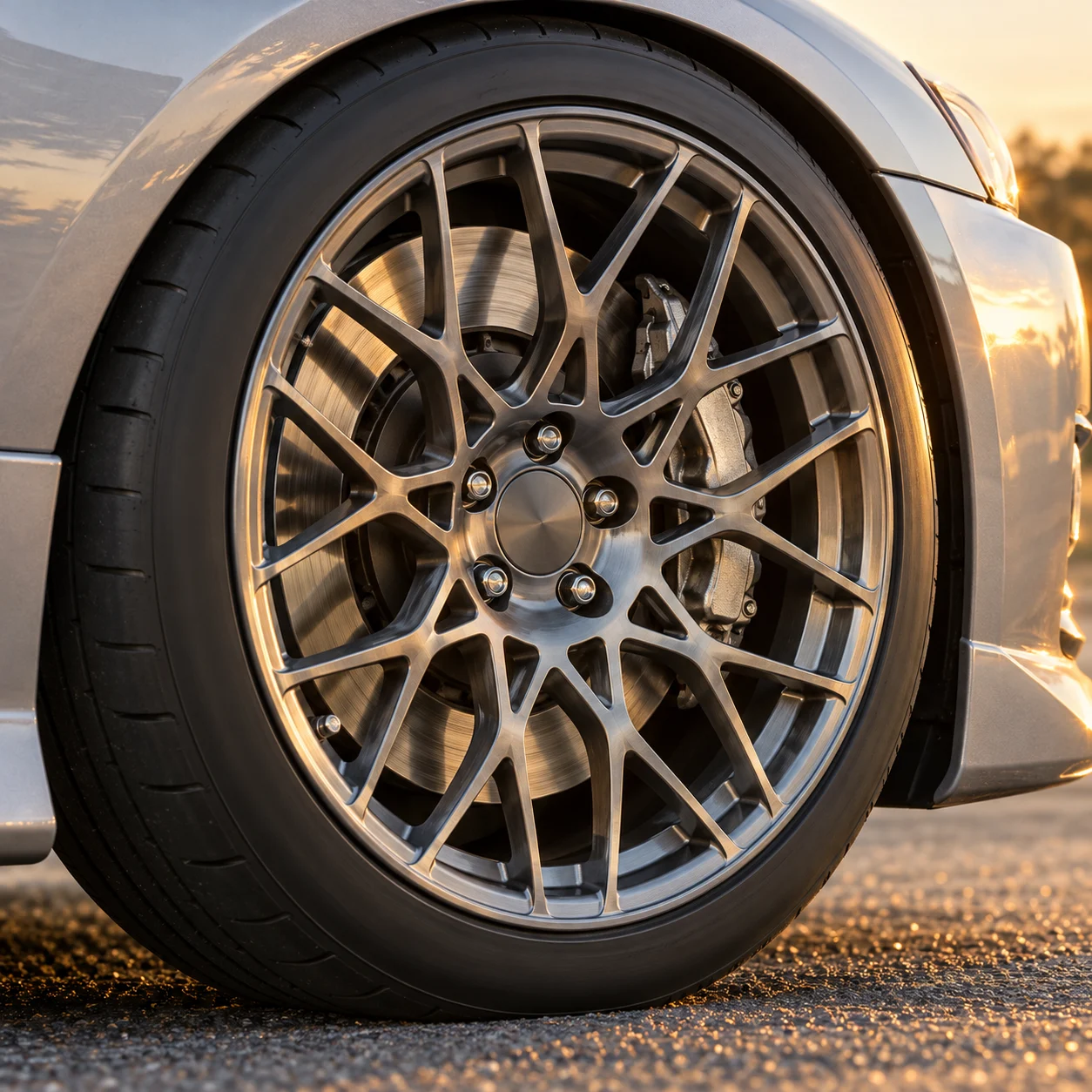
| Twin multi-spoke | Fine, layered depth | Framed by thin spokes | Technical street builds |
| Mesh | Layered center profile | More screened | Detailed show builds |
| Y-spoke | Branching, sculpted face | Open between branches | Sport-focused street or show |
These are visual directions, not clearance guarantees. A clean spoke profile must still leave room for your calipers.
How do you plan fitment for a lowered Supra?
A staggered layout gives each axle its own tire and width strategy. A square layout can simplify tire rotation where dimensions, tire direction, and vehicle requirements allow. Neither automatically improves balance: choose around handling goals and tire recommendations. Use the staggered fitment guide to compare tradeoffs.
Lowering changes available fender clearance through suspension travel. Check the tire shoulder, inner sidewall, spring perch, and liner - not just the wheel lip at rest. A flush appearance needs working clearance; a slightly tucked setup may leave more room for compression. Review flush fitment before committing.
Discuss front and rear face depth separately using the concave wheel guide. Bring suspension details and alignment information into the fitment plan early.
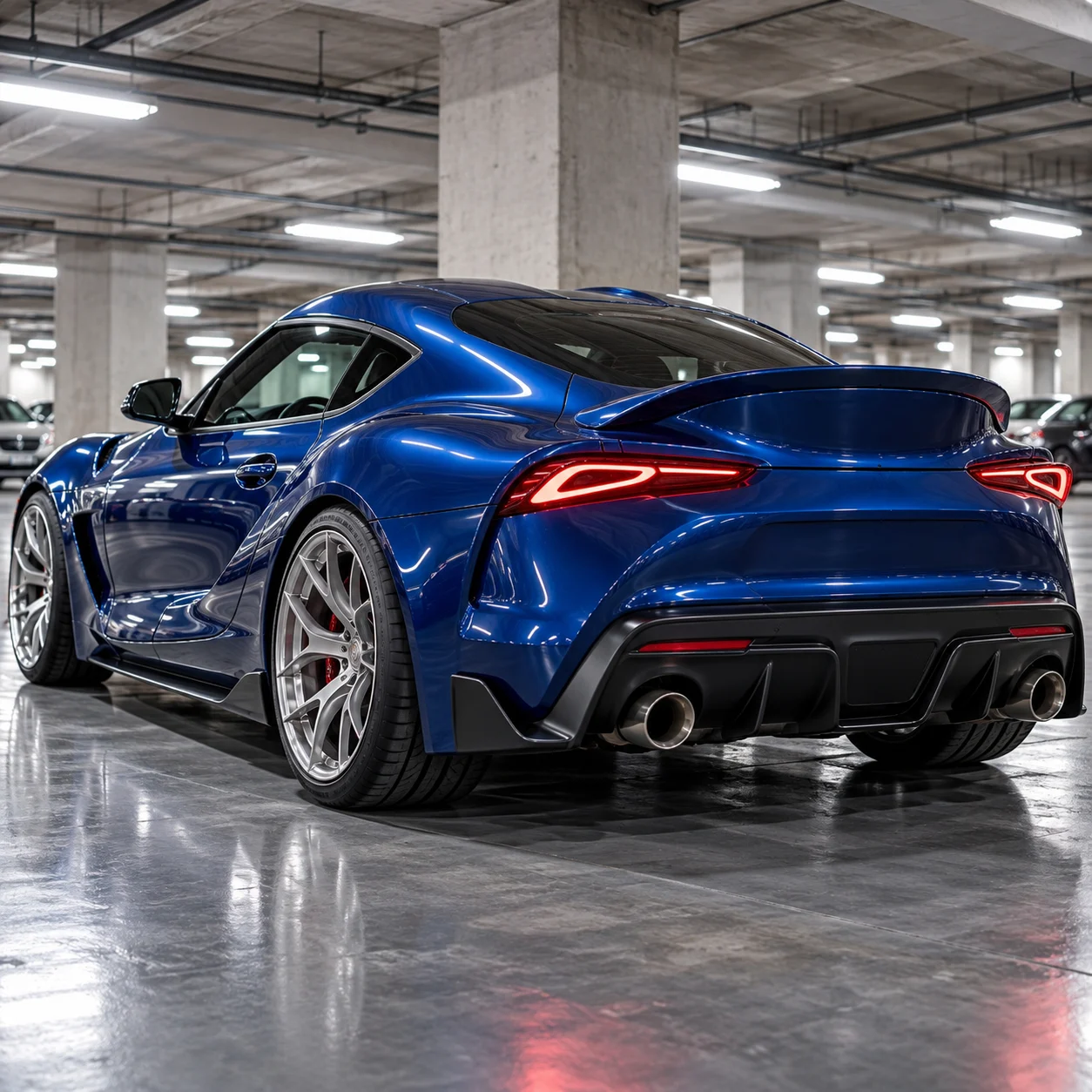
What should you measure before ordering?
1. Record your baseline. Photograph existing wheel markings, installed tire sizes, and the vehicle's tire placard. Note any differences from the documented original setup.
2. Confirm the mounting pattern. Check vehicle documentation or measure using the bolt pattern guide. Do not identify it by appearance alone.
3. Establish wheel position. Record width and offset; measure backspacing when needed. Follow the offset measurement guide, then compare proposed inner and outer positions with the wheel offset calculator. Calculations do not replace physical clearance checks.
4. Document brake clearance. Identify the calipers and rotors, especially aftermarket kits. Supply a brake template or dimensional drawing when available. Check barrel clearance and spoke-to-caliper space with the big brake clearance guide.
5. Confirm the hub interface. Measure the hub locating surface and confirm mounting hardware requirements. Understand hub-centric versus lug-centric fit and when hub-centric rings may be appropriate.
6. Record ride height. Provide suspension details and clearance measurements at your intended height. Have a qualified installer check steering lock and suspension travel, including tire-to-body clearance under compression.
Track, street or show - which build is yours?

Track: clearance and inspection first
For time-attack sessions and track days, prioritize tire support, brake clearance, and a repeatable inspection routine. Inspect wheels and tires before use and after curb strikes or off-track excursions. If minimizing mass leads your brief, discuss forged magnesium wheels; suitability depends on the complete design and use. Review magnesium wheel safety and care before choosing.
Street: keep the car usable
Canyon roads and everyday driving call for clearance that survives dips, steering input, and passengers. Keep tire selection realistic for road conditions. An open-spoke monoblock direction in gunmetal or satin bronze gives the Supra a purposeful look without making extreme fitment the centerpiece.
Show: make the details work together
Mesh, brushed faces, and contrasting finishes reward a closer look. Consider monoblock, 2-piece, or 3-piece construction around the appearance you want. Compare 2-piece and 3-piece forged wheels, then explore finishes alongside paint, trim, and caliper color.
How does a VEXORA Supra order work?
Start your custom forged wheels for Toyota Supra brief with vehicle details, intended use, suspension, brakes, tire plans, and preferred styling. Fitment review turns those inputs into a specification and drawings. You approve the drawings before forging, along with the specification and finish. Production typically takes about 20 days after those approvals; delivery timing varies by country. Confirm DDP availability for your destination. See the custom process.
| Item | Why it matters |
|---|---|
| Vehicle and modifications | Establishes the actual fitment baseline. |
| Brakes and suspension | Identifies clearance constraints. |
| Tires and intended use | Guides axle sizing decisions. |
| Style, finish, destination | Defines appearance and delivery planning. |
Explore more vehicle builds, including other sports-car directions in BMW builds and Porsche 911 builds.
Request a Supra quote | WhatsApp | sales@vexoraforged.com
Custom forged wheels for Toyota Supra - FAQ
Can I order just a pair?
Yes. The minimum order is one pair, or two wheels. Specify the axle and provide the complete vehicle setup.
Can both axles have concave faces?
Request that direction during the brief. Achievable depth depends on brake clearance, width, and mounting geometry at each axle.
Will they clear my big brake kit?
Provide the kit details and a template or dimensional drawing. Clearance needs review before you approve the wheel drawings.
Are any Supra sets ready to ship?
No. Every set is made to order; there is no ready-to-ship inventory.
Is shipping included in the production timeline?
No. Production typically takes about 20 days after approval. Shipping varies by country; confirm delivery timing and DDP availability with your quote.
Another JDM sports-coupe brief: custom forged wheels for Nissan GT-R - GT concave and Y-spoke sets.