
Deep dish wheels: the short answer
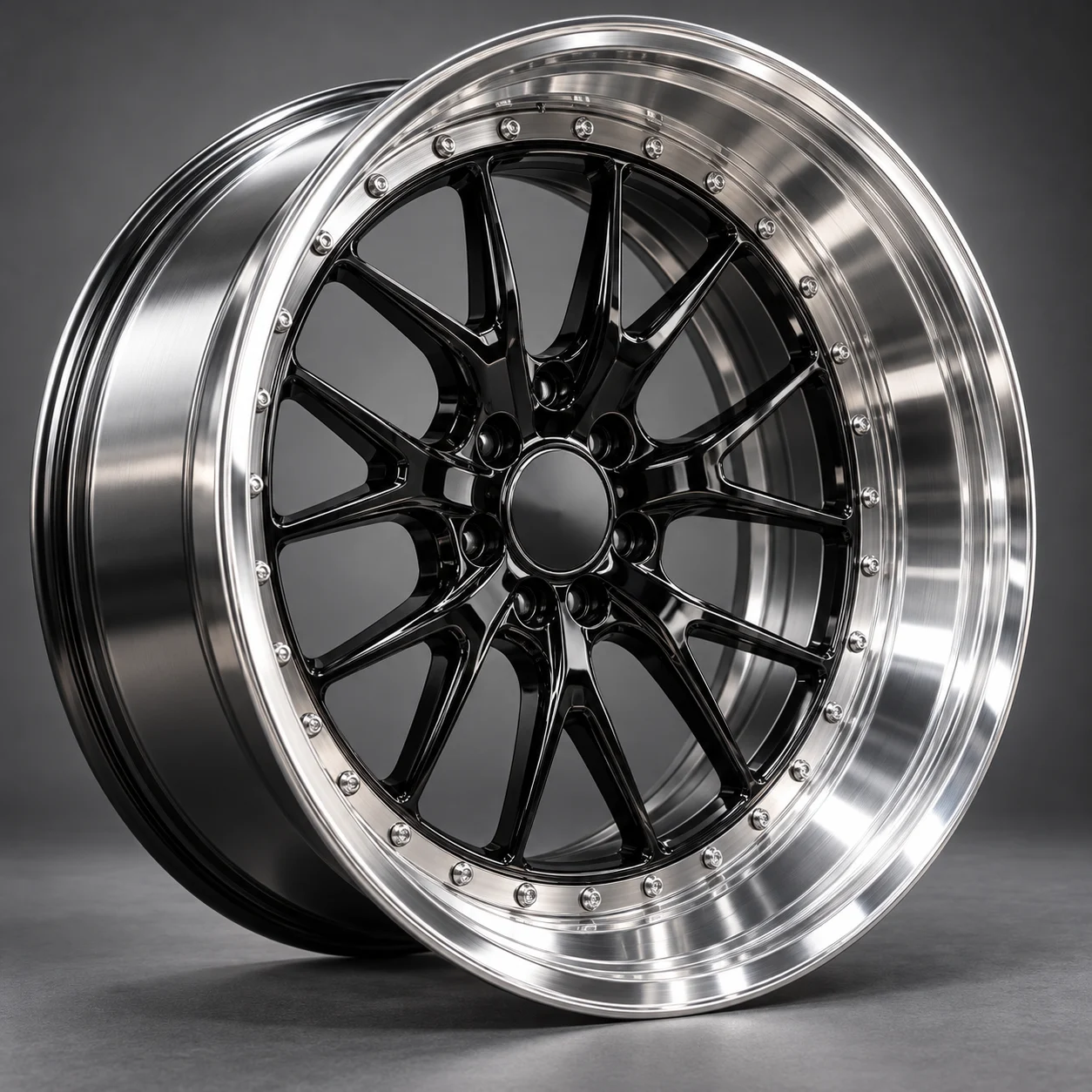
Deep dish wheels are wheels where the spoke face sits well inside a wide outer lip, so you see a band of polished or painted barrel between the tire and the spokes. The “dish” is the visible lip depth. It is created by the relationship between wheel width, offset and how the center is built, not by a special alloy.
If you want deep dish forged wheels, the useful question is not “how deep can I go?” but “how much lip does my width, offset and brake package leave room for?” Settle that first and the style follows.
Key takeaways
- Lip depth grows with wheel width and with lower offset; a narrow, high-offset wheel leaves little room for a lip.
- Deep dish and concave are different looks. Dish is about the lip; concave is about the curve of the spokes. One wheel can have both.
- Multi-piece construction (2-piece, 3-piece) makes the widest step lips easier; a monoblock can still carry a machined lip within its design limits.
- On staggered cars the rear usually shows more lip than the front. Matching lips front and rear is a design request, not an automatic result.
- Big brake kits limit how far the face can be tucked toward the hub. Send brake details before you fall in love with a render.
| Question | Short answer |
|---|---|
| What makes the dish? | Width, offset and center position inside the barrel |
| Is it the same as concave? | No — dish is lip depth; concave is spoke curvature toward the hub |
| Which construction suits big lips? | Usually 2-piece or 3-piece; monoblock lips are machined from one forging |
| What limits depth? | Brake caliper and rotor clearance, suspension, fender and tire packaging |
| Can front and rear match? | Only if the design is drawn per axle; staggered setups naturally differ |
What actually creates a deep lip?
Picture the wheel from the side. The tire sits on a barrel of a given width. The mounting pad that bolts to the hub sits somewhere across that width, set by the offset. Whatever barrel is left between the face and the outer edge is the lip you see.
Make the wheel wider while keeping the hub position, and the extra width can go outboard as lip. Lower the offset and the face moves inboard relative to the outer edge, which also shows more lip. Raise the offset on a narrow wheel and the face moves toward the outer edge, so the dish shrinks or disappears. That is why the same design drawing can look flat on the front axle and deep on the rear.
Width and offset do most of the work
Two wheels with identical spokes can look completely different once width and offset change. Use the wheel offset calculator to see how a new width/offset moves the outer edge (poke) and the inner barrel (clearance) compared with your current wheels.
Center placement is the design lever
On multi-piece wheels the center can be positioned inside the barrel to change lip size within the fitment limits. On a monoblock the face position is fixed in the forging and machining program, so lip size is decided at the drawing stage.
Tire choice changes what you see
Tire sidewall shape and how the tire is mounted affect how much lip is visible. Agree tire sizes in the brief so the render and the finished car look the same.
Deep dish vs concave: which look are you asking for?
Buyers often use “deep dish” and “concave” for the same thing, but they describe different parts of the wheel. A concave face curves the spokes inward toward the hub. A deep dish shows a wide band of lip before the spokes start. Our forged concave wheels guide covers mild, medium and deep face profiles in detail; this page is about the lip.
| Feature | Deep dish | Concave |
|---|---|---|
| What you see | Wide outer lip, face set back | Spokes curving inward toward the hub |
| Main driver | Width, offset, center position | Face profile drawn into the spokes |
| Common construction | Often 2-piece or 3-piece | Monoblock or multi-piece |
| Brake effect | Face sits closer to the caliper as dish grows | Spoke curve must clear caliper and rotor |
| Classic styles | Step lip, mesh or flat face | Directional or multi-spoke concave |
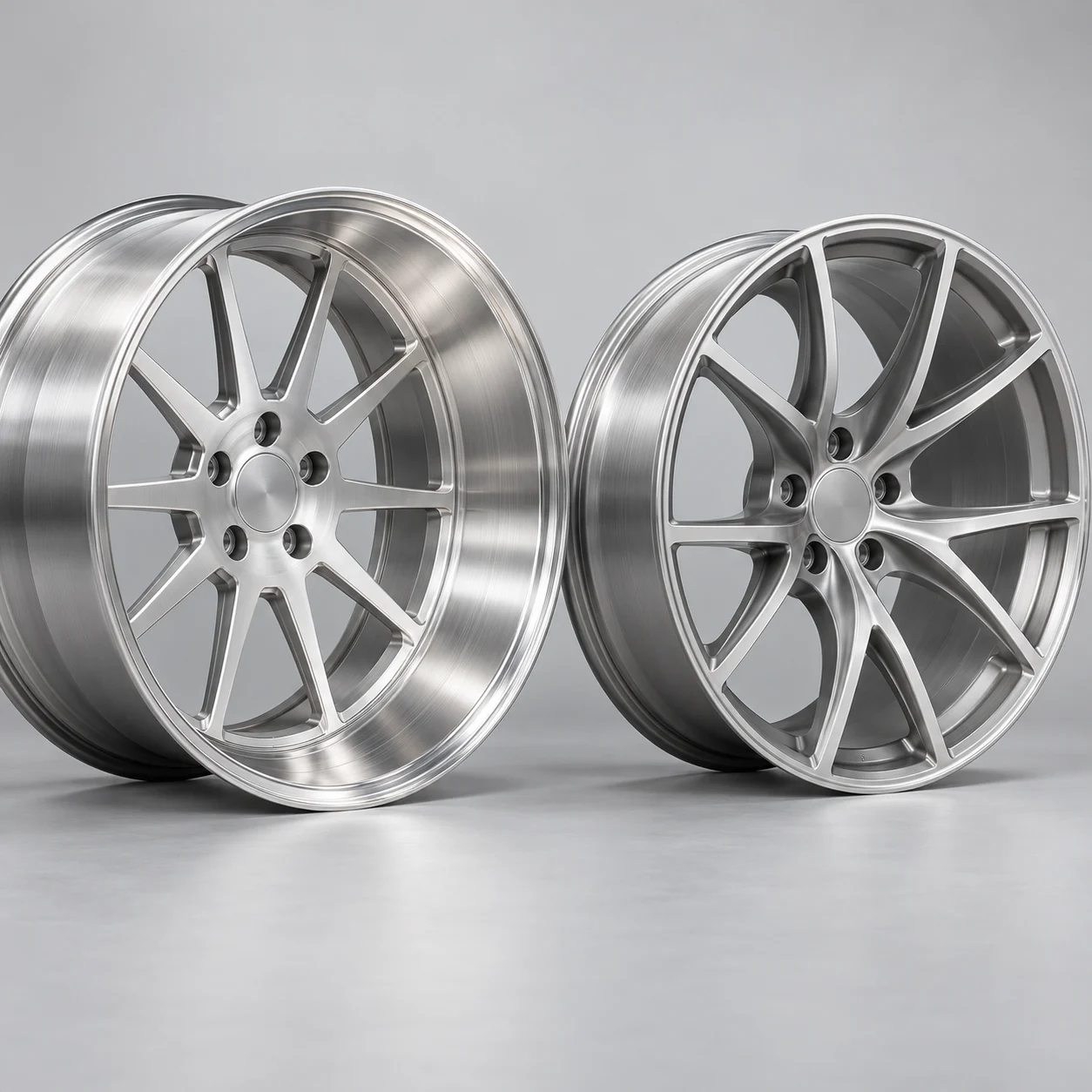
Many builds combine the two: a moderate lip with a concave spoke face. When you send a reference image, say which part you like — the lip, the spoke curve, or both — so the design is drawn around the right feature.
How to check how much dish your car can take
You do not need a finished drawing to start. These measurements give the design team what it needs to judge lip depth realistically.
- Record your current wheels. Diameter, width and offset per axle, plus tire sizes. If a wheel is unmarked, see how to measure wheel offset and backspacing.
- Measure the space you have. Distance from the current wheel face to the fender lip, and from the inner barrel to the strut or suspension arm, at ride height.
- Decide where the outer edge should land. Flush, slightly tucked, or a little poke — see flush fitment. This sets the maximum width and minimum offset.
- Collect brake details. Caliper model, rotor diameter, and a clearance template if your brake supplier offers one — see brake clearance for BBK.
- Measure an existing lip if you have a reference wheel. Lay a straight edge across the outer lip and measure straight down to where the face meets the barrel. Note it as a reference, not a target, because the new width and offset will change it.
With those numbers, the review can say whether the lip you want fits your car, or where a compromise is needed. Staggered builds should follow staggered forged wheels fitment so each axle is checked separately.
Monoblock, 2-piece or 3-piece for deep dish?
| Construction | Lip approach | Consider |
|---|---|---|
| Monoblock | Lip machined from the same forging as the face | Clean one-piece look; dish limited by the forging and design |
| 2-piece | Center joined to a barrel | More freedom to position the face for a deeper lip |
| 3-piece | Center plus separate inner and outer barrel halves | Classic step-lip look; more parts to seal and maintain |
There is no single right answer. A monoblock suits buyers who want simplicity and a subtle lip. Multi-piece suits builds where a big, visible lip is the whole point. Compare the trade-offs in monoblock vs 2-piece vs 3-piece.
Deep dish on staggered cars
Rear-drive coupes and sports cars often run a wider rear wheel. With a lower rear offset, the rear lip grows naturally while the front stays shallow. Some owners like that contrast; others want the front to look deeper too. A front lip can only grow if the front width, offset, steering lock and brakes allow it.

Rear-engine and front-engine performance cars often need the most care because the front brake package is large. For model-specific direction, see our Porsche 911 and Corvette build pages.
Common deep dish mistakes
- Choosing a render first and checking brakes later.
- Using spacers to fake lip depth instead of specifying offset correctly — read hub centric wheel spacers before going that route.
- Assuming the front will look like the rear on a staggered set.
- Mixing up dish and concave in the brief, then getting the wrong emphasis.
- Forgetting tire size, which changes how much lip is visible.
Finishes that make a dish read
A lip only reads as “deep” if it contrasts with the face. Polished or brushed lips with a painted or dark center are the classic choice; a single color all over makes the dish look shallower in photos. Browse finishes and note the lip and center finish separately in the brief.
Ordering custom deep dish forged wheels
VEXORA makes fully custom forged wheels in aluminum and magnesium. Every VEXORA set is made to order, and custom orders start from a single pair. MOQ: 1 pair (2 wheels). Production typically takes approximately 20 days once the specification, drawings and finish are approved, confirmed per project. Shipping time varies by destination country. Where DDP (Delivered Duty Paid) is available for your country, orders ship DDP: import duties and taxes are handled and the wheels are delivered to your door. VEXORA does not keep a stock catalog or ready-to-ship inventory. Every wheel is engineered and forged to your vehicle, dimensions and finish.
- Vehicle make, model, year and any suspension or brake upgrades
- Current and target diameter, width and offset per axle; tire sizes
- Reference image with a note: lip, concave, or both
- Preferred construction (monoblock, 2-piece, 3-piece) or “advise me”
- Lip and center finish
Deep dish wheels FAQ
Are deep dish wheels the same as concave wheels?
No. Deep dish describes a wide outer lip with the face set back; concave describes spokes curving inward toward the hub. A wheel can have one, the other, or both.
Do deep dish wheels need a low offset?
More lip generally comes from more width and lower offset, but the right numbers depend on your car. Fender, suspension and brake clearance decide the limits.
Can a monoblock wheel be deep dish?
Yes, within the limits of the forging and design. The very widest step lips are more common on 2-piece and 3-piece wheels.
Will a deep dish wheel clear my big brake kit?
It depends on the kit and the wheel design. Send the caliper model, rotor size and any clearance template so the face position can be checked before approval.
Are deep dish rims only for wide-body cars?
No, but wider wheels make bigger lips easier. On a stock-body car the lip is usually more moderate.
What is the minimum order?
Every VEXORA set is made to order, and custom orders start from a single pair. MOQ: 1 pair (2 wheels). Production is approximately 20 days after approval; shipping time depends on destination.
Brief your deep dish set
Send your vehicle, current wheel specs, brake details and a reference image, and request a quote. Email sales@vexoraforged.com or message WhatsApp +86 159 2056 8771.
Deep-dish muscle example: custom forged wheels for Camaro.
Deep-dish JDM example: custom forged wheels for Nissan GT-R.
Deep-dish muscle example: custom forged wheels for Dodge Challenger.
Lip depth and diameter: start with forged wheel sizes (18 vs 20).