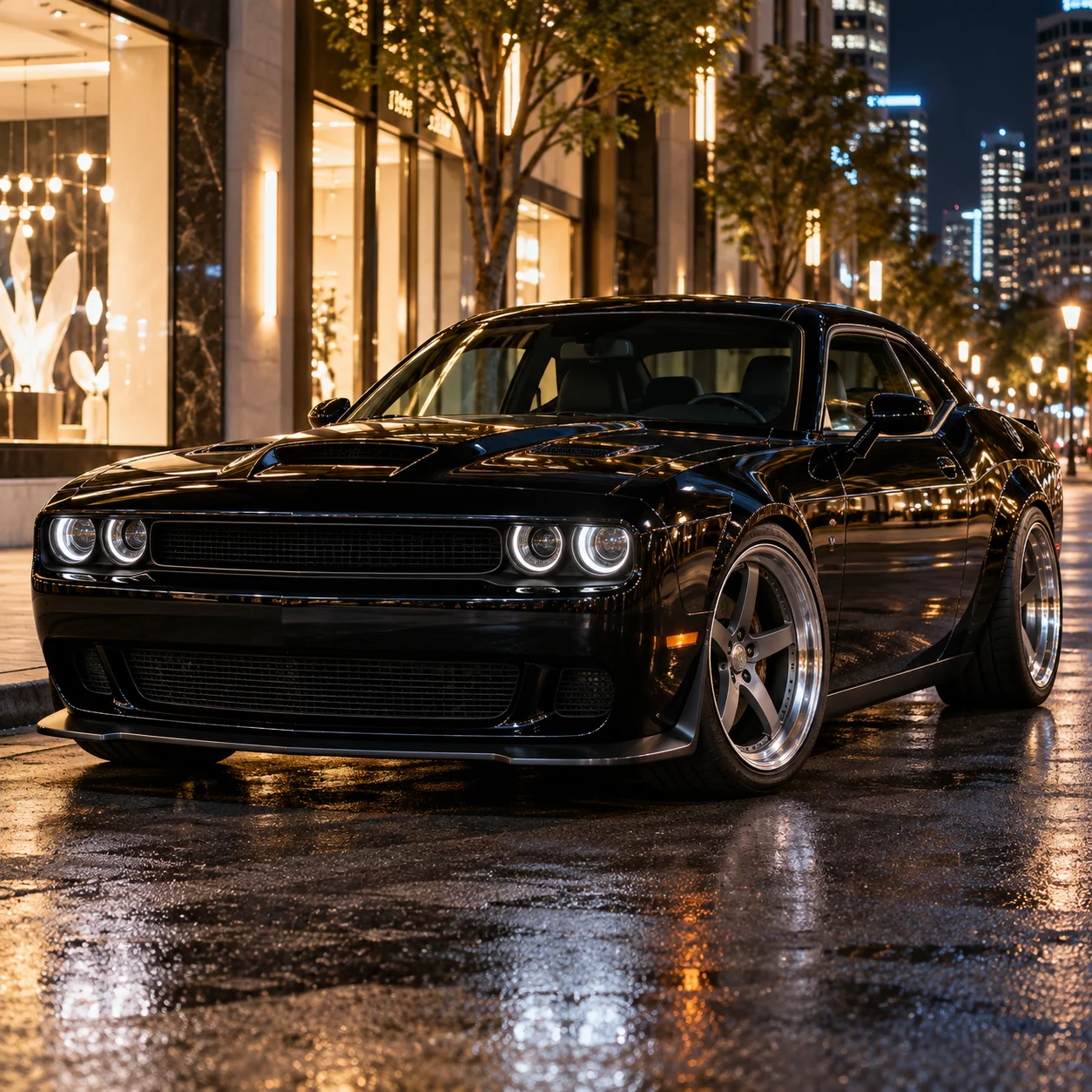
Give your Dodge Challenger the wheel presence its long-hood proportions deserve. VEXORA custom forged wheels for Dodge Challenger put axle-specific width, deep-concave faces and wide stepped lips at the center of the build - not a borrowed shelf fitment. Start with your tire plan, brake package and preferred look, then request a quote for a made-to-order set.
Every set is 100% custom and made to order, with a minimum order of one pair (2 wheels). Production typically takes about 20 days after specifications, drawings and finish are approved. Shipping time varies by country, with DDP delivery available where supported: duties and taxes handled, delivered to your door. There is no stock catalog or ready-to-ship inventory.
Key takeaways
- Design each axle: Coordinate face depth, lip width and stance around real clearance, not a parked photo.
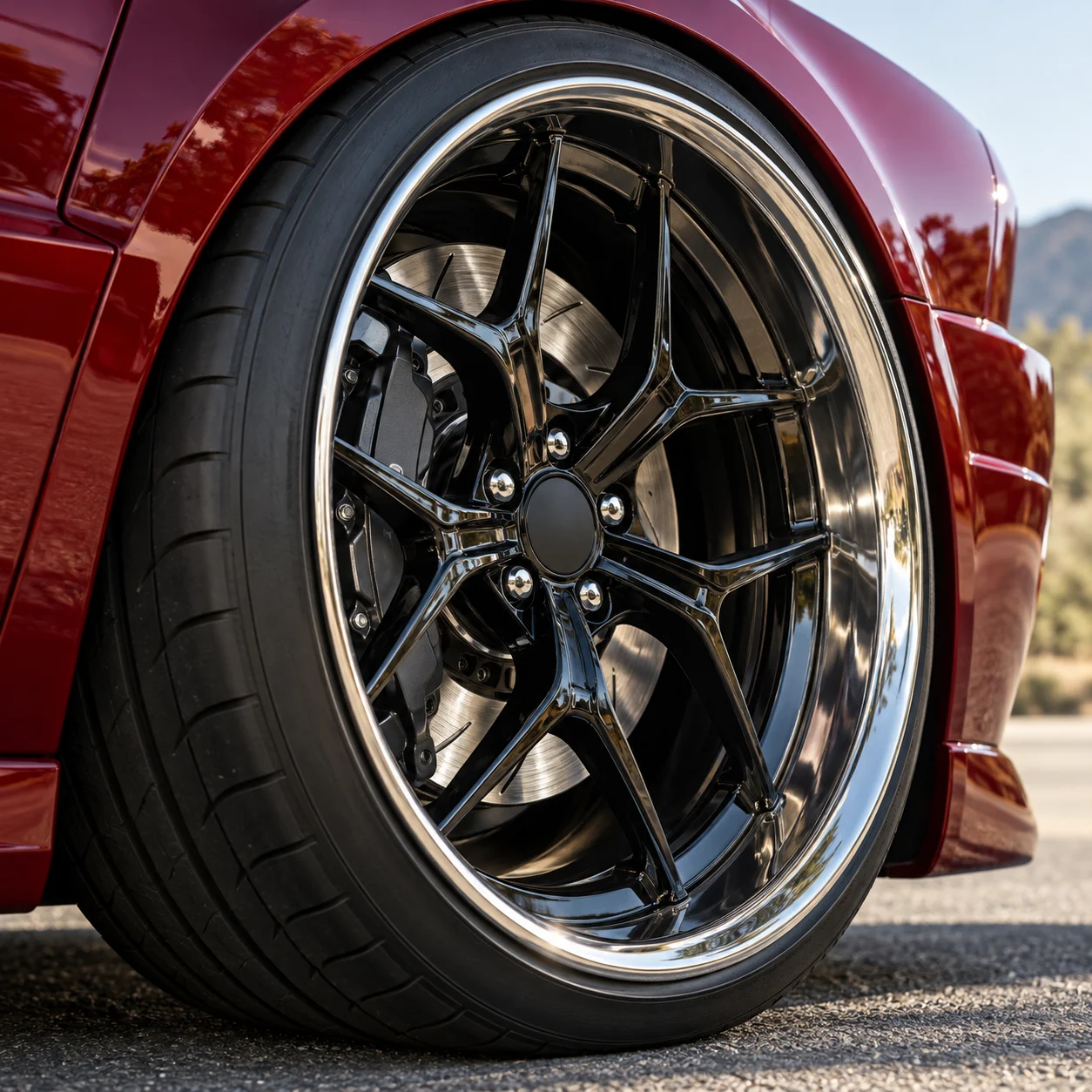
- Show the brakes when you mean to: Open spokes highlight large calipers; clearance still needs verification.
- Choose construction for the look: Monoblock for a unified face; 2-piece or 3-piece when a wide lip leads the composition.
- Match the build use: Street, drag-strip and road-course Challengers need different tire and fitment priorities.
- Approve before forging: Review the drawings and finish before the order enters production.
Why do Challenger owners go custom forged?
Challenger proportions reward deliberate wheel design. The longer hood and more upright greenhouse give the car a classic muscle stance that reads differently from a Camaro or Mustang. A deeper rear face can emphasize the haunches, while a front profile shaped around brake clearance keeps the set visually connected from axle to axle.
Custom forged wheels for Challenger let you establish face depth and lip width per axle instead of accepting whatever a catalog wheel offers. Forging can provide strength with less material than a comparable cast design, creating room for lower mass without making appearance the only priority. See the forged-versus-cast guide for the construction differences, and what forged wheels are for the basics.
Which forged styles suit a Challenger?
Choose the visual direction first, then refine it against the available space. A dramatic wide-lip face only works when the tire, brakes and bodywork agree.
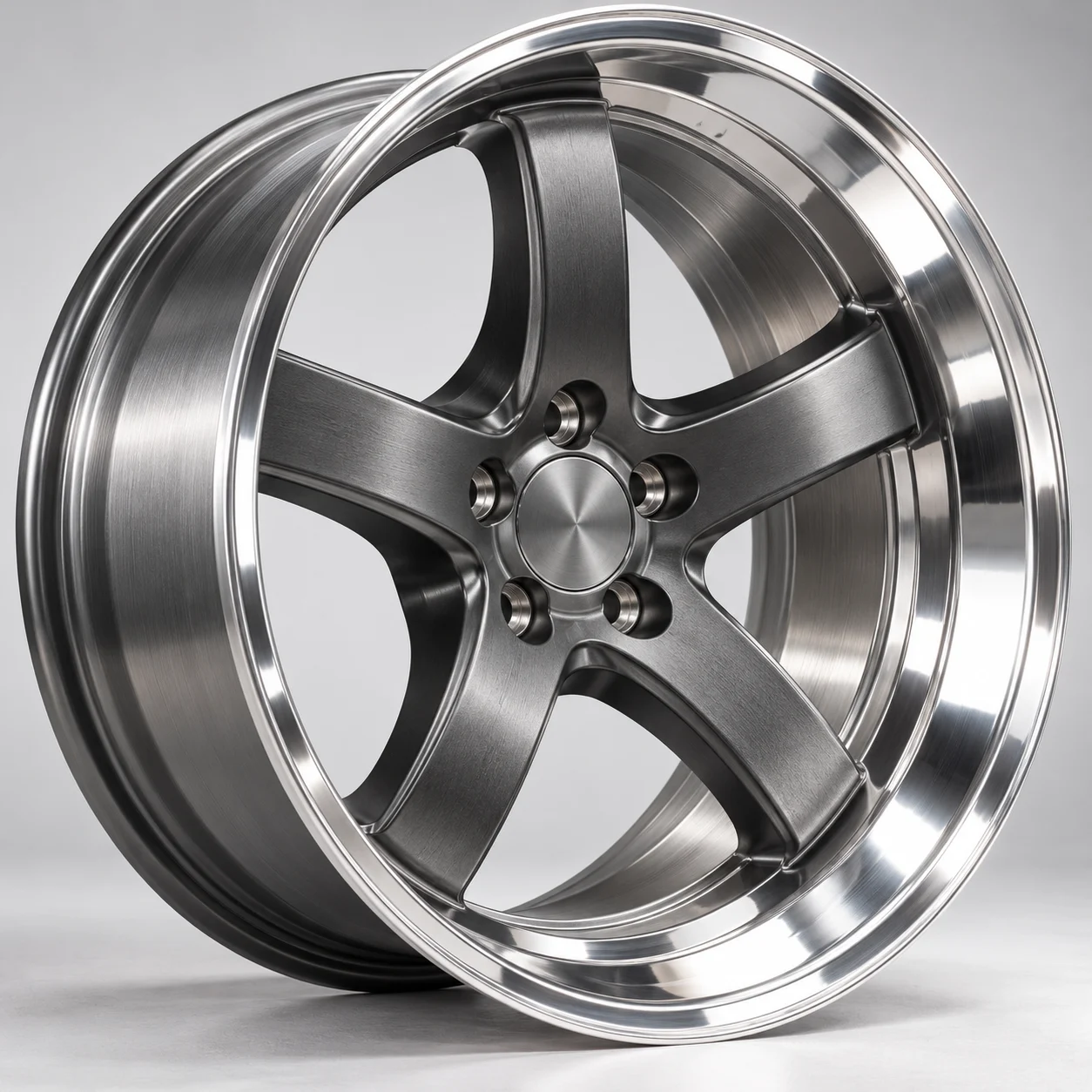
| Style | Look | Concave depth | Brake visibility | Best for |
|---|---|---|---|---|
| Deep-concave 5-spoke | Bold, muscular, direct | Deep where clearance permits | High with open spacing | Street stance and brake-show builds |
| Twisted split-spoke | Directional, energetic | Profile-dependent sweep | Moderate to high | Modern street and road-course looks |
| Mesh | Detailed, motorsport-inspired | Subtle to pronounced | More screened | Technical, layered styling |
| Wide-lip 2-piece / 3-piece | Strong face-and-lip contrast | Face depth balanced against lip | Depends on spoke layout | Wide stepped-lip muscle builds |
For high-power trims with large brakes, an open face puts the hardware on display. Treat that openness as a styling choice - not proof of caliper clearance. Deep-dish and concave language is explained further in the deep-dish guide and forged concave wheels guide.
How do staggered fitment and concave depth work on a Challenger?
Concave depth depends on wheel width and offset per axle, plus the space needed for the brakes. A wider rear wheel may allow a deeper face, but width alone does not guarantee it. Lip width also competes for space within the overall wheel geometry.
A staggered setup can support the rear-focused muscle stance and tire plan, but different front and rear sizes generally prevent front-to-rear tire rotation. For drag-strip use, begin with the intended tire; for street and road-course use, consider handling balance and tire management before prioritizing maximum rear width.
Use the staggered fitment guide alongside flush fitment and the wheel fitment guide to separate the desired look from the required clearance.
What should you check before ordering?
Build the brief from measurements, not photographs alone. Record front and rear details separately, especially when the current setup is staggered.
1. Read the existing setup. Photograph wheel markings and tire sidewalls. Check the door placard for specified tire sizes, then identify any changes from the original equipment.
2. Confirm the bolt pattern. Check vehicle documentation and measure using the bolt-pattern measurement guide. Do not identify it by appearance.
3. Establish wheel position. Record width and marked offset, then verify backspacing using the offset measurement guide. Compare proposed changes with the wheel offset calculator; calculations do not replace physical clearance checks.
4. Document the brakes. Photograph the caliper and identify the brake package, including aftermarket changes. Follow the big-brake clearance guide for the dimensions or template needed to check spoke and barrel space.
5. Verify hub fit. Confirm hub dimensions from reliable documentation or measurement. Review hub-centric versus lug-centric fit before approving the mounting details.
6. Check suspension and body clearance. Note lowering, alignment changes and suspension hardware. Measure inner and outer space, allowing for steering movement, suspension travel and the intended tire profile.
Street, drag strip or show - which Challenger is yours?
Street and canyon roads: usable stance
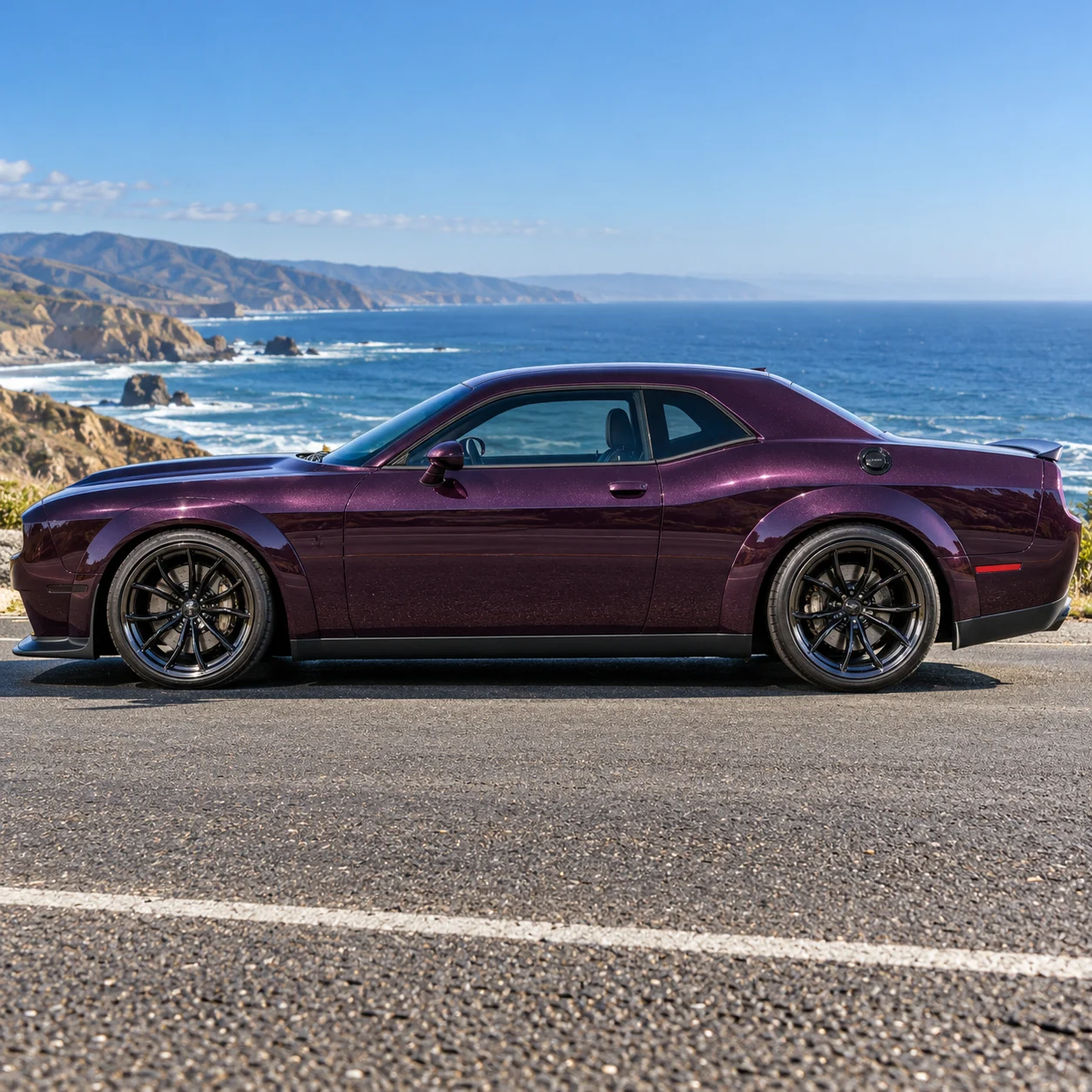
A road-driven Challenger needs clearance beyond a parked photo. Plan for passengers, uneven pavement and steering movement. Gunmetal on a deep-concave five-spoke keeps the long body cohesive; satin bronze or polished lip accents add contrast without forcing an extreme arch position.
Drag-strip builds: tire first
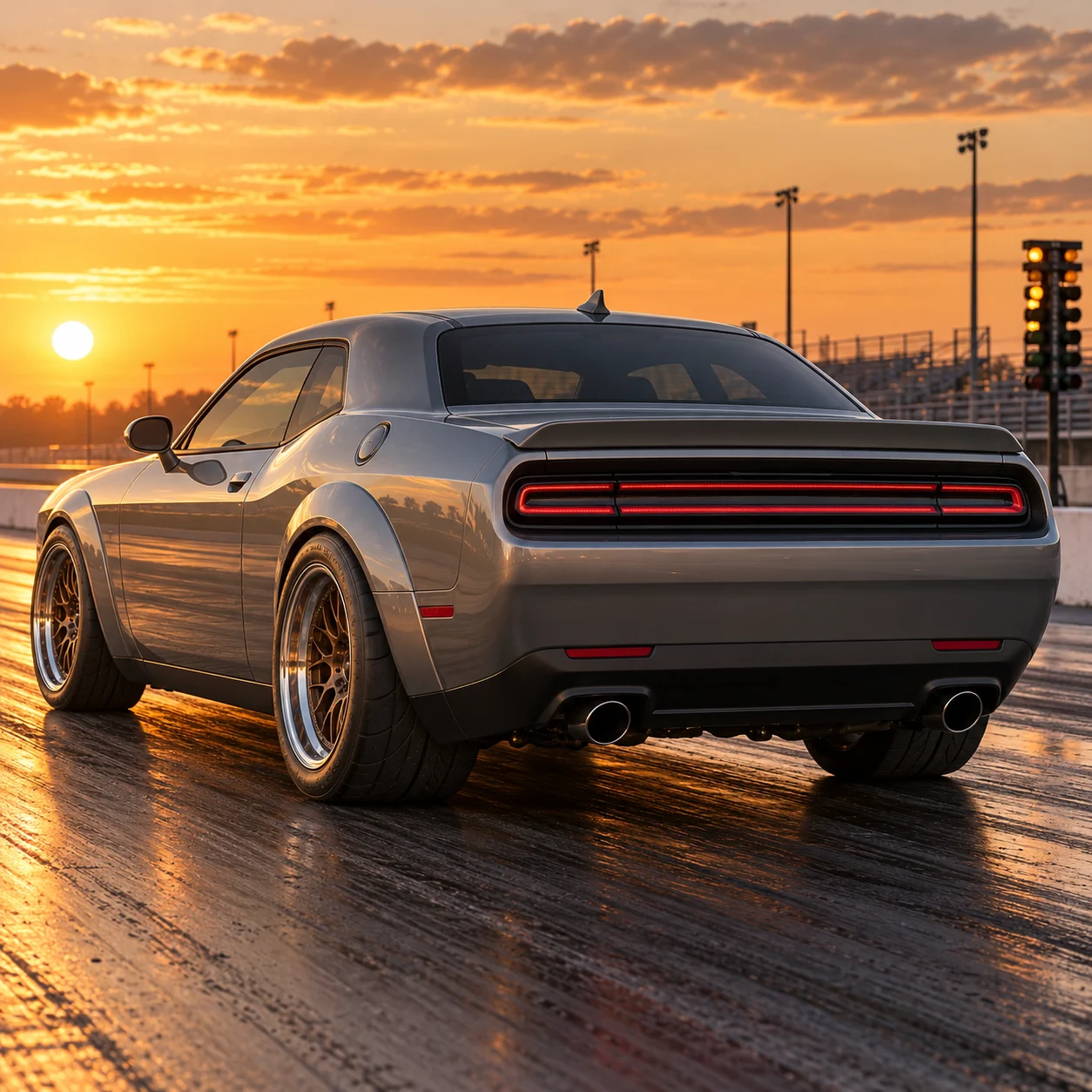
Start with the intended tire compound and sidewall height, then work back to width, offset and lip. A rear-biased staggered package can support the muscle stance, but confirm clearance through launch squat and steering lock before approving face depth.
Show builds: depth and lip contrast
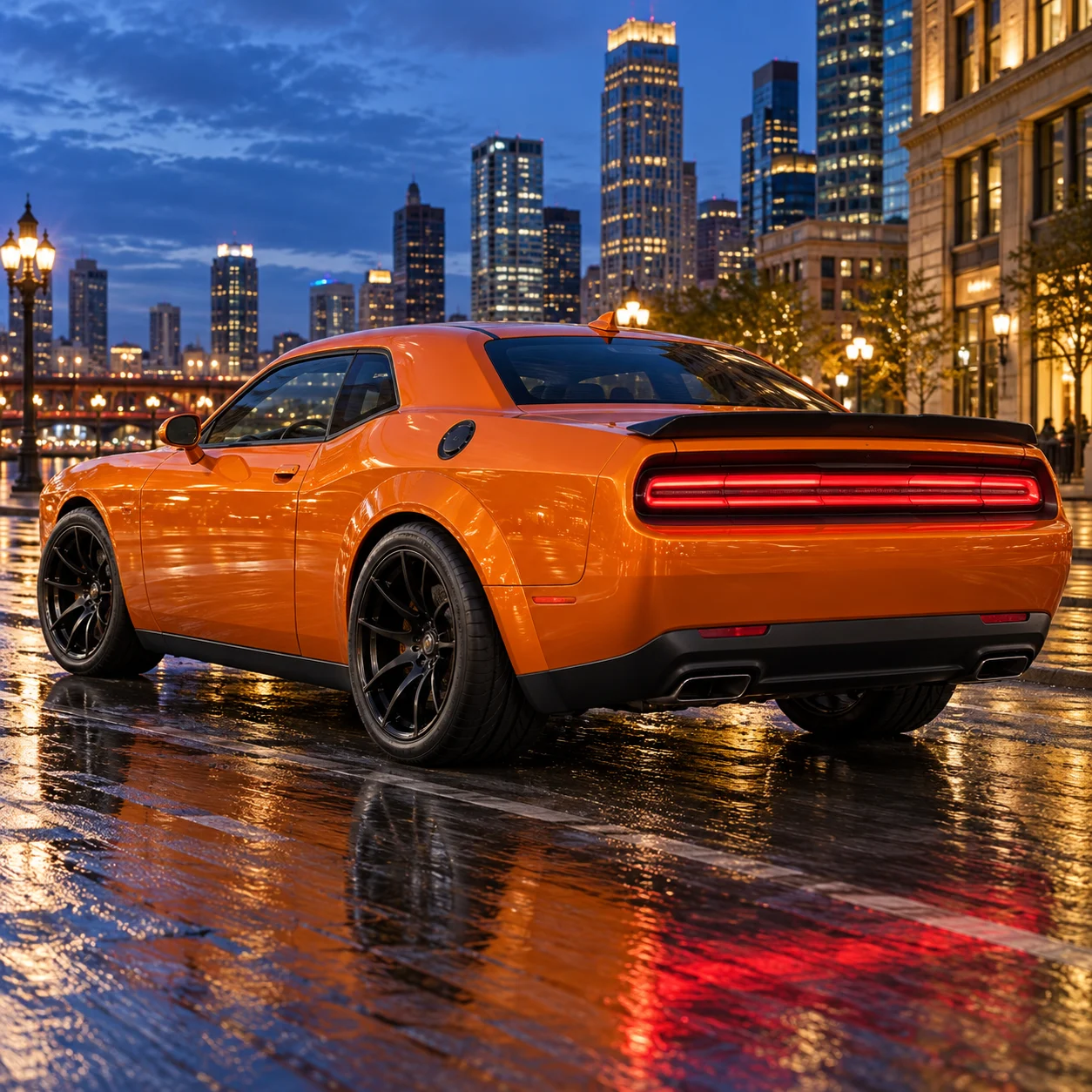
Let wide-body proportions, visible brakes and finish work together. A wide stepped lip against a recessed face is a classic Challenger direction when the geometry allows. Explore finishes that complement the paint rather than compete with it.
Monoblock or multi-piece for a Challenger build?
Monoblock wheels suit a clean, unified design where the spokes carry the visual impact. Choose this direction when a strong face matters more than a separate lip treatment.
2-piece forged wheels introduce a distinct center-and-rim relationship. 3-piece wheels offer another route to a pronounced lip-led composition. For either multi-piece direction, balance lip width with brake room and mounting geometry rather than assuming more lip always fits. Compare constructions in the 2-piece vs 3-piece guide.
Aluminum or magnesium?
VEXORA offers forged aluminum and forged magnesium. Choose the material alongside the intended use, construction and budget - not as a substitute for reviewing the complete wheel design. Explore forged magnesium wheels and the magnesium-versus-aluminum comparison before settling the brief.
How does a VEXORA Challenger order work?
Your custom forged wheels for Dodge Challenger start with a brief: vehicle details, tire plan, brakes, suspension, preferred style and intended use. Fitment review comes next, followed by drawings for your approval before forging. Select and approve the finish alongside the final specifications.
Production typically takes about 20 days after specifications, drawings and finish are approved. Shipping time varies by destination; confirm DDP availability for your country. See the custom order process for the sequence.
| Item | Why it matters |
|---|---|
| Vehicle and brake package | Establishes the fitment review. |
| Tires and suspension | Defines the clearance priorities. |
| Style and finish references | Directs the face, lip and color. |
| Delivery country | Allows shipping and DDP review. |
Browse more vehicle build directions, including Camaro wheel styling and Mustang wheel styling, to refine your preferred spoke language. Use them for inspiration, not transferable fitment specifications.
Request a Challenger quote | WhatsApp | sales@vexoraforged.com
Custom forged wheels for Dodge Challenger - FAQ
Can the front and rear faces have different depths?
Yes, where the approved geometry allows. Each axle's width, offset and brake clearance determine the available profile.
Can I order only a rear pair?
The minimum order is one pair (2 wheels). Provide the remaining setup details so the intended combination can be reviewed.
Will a deep-concave face clear big brakes?
Not automatically. Confirm caliper dimensions and check both spoke and barrel clearance before approving the drawings.
Are any Challenger sets ready to ship?
No. Every set is made to order; production typically takes about 20 days after all required approvals.
What should I send for a quote?
Send vehicle details, current wheel and tire information, brake and suspension changes, style references and your delivery country.
Muscle diameter and face depth: see the size hub 18 inch vs 20 inch forged wheels.